
Sustainability

Sustainability


Our Sustainability Journey

Since 2015, KDAH has been actively integrating sustainability into our operations. While we recognize that more work lies ahead, we take pride in the progress achieved so far and reaffirm our commitment to continuous improvement and responsible healthcare.

As one of the leading healthcare providers in India, Kokilaben Dhirubhai Ambani Hospital (KDAH) recognizes its significant responsibility towards its employees, patients, and the wider community it serves.

In addition to delivering world-class healthcare, we are acutely aware of the challenges posed by climate change, environmental degradation, and social inequities. In response, KDAH has developed a Sustainability Roadmap for 2030, guiding our efforts for the decade ahead.

This roadmap builds on our vision of delivering patient-centric, safe, and sustainable healthcare, and reflects our commitment to agility and resilience in meeting the challenges faced by society.

Anchored in the United Nations Sustainable Development Goals (SDGs), our strategy is aligned with India’s 2030 priorities for sustainable development and the nation’s vision for low-carbon growth.

Through this framework, KDAH has identified key priorities that address the most pressing sustainability challenges within healthcare delivery, operations, and community well-being.


Sustainable Governance and Structures at KDAH

KDAH has established dedicated team to coordinate, implement, and monitor sustainability initiatives across the departments. These structures ensure that sustainability challenges are systematically addressed and integrated into daily operations.

Governing Council

The Governing Council steers KDAH’s sustainability process. It oversees all initiatives and monitors progress toward sustainability objectives. The Board of Directors is regularly informed about developments, achievements, and challenges related to sustainability, ensuring top-level support and alignment with institutional goals.

Sustainability Committee

The Sustainability Committee is tasked with developing and proposing KDAH’s social, environmental, and climate responsibility strategy, and monitoring its implementation.

  • Chaired by a senior management representative, it brings together managers from various departments.
  • The committee acts as the steering body to support KDAH in achieving its sustainability objectives.
  • The committee meets quarterly and additionally as needed.

Dedicated Sustainability Team (Clinical Administration / Facility Management/ Quality Department)

KDAH has a dedicated sustainability team embedded within the Clinical Quality Department.

  • The team coordinates the implementation of sustainability strategies at the operational level.
  • It provides expert guidance and support for projects promoting sustainable practices across the hospital.
  • The team collaborates closely with all departments and senior management to integrate sustainability into daily operations.
 

SDG’s @ KDAH

Sustainable Development at KDAH: Our Contribution to the SDGs

KDAH Sustainability Roadmap: Aligning with the UN SDGs

For the past decade, environmental protection and sustainability have been integrated into specific projects, initiatives, and then systematically incorporated into the strategic plans and institutional programs of KDAH.

Read more about KDAH’s Sustainable Development efforts.


Strategic Plan

KDAH Strategic Plan 2030: Advancing Healthcare Sustainability in Alignment with National and State Climate Commitments

National & State Climate Commitments

India’s Climate Goals (COP26–COP29):

Under COP26 (Glasgow, 2021), COP27 (Sharm El-Sheikh, 2022), COP28 (Dubai, 2023), and COP29 (Abu Dhabi, 2024), India has committed to:

Maharashtra’s Climate Initiatives:

  • Majhi Vasundhara Abhiyan: Launched by the Government of Maharashtra, this initiative focuses on environmental awareness and action across urban and rural local bodies. It emphasizes the five elements: Earth, Air, Water, Fire, and Sky, encouraging community participation in sustainable practices. Majhi Vasundhara
  • Focus areas: urban resilience, clean energy, air quality, and water conservation

KDAH Green Plan 2030: Sustainability Targets and Progress

Aligned with national and state priorities, KDAH commits to:

  • Reduce hospital-wide carbon emissions by 25% by 2030 (Scope 1 & 2), through energy efficiency and renewable energy adoption.
  • Transition to 50% renewable electricity by 2030.
    • Current Status: KDAH has already achieved 50% renewable electricity from open-source renewable energy, meeting the milestone ahead of schedule.
    • Next Steps: Increase renewable share beyond 50%, incorporate onsite renewable generation (solar panels/rooftop systems), and monitor carbon emission reductions.
  • Cut water consumption intensity by 20% per patient by 2030.
  • Biomedical Waste Management:
    Segregation & Disposal:
    • 100% source segregation strictly followed within KDAH.
    • Recycling / treatment outsourced to approved vendors.
    • High-volume categories (Red, Yellow) are typical; hazardous categories are low, showing effective segregation.
    Targets & Recommendations:
    • Maintain kg/bed/day monitoring monthly.
    • Explore waste minimization strategies (reduce plastics, optimize consumables).
    • Continue strict source segregation and collaboration with approved vendors for 100% compliance.
  • Ensure all new infrastructure meets green building standards (LEED/IGBC).
  • Train 100% of staff in sustainability and climate-health awareness by 2026.

Technology & Innovation in Sustainability

KDAH leverages cutting-edge technology to optimize resource efficiency, patient care, and environmental sustainability:

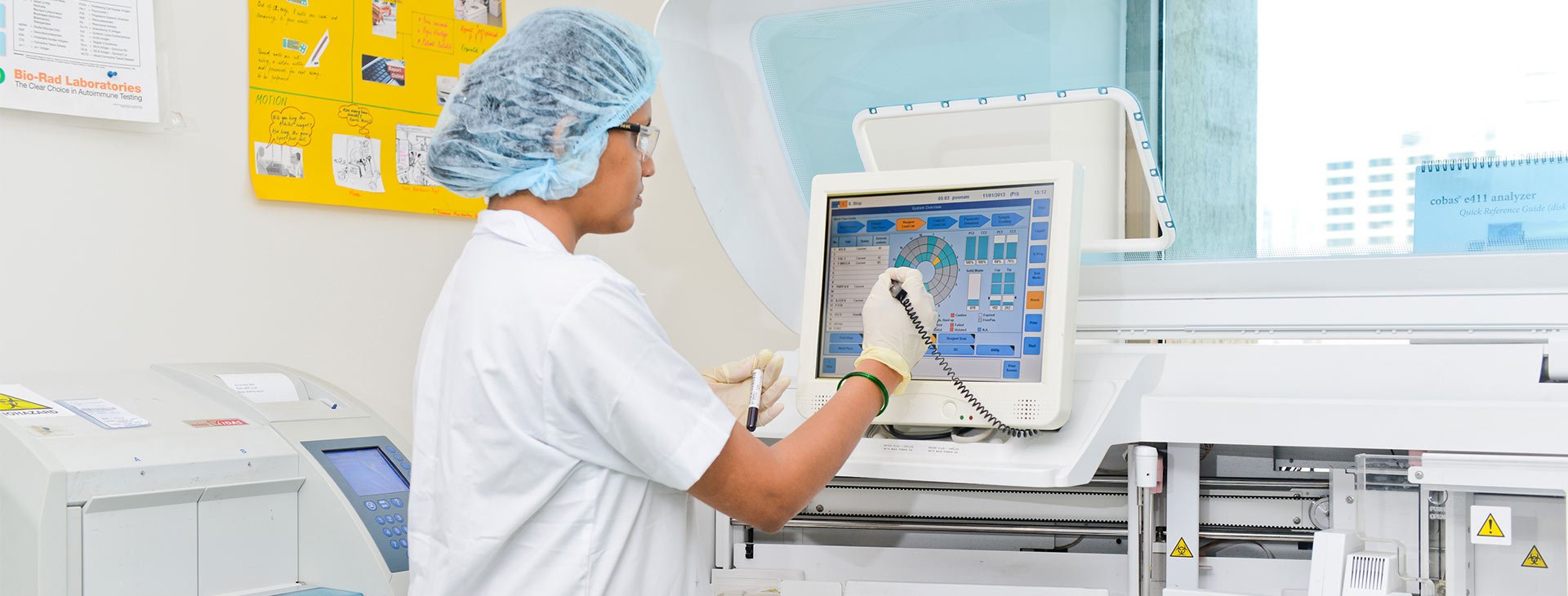
  • Total Lab Automation – Smart Core Lab Automation:
    • Standardizes laboratory processes, improves turnaround time (TAT), optimizes staff allocation, and enhances staff safety.
  • Serum Tube Consolidation:
    • Streamlines workflow, reduces errors and costs.
    • Promotes sustainability by reducing plastic waste, chemical disposal, and carbon footprint.
  • Toumai® Robotic Surgery System
    Minimally invasive procedures, reducing hospital stay and associated resource use.
  • Radixact® Radiation Therapy & EDGE™ Radiosurgery
    Asia’s first systems integrating precision cancer treatment with energy-efficient operation.
  • BrachyVision with CT/PET CT Integration
    Ensures precise radiation planning, minimizing unnecessary exposure and energy use.

Impact

  • Reduces hospital-wide Scope 2 emissions, contributing directly to the 25% carbon reduction target.
  • Enhances efficiency, patient care, and staff safety.
  • Demonstrates KDAH’s leadership in sustainable, high-tech healthcare.

Long-Term Commitment

  • The 2030 targets are stepping stones toward Net Zero by 2050, in alignment with international health sector climate commitments.
  • KDAH is committed to driving sustainable change in healthcare, supporting India’s national climate vision, and contributing to a healthier, more resilient Maharashtra.

Health System Resilience in the Face of Climate Change

Climate change poses significant challenges to healthcare systems, especially in urban environments like Mumbai, where rising temperatures, air pollution, and resource pressures impact both patients and operations. At KDAH, we are strengthening resilience by integrating sustainability measures into our built environment and daily practices. Key initiatives include replacing hot water boilers with heat pumps, upgrading AHUs with EC fans, using cool paints and wall cladding to reduce heat load, and installing heat-resistant piping. Alongside, we implement STP and ETP plants, RO systems, eco-friendly landscaping, and water harvesting to conserve resources. These measures not only improve patient and staff comfort but also reduce emissions, enhance energy efficiency, and ensure that KDAH remains adaptive and sustainable in the face of climate challenges.


Achievements

Best Practices for Climate Action and Sustainability at Kokilaben Dhirubhai Ambani Hospitals – Mumbai

Kokilaben Dhirubhai Ambani Hospital (KDAH) in Mumbai is a leader in integrating climate action and sustainability into its healthcare operations. With a commitment to minimizing environmental impact, KDAH has adopted comprehensive strategies across various domains to reduce its carbon footprint while maintaining high standards of patient care. This article explores the hospital's best practices in facility management, biomedical equipment, laundry services, and sustainable procurement, illustrating how these efforts contribute to a healthier environment and a more sustainable future.

Read more about our sustainability initiatives.


Annual Sustainability Report

At our hospital, we are commited to delivering compassionate, high-quality care to every patient while advancing a sustainable future.
Over the years, we have reduced our carbon footprint, invested in renewable enrgy and strengthened our abilityto adapt to climate-related challenges, ensuring that our care is both excellent and environmentally responsible.

Read more


Small steps, big impact - What you can do

You can do your part to help us build a more sustainable healthcare system

Arrive on time

Please arrive on time for your appointments. This helps us optimise our resources and prevents unused slots that could otherwise serve other patients in need.

Use public transportation

Whenever possible, please opt for public transportation, carpooling, and other environmentally friendly modes of travel to reach our facilities.

Use a reusable bag

When collecting medications or other items, please bring a reusable bag. This simple act significantly reduces single-use plastic waste.

Use the KDAH App

Please use the KDAHApp and opt for electronic communications and prescriptions where available. This reduces paper usage.
 
Proper Waste Disposal for a Clean Environment
 
Please help us n maintaining a safe and clean hospital environment. Dispose of waste only in the designated bins.