

Nephrology

Nephrology
Kidneys are bean-shaped organs about 10 to 12 cm in length, situated on either side of the backbone. Each kidney comprises approximately 1 million nephrons, which are the functional units primarily involved in the filtration of wastes, among many other functions.
CKD is an abnormality in kidney function lasting more than three months. This results in the accumulation of waste products and water in the body. It is often progressive, with gradual worsening of kidney function leading to end-stage kidney disease, necessitating dialysis or transplantation.
Some of the common causes are
Early stages may be without any symptoms. With an increase in the accumulated wastes and water, symptoms may develop such as:
If you have high blood pressure, uncontrolled diabetes, or a family history of kidney disease, you may be at risk for developing CKD. Periodic screening tests in such high-risk groups will help in the early detection of CKD. Appropriate medical advice in the early stages of CKD may prevent rapid deterioration of kidney function and delay dialysis.
Early stages of CKD are often silent, without any symptoms. The only way to know is through simple blood and urine tests that indicate the accumulation of waste in the blood or leakage of proteins/albumin in the urine. Some tests may need to be done at periodic intervals to track the level of your kidney function.
Most CKD patients require medicines to control blood pressure. In addition, some may need diuretics to reduce the swelling of the body. People with diabetes require controlling their blood sugar.
Some medications may have adverse effects on kidney function, while others may require dose adjustments. It is best to discuss all your medicines and their dosages with our kidney specialist.
Diet needs to be controlled. It should include less salt, more water, and be low in proteins. Alcohol in small amounts may be permissible, while smoking can worsen kidney damage, and steps to quit should be taken.
Some patients may continue with stable kidney function for years without requiring dialysis. Others may show relentless worsening and reach a stage necessitating dialysis.
There are two types of dialysis:
One of the treatment options available for patients with end-stage kidney disease is a kidney transplant. This involves surgically implanting a functional kidney that may come from a living or a deceased donor. Following transplantation, the patient needs to be on lifelong medications to improve its survival.
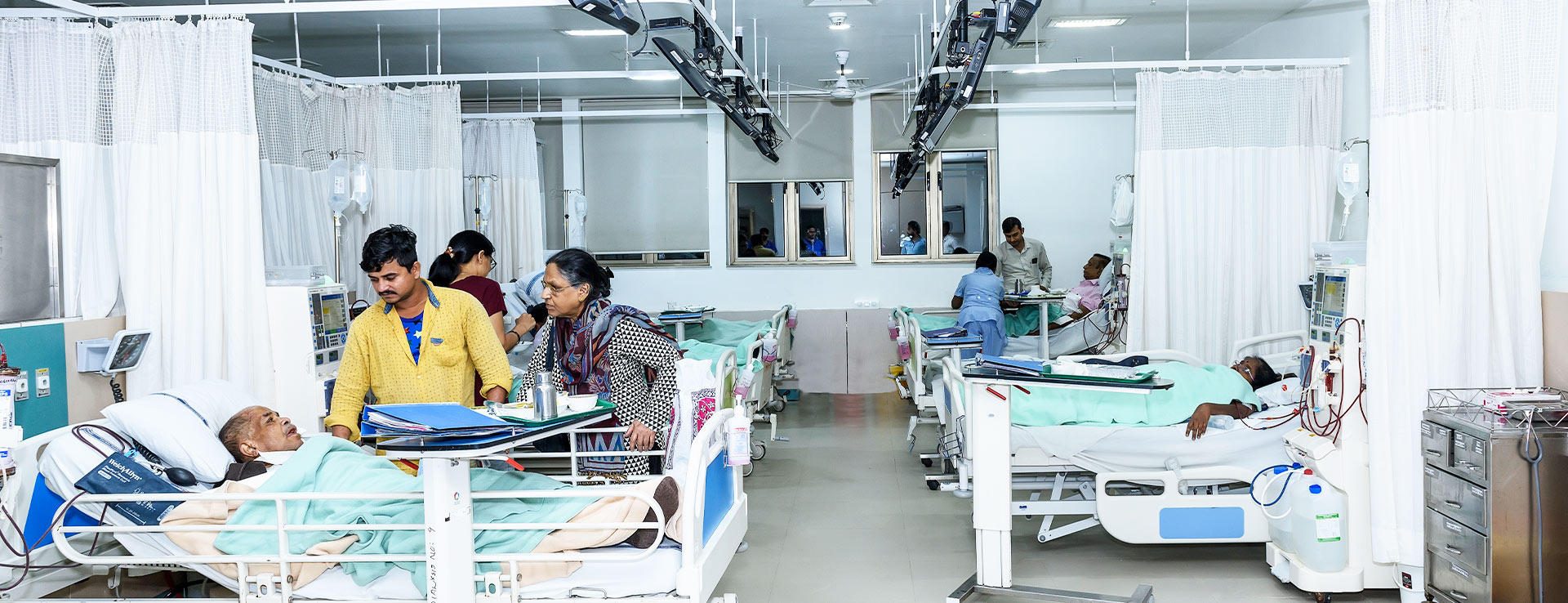
Kokilaben Hospital has one of the city’s largest dialysis units, with the latest technology, that provides all types of dialysis. Utmost care is given to quality with well-trained and compassionate staff. A state-of-the-art water purification plant, along with regular water tests, ensures a continuous supply of ultra-pure water for dialysis.
Kokilaben Hospital has a dedicated transplant ward with nurses trained to provide the best post-transplant care. The entire transplant team is well-trained with work experience in India as well as various other countries.
The centre boasts of specialists dedicated to each specialty as mentioned above, which include

Transplant/Kidney Transplant, Nephrology
Kidney Transplant and management of Renal conditions

Transplant/Kidney Transplant, Nephrology
Critical Care Nephrology, Hemodialysis and Transplantation

 View Doctors