
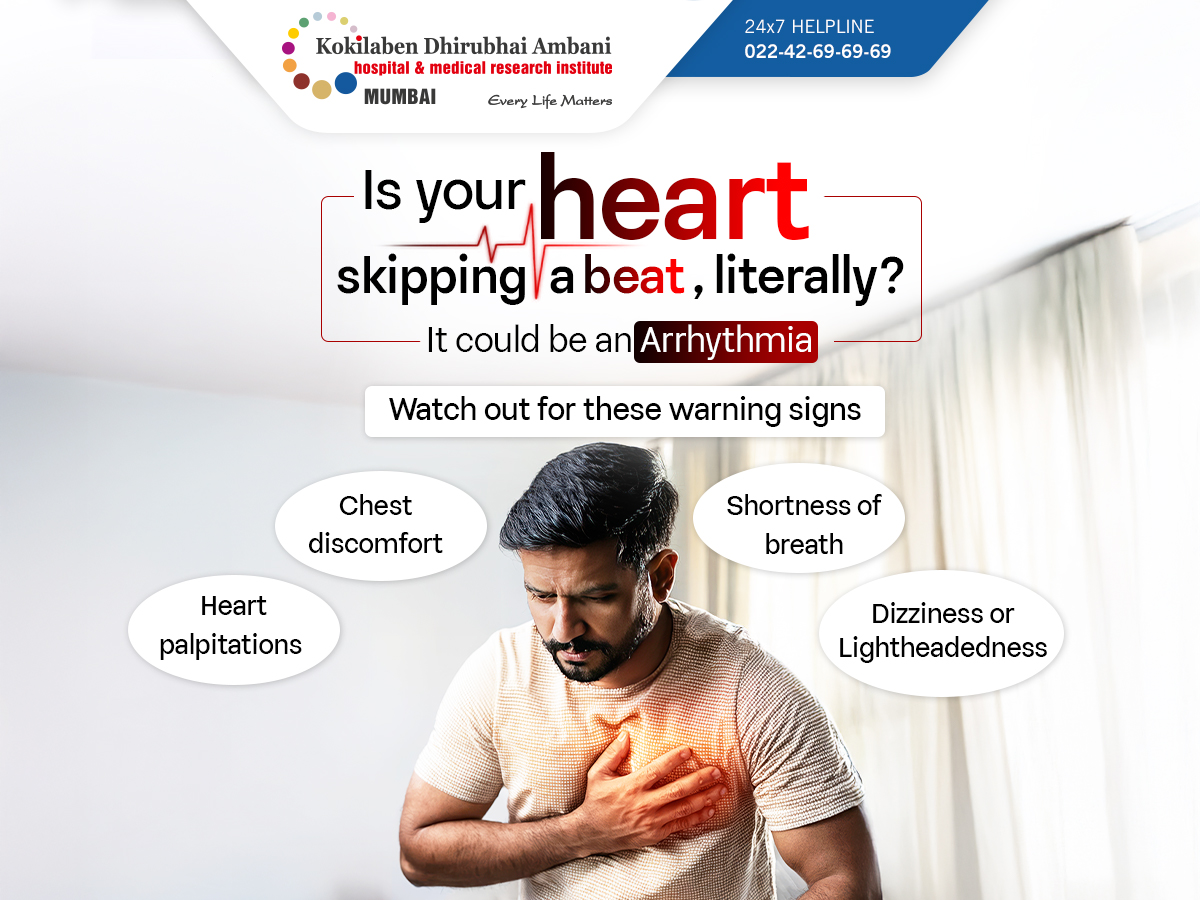
Arrhythmia means that your heart isn’t beating in a regular rhythm; it may be too fast, too slow, or irregular. While some arrhythmias are harmless and may not cause any symptoms, others can lead to serious health complications such as stroke, heart failure, or even sudden cardiac arrest in rare cases. Various factors can trigger arrhythmias, including high blood pressure, coronary artery disease, thyroid problems, excessive caffeine or alcohol intake, stress, certain medications, and electrolyte imbalances. Arrhythmias are manageable or treatable through medication, lifestyle changes, or medical procedures like pacemaker implantation or catheter ablation. In some cases, no treatment is required, only regular monitoring. Early diagnosis and timely care can greatly improve outcomes, so seeing a cardiologist when you notice any warning signs is the best way to keep your heart healthy and in rhythm.

 View Doctors