Our sports medicine programme is built on a foundation of objective assessment, evidence based treatment, and structured recovery, giving every athlete the tools to return stronger, faster, and with a significantly reduced risk of reinjury.
Extracorporeal Shockwave Therapy (ESWT) is a non invasive treatment that delivers targeted acoustic energy to injured or degenerated tissue. At the cellular level, shockwaves trigger mechanotransduction, stimulating a biological signalling cascade that promotes tissue regeneration, collagen production, and natural healing.
ESWT is clinically used to reduce chronic pain, accelerate recovery from soft tissue injuries, and treat conditions that have not responded adequately to conventional physiotherapy. It is a well established, evidence supported option across a broad range of orthopaedic and sports related presentations.
Class IV laser therapy is a high intensity photobiomodulation treatment that delivers focused light energy to a depth of 10–12 cm within the tissue. At the cellular level, it stimulates ATP production, increasing energy availability within cells and triggering a physiological response that includes improved blood flow, accelerated tissue metabolism, reduced nerve sensitisation, and the release of endogenous analgesics (beta endorphins).
At the tissue level, Class IV laser reduces inflammation, promotes new collagen synthesis, supports immune regulation, and facilitates nerve repair. Clinically, it has demonstrated efficacy in managing knee osteoarthritis, lateral epicondylitis (tennis elbow), cervical and lumbar pain, and patellofemoral conditions, making it a versatile and effective tool in both acute and chronic musculoskeletal management.
Neuromuscular Electrical Stimulation delivers controlled pulsed electrical currents through surface electrodes to produce involuntary muscle contractions. This direct peripheral activation recruits motor units that are often suppressed following injury, surgery, or prolonged immobilisation, a physiological phenomenon known as arthrogenic inhibition.
NMES has been shown to increase muscle cross sectional area, restore oxidative enzyme activity, and rebuild force generating capacity in muscles weakened through disuse or post surgical atrophy. It is particularly well evidenced in quadriceps rehabilitation following ACL reconstruction or significant knee trauma. Used alongside active rehabilitation, NMES accelerates strength recovery, counteracts inhibit
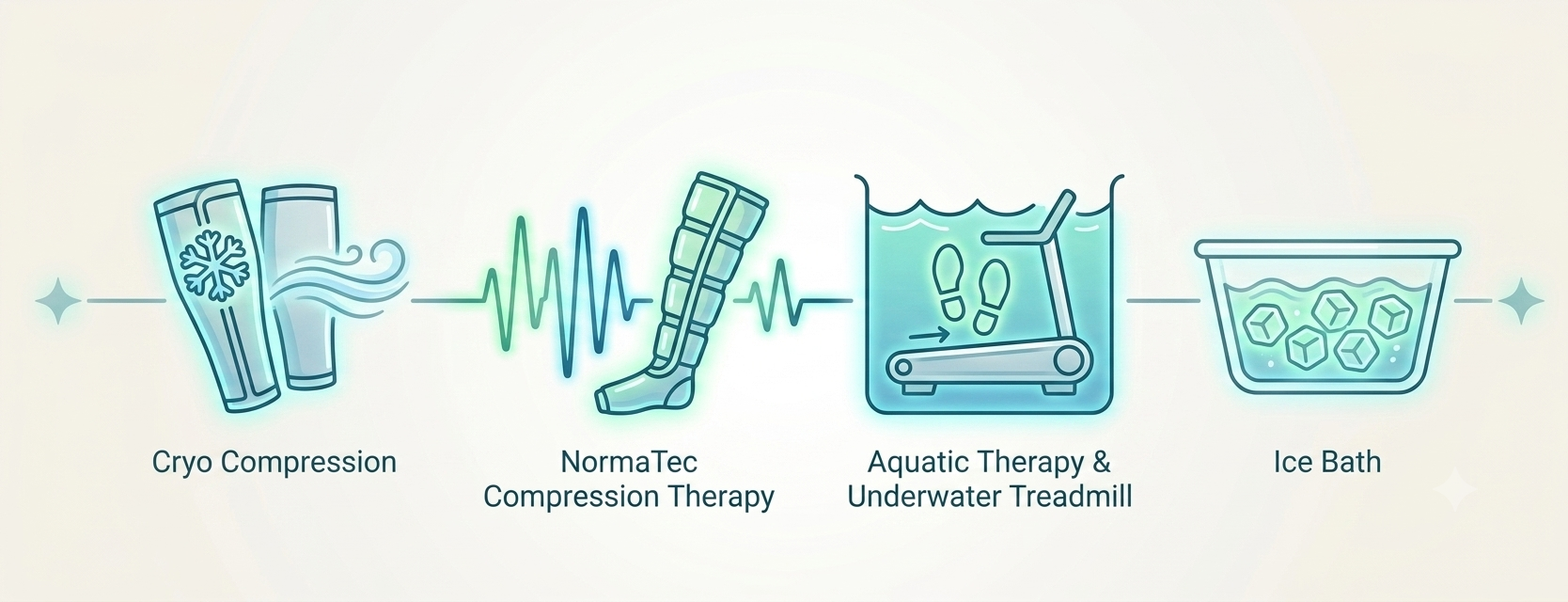
Cryo compression combines the therapeutic effects of cold and graduated compression in a single, simultaneous application. Cold reduces cellular metabolic activity, constricts local blood vessels, limits the accumulation of inflammatory fluid, and slows nerve conduction, reducing pain and protecting tissue from secondary damage. Compression accelerates the removal of excess fluid from injured tissue by directing it toward the body's lymphatic drainage pathways.
When applied together, cold and compression produce a faster, more effective reduction in swelling than either modality alone. Cryo compression is used in both acute injury management and post operative recovery to improve comfort and accelerate the early phases of healing.
NormaTec is a dynamic pneumatic compression system designed to accelerate muscle recovery and support circulatory health. Using patented sequential pulse technology, the device delivers rhythmic compression across the limbs in a pattern that replicates the body's natural muscle pump, promoting venous and lymphatic return, reducing post exercise inflammation, and clearing metabolic by products that accumulate during training or competition.
NormaTec is widely used in professional sport and clinical rehabilitation to reduce recovery time between training sessions, manage post operative swelling, and support the musculoskeletal system through the demands of an intensive rehabilitation programme.
Aquatic therapy leverages the physical properties of water, buoyancy, hydrostatic pressure, viscosity, and temperature, to create a uniquely controlled rehabilitation environment. Buoyancy substantially reduces the load placed on joints and soft tissue, allowing movement and progressive loading in patients who cannot yet tolerate full weight bearing on land. Hydrostatic pressure provides uniform compression around the immersed limb, assisting with fluid management and proprioceptive input.
Water temperature is selected based on clinical objectives: warm water promotes muscle relaxation, pain reduction, and enhanced circulation; cooler water is used for higher intensity conditioning. The underwater treadmill allows clinicians to prescribe gait retraining and aerobic conditioning at a precise depth and speed, adjusting the degree of unloading to match each stage of the rehabilitation programme. The result is an environment that supports earlier, safer movement while protecting healing tissue.
Cold water immersion is a structured recovery modality used to manage the physiological effects of intense exercise. Immersion in cold water causes peripheral vasoconstriction, which reduces blood flow to fatigued muscle tissue, limits exercise induced inflammation, and decreases the accumulation of metabolic by products that contribute to delayed onset muscle soreness.
Clinically, ice baths are used to reduce post exercise muscle stiffness, lower perceived fatigue, and attenuate exercise induced muscle damage (EIMD), thereby supporting faster physical recovery between training sessions or competitive fixtures. They are most effective when applied at a controlled temperature and duration, guided by the athlete's training load and individual response.
For a comprehensive assessment or to begin a structured rehabilitation programme, visit our sports medicine department.

 View Doctors