
2d_echo_banner

2D Echo (Echocardiography) in Mumbai

Your heart works tirelessly for your family, career, and dreams every single day. At Kokilaben Dhirubhai Ambani Hospital, the best cardiac hospital in Mumbai, we help you protect it with precise 2D echo test services.

This essential 2D echo cardiac test supports early detection for men, women, and families, especially those with risk factors like hypertension, diabetes, or family heart history. Completely safe with no radiation, our 2D echo scan gives you peace of mind through proactive care.

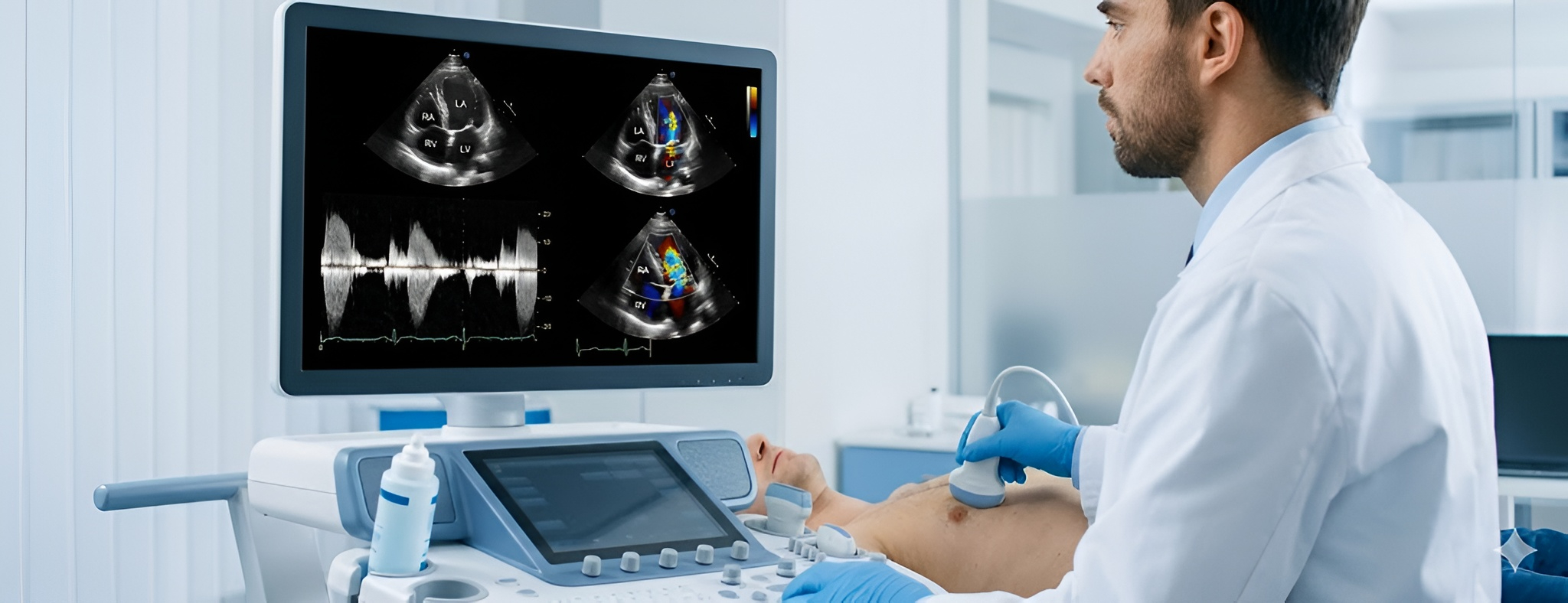
A 2D echo test, short for 2D echocardiography, creates live moving pictures of your heart using harmless sound waves. A small probe (transducer) placed on your chest sends sound waves that bounce off your heart structures, showing chambers, valves, and blood flow on a screen in real time. Unlike X-rays or CT scans, this 2D echo scan involves zero radiation, making it safe for routine screening, pregnancy, or frequent monitoring.

The 2D echo purpose includes measuring heart size, ejection fraction (pumping strength), valve function, and wall motion abnormalities. At Kokilaben, experienced cardiologists perform every 2D echocardiogram and provide clear explanations of your results. You'll walk away understanding exactly how your heart is performing.

The 2D echo's purpose centres on comprehensive heart evaluation to catch problems early before they become serious. Doctors recommend a 2D echo test in Mumbai for symptoms such as chest pain, breathlessness, an irregular heartbeat, unusual fatigue, or leg swelling. It's also standard for routine health checks, monitoring after a heart attack, or planning treatments like chemotherapy that affect the heart.

The benefits of a 2D echo test include a non-invasive diagnosis without hospitalisation or recovery time. For Mumbai residents searching for "2D echo test near me," early screening proves essential for high-risk groups over 40, diabetics, or those with hypertension. Cardiac guidelines show 2D echo screening prevents 70% of major heart events through timely intervention.

A 2D echo scan provides detailed views of your heart's inner workings, helping doctors spot issues invisible to other tests. This ultrasound produces clear images of structure, motion, and blood flow patterns in real time. Here's exactly what our 2D echo cardiac test reveals at Kokilaben:

  • Heart failure is characterised by reduced pumping power, with an ejection fraction below 50%, meaning your heart struggles to pump blood effectively. The 2D echo scan precisely measures chamber size and contraction strength, guiding treatments such as medications or lifestyle changes. Early detection prevents hospitalisation and improves long-term outcomes.
  • Valve problems, such as stenosis (narrowing) or regurgitation (leakage), appear as abnormal flow patterns through affected valves. Doppler ultrasound in our 2D echo test quantifies severity, showing exactly how much blood leaks backwards or struggles to pass forward. This guides decisions about whether to use medications or undergo surgical repair.
  • Pericardial effusion refers to excess fluid accumulation around the heart, which can compress the chambers and impair function. The 2D echo screening clearly shows fluid location, volume, and pressure effects, helping distinguish harmless from dangerous cases. Emergency drainage becomes possible when needed.
  • Congenital defects such as holes in the heart (ASD/VSD) show abnormal blood flow between chambers via color Doppler. Our 2D echo cardiac test maps defect size and impact on circulation, essential for planning pediatric or adult repairs. Many issues stay silent until adulthood.
  • Cardiomyopathy displays thickened or enlarged heart muscle limiting efficient pumping. The 2D echo scan differentiates types (dilated, hypertrophic, restrictive) and measures wall thickness accurately. This directs targeted therapies specific to each condition.
  • Blood clots in heart chambers or after surgery appear as dark masses blocking flow, captured clearly during real-time imaging. 2D echo screening monitors treatment effectiveness and clot resolution over time. Critical for stroke prevention planning.

At our critical care centre, advanced 2D echo cardiac test detects silent issues early, guiding precise treatment when combined with ECG tests.

2D Echo Test Procedure The 2D echo test is simple, painless, and usually completed within 20–30 minutes in a quiet, dimly lit room for optimal image quality.

  • Positioning: You will be asked to lie on an examination table, usually on your left side, with a pillow for comfort. This position helps bring the heart closer to the chest wall, resulting in clearer images. Wearing a comfortable two-piece outfit makes it easier to access the chest.
  • Gel Application and Probe Placement: The technician will apply a cool, water-based gel to your chest (and sometimes upper abdomen or neck). This gel improves contact between the skin and the transducer (probe) and helps transmit sound waves. The probe is then moved gently over the chest to capture images. You may feel mild pressure but no pain.
  • Image Acquisition Images are recorded from several standard views, including:
    • Parasternal (side of the chest)
    • Apical (near the tip of the heart)
    • Subcostal (just below the ribcage)

    These multiple angles ensure a comprehensive assessment of all four chambers, valves, and major blood vessels. You will be asked to breathe normally and occasionally hold your breath for a few seconds to improve image clarity.

  • Doppler Assessment: Doppler and colour Doppler imaging are used to evaluate the direction and speed of blood flow within the heart and through its valves. Normal flow patterns differ from turbulent flow seen with valve narrowing or leakage. These measurements help determine pressure gradients and the severity of valve disease.
  • Completion and Reports: After the scan, the gel is wiped off and you can immediately resume normal activities. There are no restrictions on driving, eating, or working. At our Andheri (West) centre, reports are typically available within about 1 hour, allowing for prompt review and discussion with a cardiologist.

Preparation for 2D echo test Preparation for a standard 2D echo test is minimal and designed to fit easily into busy Mumbai schedules.

  • Clothing: Wear loose, comfortable, two-piece clothing. A top that can be easily removed or opened in the front is ideal. This avoids the need for hospital gowns and ensures smooth access to the chest area.
  • No fasting required: No fasting is required for a routine 2D echo. You may eat and drink normally before the test. Only certain specialised tests (such as stress echo) may require light meals or temporary restrictions.
  • Caffeine (for Stress Echo Only): If you are scheduled for a stress echocardiogram, you may be advised to avoid caffeine (tea, coffee, cola, energy drinks, chocolate) for 2–3 hours before the test, as it can affect heart rate.
  • Medical Devices & Conditions: Inform your doctor or technician if you have a pacemaker or implantable cardioverter-defibrillator, or if you have chronic lung disease, as these can sometimes affect image quality. Share details of your medications and any recent symptoms so the exam can be tailored to your needs.
  • Accessories & Skin Products: Avoid wearing jewellery on the chest or neck that could interfere with probe placement. Clean, dry skin without lotions or oils ensures better contact and clearer images.

Our team ensures a calm, relaxed experience for 2D echo tests for women and first-time patients, explaining each step to make the experience as comfortable as possible.

Benefits of a 2D Echo include it being a gold-standard, first-line tool for evaluating heart structure and function. Its key benefits include:

  • Completely Radiation Free- Because it uses ultrasound sound waves, a 2D echo is safe for:
    • Pregnant women
    • Children
    • Elderly patients
    • Individuals requiring frequent follow-up scans
  • Real-time imaging: Unlike static images, 2D echo shows the heart beating in real time, valves opening and closing, chambers contracting, and blood flowing. This real-time view allows cardiologists to detect subtle abnormalities quickly and accurately.
  • Comprehensive Information in a Single Test: In one 20–30 minute session, a 2D echo can evaluate:
    • Chamber sizes and wall thickness
    • Pumping function (ejection fraction)
    • Valve anatomy and function
    • Blood flow patterns and pressures

    This often eliminates the need for multiple separate tests.

  • Cost-effective: A 2D echo is generally more affordable than CT or MRI scans while providing superior functional information about the heart. Early detection through echo can prevent costly emergencies and hospitalisations, making it a smart preventive investment.
  • Convenient, Outpatient Procedure: The test is done on an outpatient basis with no need for admission. Many patients can:
    • Walk in for the test
    • Undergo the scan before lunch
    • Discuss the results the same day with a cardiologist

    At Kokilaben, timely 2D echo screening has helped many patients make preventive lifestyle and treatment changes that significantly improved their long-term heart health.

Do not wait for a major event to think about your heart. You should discuss a 2D echo with your doctor or consider screening if you experience:

  • Unexplained shortness of breath during routine activities (walking, climbing stairs, light work)
  • Chest pain, heaviness, tightness, or pressure, especially if it spreads to the arms, neck, jaw, or back
  • Irregular heartbeat, palpitations, or a sensation of pounding/skipping heartbeats
  • Long-standing high blood pressure (>140/90 mmHg)
  • Persistent fatigue, dizziness, or fainting spells
  • Other situations where a 2D echo is often advised:

  • After a COVID-19 infection, if you have continuing fatigue, breathlessness, or chest discomfort
  • If you have a strong family history of heart disease or sudden cardiac death
  • For people above 30–40 years with multiple risk factors (diabetes, smoking, high cholesterol, obesity)

In these cases, a 2D echo provides a baseline evaluation and can pick up early changes before symptoms worsen.

If you are searching for a 2D echo test in Mumbai, Kokilaben Dhirubhai Ambani Hospital stands out as the best cardiac hospital in Mumbai, with unmatched expertise and technology.

  • Experienced Cardiologists: Internationally trained cardiologists interpret every 2D echo with high precision. When needed, they work closely with cardiac surgeons and other specialists to plan further treatment.
  • Advanced Imaging Technology: We use leading ultrasound systems (such as high-end Philips/GE platforms) with capabilities that include:
    • High-definition 2D imaging
    • 3D echocardiography (where indicated)
    • Colour Doppler and spectral Doppler
    • Strain imaging and tissue Doppler for detailed heart muscle analysis
  • 24/7 availability: Emergency 2D echo scans can be arranged around the clock for patients with chest pain, breathlessness, or other urgent symptoms. Fast reporting supports timely, lifesaving decisions.
  • Comprehensive Cardiac Packages: Holistic heart check-up packages include 2D echo, ECG, stress test, and relevant blood tests at bundled, cost-effective rates, enabling complete evaluation in a single visit.
  • NABH-accredited Facility: As an NABH-accredited, 750+ bed tertiary-care hospital, Kokilaben follows rigorous protocols for quality, infection control, and patient safety.

Your heart is central to everything you do; protecting it is one of the most important health decisions you can make. Kokilaben Dhirubhai Ambani Hospital’s precise 2D echo test in Mumbai helps you understand how well your heart is functioning and detects silent problems before they become serious.

From clarifying the purpose of a 2D echo to identifying life-threatening but symptomless conditions, our comprehensive 2D echo services offer the clarity and confidence your family deserves. The benefits of a 2D echo extend beyond the test itself; they empower you to make informed, proactive choices for lifelong heart health.

Book 2D Echo at our cardiac department Mumbai | Call: +91-22-4269 6969
  • 1. Is a 2D Echo test painful? No pain at all! The 2D echo test uses only sound waves and gel on your chest. The probe pressure feels like a light touch, completely comfortable even for anxious patients or 2D echo tests for women.
  • 2. How long does a 2D Echo test take? Just 20-30 minutes total time. Prep takes 5 minutes, scanning takes 15-20 minutes, and cleanup is instant. Reports are ready in 30-60 minutes at Kokilaben for fast 2D echo screening decisions.
  • 3. Is fasting required before a 2D Echo? No fasting needed for the standard 2D echo cardiac test! Eat normally beforehand. Stress echo variants skip caffeine/heavy meals only 2-3 hours prior. Our team confirms your specific requirements.
  • 4. Can a 2D Echo detect heart valve problems? Yes! 2D echo scan excels at valve assessment, precisely showing stenosis, regurgitation, prolapse, or infection. Colour Doppler measures leak severity and flow patterns accurately every time.
  • 5. Can children undergo a 2D Echo? Absolutely safe for kids! A pediatric 2D echo test easily detects congenital defects such as holes or valve issues. Child-friendly technicians use simple explanations; no sedation is required.