

Archive for 2023

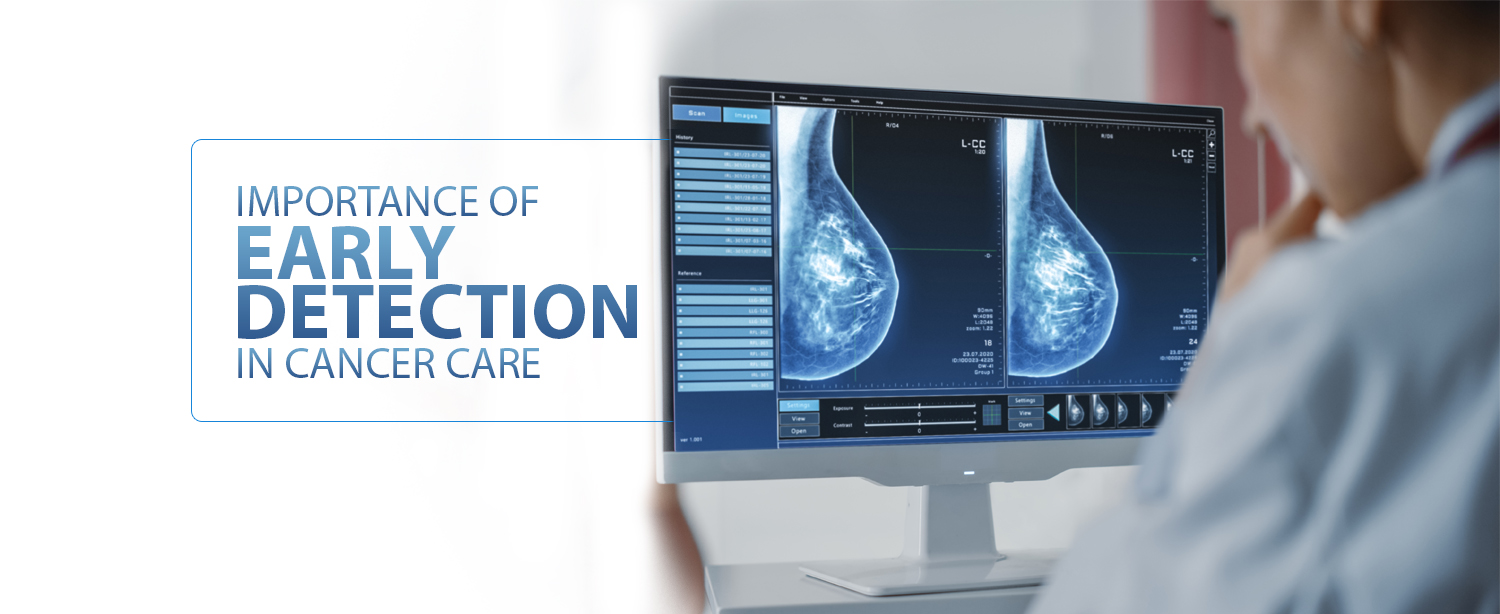
Importance of Early Detection in Cancer Care

Friday, February 3rd, 2023

Cancer is the leading cause of death worldwide, and early detection plays a crucial role in increasing the chances of successful treatment and survival. When cancer is detected in its early stages, it is often more treatable and less likely to have spread to other parts of the body. Early stage patients are known to require only a single modality treatment, either surgery or radiation therapy but once it comes to stage III or IV multimodal treatment is always required, either two or three forms of treatment. In fact, statistics suggest that more than 50% cancer deaths in India are due to late diagnosis.

Several screening tests can help with early detection of cancer. In addition to screening tests we recommend regular health check-ups, reporting unusual symptoms and conducting self-examinations to increase the chances of early detection. Additionally by adopting a healthy diet, exercising regularly, promptly treating infections, abstaining from tobacco and alcohol and minimizing exposure to toxins you can lower your risk of developing cancer and improve your general health.

Cancer screening

It is important to be proactive in maintaining one’s health and to seek medical attention if any symptoms or concerns arise. Here is a list of various cancer screening tests to be performed as per your doctor’s advice:

  • Mammogram
    A low-dose X-ray of the breast used to detect changes or abnormalities that may indicate breast cancer.
  • Pap smear
    A test to detect abnormal cells on the cervix that could indicate cervical cancer.
  • Colonoscopy
    A test that uses a flexible tube with a camera to examine the inside of the colon and rectum for signs of cancer or precancerous polyps.
  • Prostate-specific antigen (PSA) test
    A blood test to measure the level of PSA, a protein produced by the prostate gland that can indicate prostate cancer.
  • Liver function tests
    Blood tests that measure levels of certain enzymes and proteins produced by the liver to detect liver cancer or other liver diseases.
  • Endoscopy
    A test that uses a flexible tube with a camera to examine the inside of the esophagus, stomach, and small intestine for signs of cancer or precancerous changes.
  • Chest X-ray
    A low-dose X-ray of the chest to detect changes or abnormalities that may indicate lung cancer.

It is important to note that these tests may vary based on individual risk factors, such as age, family history, and lifestyle habits. It is advisable to consult a healthcare provider for personalized recommendations and to discuss the benefits and risks of each test. Further, an early detection does not guarantee a cure, but it can greatly improve the chances of a successful outcome and increase the chances of survival. Early detection can also reduce the need for more extensive and invasive treatments, such as surgery, chemotherapy, and radiation therapy.

Cancer treatment at Kokilaben Dhirubhai Ambani Hospital

Our Centre for Cancer brings together the expertise within the hospital to provide comprehensive and coordinated care for patients with all types of cancers, including solid tumours and blood related diseases. We offer a broad scope of cancer services, ranging from public awareness programs, screening and diagnosis, to treatment, pain management and palliative care. The range of care provided is organised into a number of patient-centred clinics, which includes Radiation therapy, Chemotherapy, Surgery, Bone Marrow Transplant, and Pain and Palliative Care. Our centre is supported by a Day Care Chemotherapy Unit that allows patients to go home the same day while under treatment. Besides, we offer cutting edge services that include:

  • Minimal Access Surgery and Robotic Surgery for most cancers
  • Trilogy for radiotherapy, EdgeTM and Novalis Tx for radiosurgery
  • Latest PET Scan for precise diagnosis

We also offer Precision Oncology, a landmark in cancer care which offers personalized, precise and individualized cancer treatment for each patient.

The Comprehensive Breast Care Unit at our Centre is a dedicated service that has been created to specifically diagnose and treat various diseases affecting the breast including breast cancer and is known to provide evidence based medicine using a multidisciplinary approach. Our highly experienced team has successfully performed over 19,500 complex cancer surgeries with excellent outcomes.

When it comes to your body, remember you are in charge. If you do spot something unusual, don’t put it off. Speak to your doctor, or reach out to our cancer specialists for further investigation. In most cases it won’t be cancer – but if it is, finding it early can make a real difference. For more information regarding the advanced cancer treatments offered at Kokilaben Dhirubhai Ambani Hospital, Mumbai, please visit:

https://www.kokilabenhospital.com/departments/centresofexcellence/centrefor_cancer.html

Cervical Cancer: Important points you must know

Friday, January 20th, 2023

India accounts for the highest number of cervical cancer cases in Asia, according to a latest Lancet study on the disease. There were around 6,04,127 new cases of cervical cancer in 2020 and India reported around 21% of the total cervical cases, as per the data. Cervical cancer is a type of cancer that occurs in the lower part of the uterus called the cervix – a part of the uterus that connects to the vagina. This disease is caused by various strains of human papillomaviruses (HPV), a group of viruses that cause sexually transmitted infections. When the human body is exposed to HPV, the body’s immune system typically prevents the infection from viruses but sometimes people with weaker immune systems cannot fight against the infection caused by HPV, which results in the virus surviving in their body for years, contributing to the process of cervical cells becoming cancerous cells.

Symptoms of Cervical Cancer

Sadly, cervical cancer doesn’t initially show any symptoms that are obvious. Only when the cancer has progressed do symptoms start showing up. It is advised to undergo routine screening tests that are known to identify the likelihood of having cervical cancer because in its early stages, the disease may not exhibit any symptoms at all.

The most common symptoms of cervical cancer in women include:

  • Vaginal bleeding between periods or following sexual intercourse
  • Vaginal discharge that is heavy, foul-smelling, or contains blood
  • Pelvic pain or pain during intercourse
  • Fatigue or weakness
  • Loss of appetite or weight loss
  • A change in bowel or bladder habits
  • A lump or mass in the pelvic area
  • Lower back pain

It’s important to note that these symptoms can also be caused by other conditions, and not all women with cervical cancer will have symptoms. That is why it is important to have regular cervical cancer screenings.

Cervical Cancer: Do’s & Don’t

Here are some essential healthcare precautions to note to reduce your risk of cervical cancer:

Do’s:

  • Get regular Pap tests and cervical cancer screenings as recommended by your healthcare provider
  • Practice safe sex to reduce the risk of HPV infection
  • Maintain a healthy diet and exercise regularly to support overall health
  • Understand the symptoms of cervical cancer and seek medical attention for any unusual changes
  • Get the HPV vaccine

Don’ts:

  • Don’t ignore or avoid recommended cervical cancer screenings
  • Don’t smoke or use tobacco products
  • Don’t rely solely on alternative medicine to treat cervical cancer
  • Don’t ignore symptoms or delay seeking medical attention

Cause of Cervical Cancer

Here are some medically researched risk factors that increase your risk of getting cervical cancer:

  • Poor vaginal hygiene
  • Smoking
  • Increased number of childbirths
  • HIV infection
  • Prolonged use of oral contraceptive pills
  • Sexual intercourse with multiple partners

Lead a healthy lifestyle, take care of your reproductive health and see a gynaecologist for any unusual changes.

Cervical Cancer treatment at Kokilaben Dhirubhai Ambani Hospital

Cervical cancer is a serious disease that affects many women worldwide. Early detection and treatment are crucial in increasing the chances of survival. The Centre for Cancer at Kokilaben Dhirubhai Ambani Hospital, Mumbai is staffed with experienced and compassionate oncologists and onco-surgeons who specialize in the diagnosis and treatment of cervical cancer. We use state-of-the-art technology for prevention, screening and early detection, advanced imaging (including PET CT) to surgery, radiation and chemotherapy all under one roof to provide our patients with the best possible care. We are committed to fighting cervical cancer and saving lives.

Warning signs of thyroid disease you must know

Monday, January 9th, 2023

The thyroid is a tiny, butterfly-shaped gland located in the neck. It significantly affects general health and wellbeing and is essential for your body’s metabolism. Unfortunately, millions of people throughout the world experience thyroid diseases such as hypothyroidism and hyperthyroidism. Statistics suggest that thyroid disorders are one of the most common endocrine disorders and affect nearly 4.2 crore Indians.

How does the thyroid gland function?

The thyroid gland makes hormones that control various aspects of the body’s metabolism, such as heart rate, body temperature, and the rate at which energy is used by the body. Thyroxine (T4) and triiodothyronine (T3) are released into the bloodstream to do this. These hormones are essential for preserving the body’s homeostasis, or overall equilibrium. The body’s metabolism runs more efficiently when the thyroid is in good health. However, thyroid abnormalities can result in a number of different health problems.

Common thyroid disorders

There are several thyroid disorders that can affect the body’s metabolism and overall health. The most common include:

  • Hypothyroidism
    This occurs when the thyroid gland doesn’t make enough thyroid hormone. 
  • Hyperthyroidism
    This occurs when the thyroid gland makes high levels of thyroid hormone.
  • Goiter
    This is a condition that causes the thyroid gland to become enlarged, resulting in a visible swelling in the neck. This may occur due to a variety of factors, including an iodine deficiency, autoimmune disorders, and certain medications.
  • Thyroid nodules
    These are small lumps that can form in the thyroid gland. Most thyroid nodules are benign (non-cancerous), but some rare ones may be cancerous.
  • Thyroid cancer
    This is a cancer that affects the thyroid gland.

Warning signs of thyroid disease

Depending on whether the body is producing too much or too little thyroid hormone, different indicators of thyroid disorders might be seen in different people. Thyroid issues are more common in women than in men. Around 1 in 8 women may experience thyroid issues at least once in their lives. Some women are more prone to thyroid issues than others, depending on factors including age, body type, and the level of thyroid hormone in the body. Here are some of the signs and symptoms that could indicate a thyroid abnormality:

  • Fatigue and weakness
  • Sensitivity to heat and cold
  • Significant weight gain or weight loss
  • Change in the appearance
  • Feeling miserable
  • Headaches
  • Mood swings
  • Digestive issues
  • Dry skin
  • Menstrual irregularities
  • Fertility issues
  • Thinning hair

While these symptoms may not necessarily indicate thyroid problems, you must still speak to your doctor for further testing and diagnosis. Thyroid disorders can often be diagnosed through a blood test that measures the levels of thyroid hormones and thyroid-stimulating hormone (TSH) in the body. This helps take the required medical action and reduces your risk of suffering from thyroid complications.

Facts about your thyroid

Here are some essential things to know about your thyroid gland:

  • A TSH test is the most accurate way to diagnose a thyroid imbalance.
  • Stress can worsen thyroid disorders.
  • A thyroid imbalance must be addressed before and during pregnancy.
  • Thyroid disorders can be emotional.
  • Thyroid disorders usually require lifelong treatment.
  • Women are more prone than men to have thyroid issues.
  • Most thyroid disorders cannot be prevented.

Treatment of thyroid disorders

Treatment for thyroid disorders typically involves medication to correct hormone imbalances. Surgery might be required in some complex cases to remove all or a part of the thyroid gland. Thyroid imbalance is serious and can have a significant impact on your overall health and well-being. You must take charge of your thyroid health without any delay and seek specialist care. Consult doctors at our

Department of Endocrinology & Diabetes for a detailed evaluation, management and care of your thyroid. Early diagnosis and treatment can help to prevent long-term health complications.