

Archive for 2023

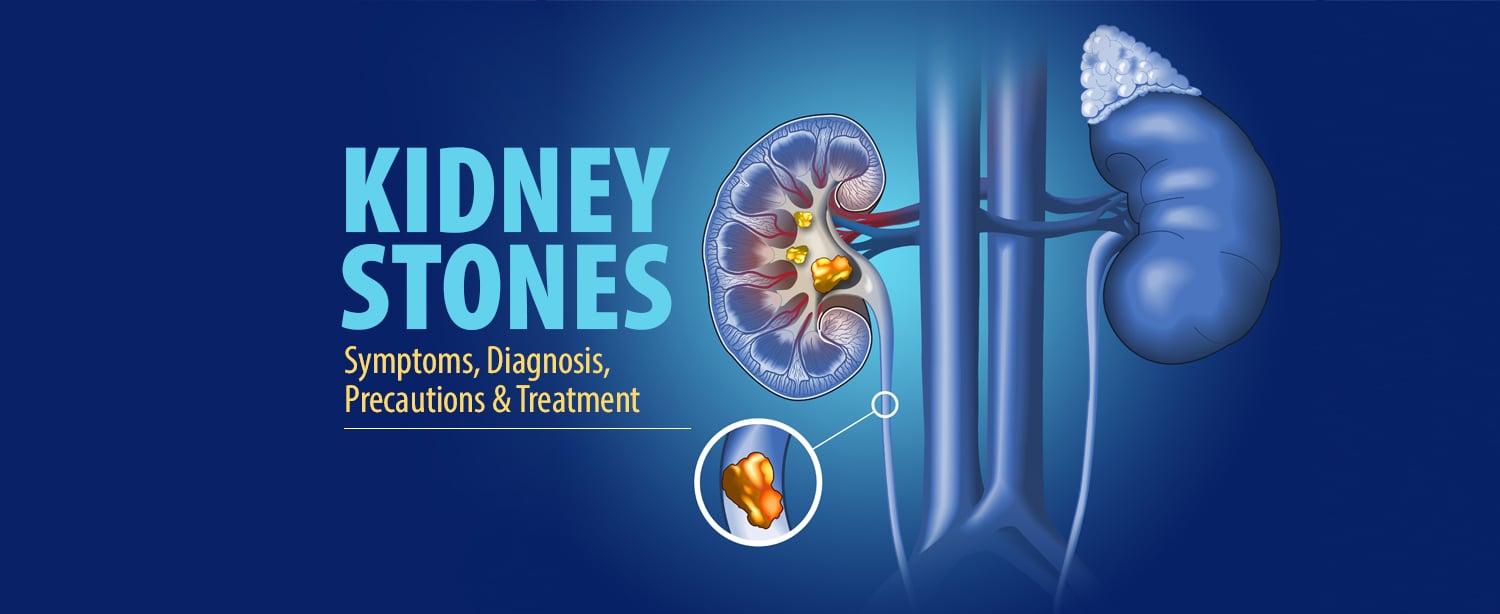
Kidney Stones: Symptoms, Diagnosis, Precautions & Treatment

Thursday, March 9th, 2023

Statistics suggest that over 12% of the total population in India suffers from kidney stones. A kidney stone is a solid, pebble-like piece of material that can form in one or both of your kidneys when high levels of certain minerals accumulate in your urine. They are one of the most painful and common urinary tract problems. These stones are formed by the buildup of minerals and salts in the kidneys, which can cause intense pain when they pass through the ureter and bladder.

Causes of Kidney Stones

While there is no exact cause behind kidney stones, in majority of the cases, these are formed due to the high concentration of minerals in the urine. Here are some of the most common causes behind kidney stones:

  • Dehydration
    When your body doesn’t get enough water, it can lead to the formation of kidney stones.
  • Diet
    Eating a diet high in salt, sugar, and animal protein can increase your risk of developing kidney stones.
  • Genetics
    If someone in your family has had kidney stones, you are more likely to develop them too.
  • Medical Conditions
    Certain medical conditions such as gout, hyperparathyroidism, and Crohn’s disease can increase your risk of developing kidney stones.

Symptoms of Kidney Stones

The symptoms of kidney stones can vary depending on the size and location of the stone. Some of the most common symptoms include:

  • Severe pain in the back, side, or groin.
  • Painful urination.
  • Difficulty passing urine
  • A feeling of intense need to urinate.
  • Urine that is dark or red due to blood.
  • Nausea and vomiting.

If you experience any of these symptoms, it is important to see a doctor as soon as possible.

Diagnosis of Kidney Stones

If your doctor suspects that you have kidney stones, they will likely order a series of tests to confirm the diagnosis. These may include:

  • Urine test
    This can help identify any infections or abnormalities in the urine.
  • Blood test
    This can help determine if there is an infection or other medical condition present.
  • X-ray
    This can help identify the size and location of the kidney stone.
  • CT scan
    This is a more detailed imaging test that can help identify the size and location of the kidney stone more accurately.

Precautions for Kidney Stones

If you have a history of kidney stones or are at risk for developing them, there are some precautions you can take to reduce your risk. With the right foods, plenty of water, and proper medication, you can lower your chances of getting them. These include:

  • Drinking plenty of water
    This can help flush out minerals and salts that can lead to the formation of kidney stones.
  • Eating a healthy diet
    This means limiting your intake of salt, sugar, and animal protein, and increasing your intake of fruits, vegetables, and whole grains.
  • Avoiding certain medications
    Some medications such as diuretics and antacids can increase your risk of developing kidney stones.
  • Managing medical conditions
    If you have a medical condition that increases your risk of developing kidney stones, such as gout or hyperparathyroidism, it is important to manage it properly.

Treatment for Kidney Stones

If you are diagnosed with kidney stones, there are several treatment options available which include pain medication, Extracorporeal Shock Wave Lithotripsy (ESWL) or ureteroscopy – a minimally invasive procedure. Consult a urologist in Mumbai to understand your treatment options better.

Kidney Stone treatment at Kokilaben Dhirubhai Ambani Hospital, Mumbai

Troubled with recurrent kidney stones? Our Department of Urology is equipped with the latest ESWL (Lithotripsy) machine that is used to treat kidney stones. This is a non-invasive procedure that uses shock waves to break up the kidney stone into smaller pieces that can be passed more easily. Our state-of-the-art urology unit also offers minimally invasive, scarless options for safe removal of kidney stones. Consult our team for the right advice to help manage your kidney stones.

5 nutrients every woman should consume

Wednesday, March 8th, 2023

Are you eating healthy? Malnutrition is a major issue among women in India, and around 40 per cent of Indian women are underweight when they begin their pregnancy. Pregnant and lactating women require additional nutrients to support the growth and development of their babies, but many women in India do not receive adequate nutrition during this time. Cultural norms around food, limited resources, orthodox eating practices and skipping meals to maintain a perfect figure are some reasons that contribute to poor nutrition among women in India.

50% Indian women are anaemic, where your body does not get enough oxygen-rich blood. This makes one feel tired and weak all the time. To address various deficiency issues, the Indian government has implemented programs aimed at improving women’s nutrition. Some key strategies for improving women’s nutrition in India include increasing access to nutritious foods, empowering women to make decisions about food and finances, and educating women and their families about the importance of a healthy diet.

Top five nutrients every woman should consume

With the fast-paced lifestyle and hectic schedules, women often tend to ignore their dietary needs, leading to deficiencies of vital nutrients in their bodies. Let us understand the essential nutrients that every woman should consume to maintain good health:

  • Calcium
    Calcium is a vital mineral that is essential for bone health. Women are at a higher risk of developing osteoporosis than men, making it crucial for them to maintain adequate calcium intake. Foods rich in calcium include dairy products such as milk, cheese, and yogurt, leafy green vegetables such as spinach and kale, and fortified foods such as cereals and orange juice. You must include this nutrient in your daily diet.
  • Iron
    Iron is essential for the production of hemoglobin, a protein that carries oxygen throughout the body. Women are more likely to develop iron deficiency due to blood loss during menstruation. Foods rich in iron include red meat, poultry, seafood, beans, lentils, spinach, and fortified cereals. The consumption of iron is known to prevent anemia, fatigue, and weakness.
  • Folate
    Folate, also known as vitamin B9, is essential for cell growth and development. It is especially important for women of childbearing age as it helps prevent birth defects of the brain and spine. Foods rich in folate include leafy green vegetables, beans, lentils, citrus fruits, and fortified cereals. Adequate folate intake also helps prevent anemia and promotes healthy hair, skin, and nails.
  • Omega-3 Fatty Acids
    Omega-3 fatty acids are a type of polyunsaturated fat that is essential for brain health and reduces the risk of heart disease. Women tend to have a higher risk of developing depression and anxiety, making omega-3 fatty acids an essential nutrient for them. Foods rich in omega-3 fatty acids include fatty fish such as salmon, tuna, and sardines, walnuts, chia seeds, and flaxseeds. Sufficient intake of omega-3 fatty acids helps improve mood, cognitive function, and heart health.
  • Vitamin D
    Vitamin D is essential for bone health as it helps the body absorb calcium. Women tend to have a higher risk of developing osteoporosis, making vitamin D an essential nutrient for them. The body can produce vitamin D when exposed to sunlight, and it is also found in fatty fish, egg yolks, and fortified foods such as milk and orange juice. Adequate vitamin D intake also helps boost your immune system.

Nutrition care at Kokilaben Dhirubhai Ambani Hospital, Mumbai

Consuming a well-balanced diet that includes all essential nutrients is crucial for women’s overall health and well-being. Adequate intake of calcium, iron, folate, omega-3 fatty acids, and vitamin D can help prevent various health problems, including anemia, osteoporosis, heart disease, and depression. Consult dietitians from our Department of Nutrition Therapy for a one to one meeting. We offer personalized nutrition plans and nutrition counseling services to help women achieve their dietary goals and maintain good health. So, let’s take a step forward to prioritize your health and make every day a Women’s Day.

These bad habits can harm your Heart health!

Monday, February 27th, 2023

India accounted for more than 28,000 deaths due to heart attacks in the last three years. Statistics suggest that there has been a 54% rise in heart attacks in India in the last decade. Cardiologists have noticed a sharp increase in sudden cardiac death in India in the past few years, with young adults being the worst sufferers. What is the reason behind these disturbing statistics?

Heart disease, which encompasses conditions like heart attack, stroke, heart failure, and irregular heart rhythm, is when your heart and blood vessels don’t function as they should (arrhythmia). Your heart works tirelessly throughout the day to circulate blood throughout your body. Even as you read this on your screen right now, it is pumping while you exercise, walk, eat, sleep, and are awake.

Apart from planning regular cardiac health checkups and knowing your family history, your actual heart health is determined by what you do in your daily life. Your everyday lifestyle choices, the food you eat, your daily activity levels have a great impact on your heart health. Your heart is always working hard for you — you too can choose to lead a heart healthy lifestyle to protect your heart.


Why is you heart health important?

The human heart is a complex organ that plays a vital role in the functioning of our body. As the primary organ, it is responsible for pumping blood to every part of our body, delivering oxygen and nutrients to our cells and organs, and removing waste products.

You cannot change some heart disease risk factors, such as your age or family history. However, better lifestyle choices at any age can avoid heart disease and reduce your risk of having a heart attack or stroke. Watch out for these poor lifestyle choices that increase your risk of heart disease and stay away from them:

  • Smoking – and not just cigarettes 
    Every time you inhale a cigarette, you are breathing over 5,000 chemicals – many of which are harmful to your health and are carcinogens. Some people use e-cigarettes —called “vaping” which is equally harmful. Smoking damages the lining of the arteries, and may increase your risk of heart disease, high blood pressure and high cholesterol
  • High levels of Stress
    Stress is known to increase the levels of cortisol, a hormone that can increase blood pressure and blood sugar levels, leading to inflammation and damage to the blood vessels. Chronic stress can also lead to unhealthy coping mechanisms, such as smoking, overeating, and lack of physical activity, which can increase the risk of developing heart disease. Make healthy changes to cope better with stress.
  • Eating an unhealthy diet
    Good nutrition can go a long way in lowering your risk of heart disease. A diet that is high in saturated and trans fats, sodium, and added sugars can increase the risk of developing high blood pressure, high cholesterol, and obesity. These conditions can increase the risk of developing heart disease. Choose to eat a diet that is rich in fruits, vegetables, whole grains, and lean protein.
  • Leading a sedentary lifestyle
    Lack of physical activity can lead to obesity, high blood pressure, and high cholesterol, all of which are risk factors for heart disease. Regular physical activity can help improve heart health by reducing inflammation, improving blood vessel function, and reducing the risk of developing other chronic conditions. Just 150 minutes per week – of moderate-intensity physical activity can help lower your heart disease risk.
  • Having too many drinks
    Drinking too much alcohol can increase the risk of developing high blood pressure, irregular heart rhythms, and damage to the heart muscle. In addition, excessive alcohol consumption can lead to obesity, which can increase the risk of developing heart disease. It is best to avoid all forms of alcohol.

Cardiac care at Kokilaben Dhirubhai Ambani Hospital, Mumbai

Concerned about your heart health? Meet highly experienced cardiologists at our Centre for Cardiac Sciences for the prevention, diagnosis, treatment, and rehabilitation of heart disease in people across age groups. We are also equipped with cutting-edge technology, world-class infrastructure and a great team to help manage the most complex cases.

How Poor Air Quality can Affect You?

Monday, February 20th, 2023

Suffering from chest pain, wheezing and a cough that refuses to go away? Air pollution is a major problem in urban and rural India, and it is having a significant impact on the health of the people who live there. Many cities in India have very poor AQI levels, which mean that the air is highly polluted and can cause a range of health problems. The Air Quality Index (AQI) is a measure of the quality of the air that we breathe, and it is used to describe how polluted the air is. According to the network of monitoring stations that make up the System of Air Quality Forecasting and Research (SAFAR), an AQI (Air Quality Index) of 0-49 is regarded as “good,” 50 to 99 as “satisfactory,” and 100 to 199 as “moderate.” AQI in excess of 200 is considered “poor”, and above 300 “very poor”, AQI above 400 “severe” and above 500 is considered “severe+”. In the first week of February 2023, the AQI in Mumbai was recorded in the very poor category as it stood at 303. Mumbai’s air quality has deteriorated and is now worse than Delhi’s AQI.

Mumbai has been ranked the second most polluted city in the world last week. Throughout the last winter, Mumbai has experienced slow to very slow windspeed in most of the days, due to which the suspended particulate matters remained suspended in air for longer duration, therefore affecting the AQI. Experts attribute this weather condition as well as external factors like construction and vehicular emission for the deteriorating air quality. Pollution levels have been soaring in the financial capital for the last few weeks, leading to more and more respiratory infections for residents, especially the elderly and young children.

How poor AQI harms your health?

Several people are visiting hospital and clinics with complaints of respiratory distress, asthma, allergic rhinitis and chronic inflammation of the airways, among other issues. The health effects of poor air quality can be significant. High levels of air pollution have been linked to respiratory diseases such as asthma, chronic obstructive pulmonary disease (COPD), and lung cancer. One of the most common pollutants in the air is particulate matter (PM), which is made up of tiny particles that can get into our lungs and cause serious respiratory problems. In addition to PM, other pollutants such as nitrogen oxides and sulfur dioxide can also cause health problems. Exposure to air pollution for long periods can also exacerbate existing health conditions, such as heart disease and diabetes. It has also been noted that ophthalmologists in the city are getting cases with eye irritation related to air pollution, especially in people who travel daily for long distances.

Health precautions

So, what can people do to protect their respiratory health in areas with poor air quality? One of the most important things is to monitor the AQI levels and take appropriate precautions when the levels are high. These include:

  • Avoid exercising outdoors when pollution levels are high
  • Try to stay indoors if possible
  • Wear a mask if stepping outdoors
  • Quit smoking
  • Invest in an air purifier
  • Keeping indoor plants
  • Don’t burn wood or garbage
  • Take medication for asthma

The AQI in many cities in India is a major public health concern, and it is essential for individuals to take steps to protect their respiratory health. This might include monitoring AQI levels, maintaining good indoor air quality, and staying informed about the latest research on air pollution and its health effects.

Do any members of your family have chest pain or breathing difficulties? Do your kids have a persistent cough and cold? Consult our highly experienced team of doctors at the Department of Pulmonary Medicine. Our pulmonologists can help manage your symptoms with prompt diagnosis and care and also recommend preventive care.

Understanding Epilepsy

Friday, February 10th, 2023

Epilepsy is a neurological disorder that affects over 50 million people worldwide, with the majority of cases occurring in developing countries. It is characterized by recurring seizures that are caused by sudden and excessive electrical discharges in the brain. The incidence of epilepsy is highest in children under the age of two and in individuals over the age of 65. Let us understand some of the key facts about epilepsy diagnosis and treatment in this blog.

Causes behind Epilepsy

While the exact cause of an epilepsy diagnosis is not known, some factors may increase your risk of getting diagnosed with epilepsy. These include:

  • Perinatal or congenital disorders
  • Fever/infection
  • Metabolic or chemical imbalances in the body
  • Alcohol or drugs
  • Trauma to the head or brain injury
  • Genetic factors

What are Epilepsy seizures?

Seizures involve sudden, temporary, bursts of electrical activity in the brain that may disrupt the way messages are communicated between brain cells. These electrical bursts can cause involuntary changes in the body movement or function, sensation, behavior or awareness. It is important to note that not all people with epilepsy have seizure triggers, and for those that do, triggers may differ from person to person.

Signs and symptoms

The symptoms of each seizure vary depending on where in the brain the disturbance first starts, and how far it spreads. Some temporary symptoms include loss of awareness or consciousness, and disturbances of movement, mood, sensation (including vision, hearing and taste), or other cognitive functions. Some of the most common symptoms of seizures include:

  • Staring
  • Temporary confusion
  • Uncontrollable jerking movements of the arms and legs
  • Stiffening of the body
  • Loss of consciousness or awareness
  • Breathing problems
  • Loss of bowel or bladder control
  • Appearing confused or in a daze
  • Periods of rapid eye blinking

With early diagnosis and medical intervention, about 70 percent epilepsy patients are able to successfully manage epilepsy seizures with medication and certain types of surgery.

Common seizure triggers

Managing epilepsy requires a team approach. Work closely with your neurologist and therapist to help manage your condition better. Learning as much as you can about epilepsy and your seizure triggers can help you avoid the seizures. Some of the common triggers include:

  • Missed medicine
  • Sleep deprivation
  • Stress
  • Alcohol/ drug abuse
  • Menstrual cycle
  • Flashing lights

Treatment of Epilepsy

Seizures can be controlled with timely and appropriate use of anti-seizure medicines. In certain cases, surgery might be highly beneficial to patients who respond poorly to drug treatments. Experienced specialists at our Centre for Neurosciences will help you understand epilepsy better and guide you with further treatment. It is critical to take seizure medicines each and every day as prescribed. Any irregularity may have a direct impact on seizures and the medicine may not be able to prevent seizures.

We have established a “Comprehensive Epilepsy Care Programme” for the evaluation of people with epilepsy to provide the best medical and surgical management. Kokilaben Dhirubhai Ambani Hospital, Mumbai is the first and only centre in Western India that provides state-of-the-art diagnostic facilities for epilepsy evaluation under one umbrella. The team of neurologists and neurosurgeons is committed to provide multidisciplinary care to the affected that goes beyond medication and surgery. Together as a team we aim to create awareness and remove the stigma attached to this disease. Additionally, our Support Group for Epilepsy conducts regular informative sessions to address issues related to medication, education, employment and social issues for patients and caregivers.

For more information regarding multidisciplinary Epilepsy care offered at Kokilaben Dhirubhai Ambani Hospital, Mumbai