

Archive for the ‘ Brain Tumour ’ Category

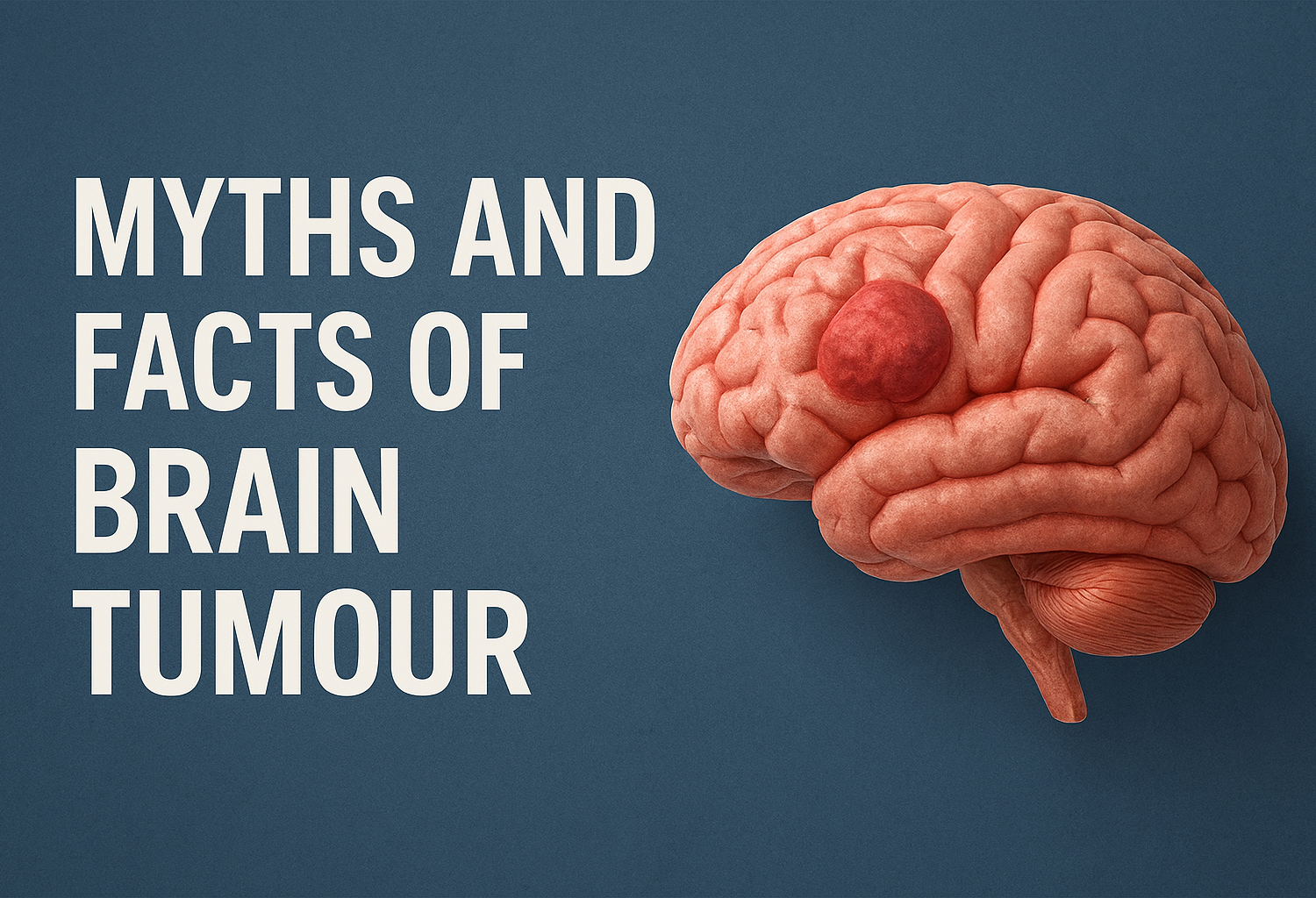
10 Myths and Facts of Brain Tumour

Saturday, October 25th, 2025

By Dr. Abhaya Kumar, Head, Neurosurgery and Consultant, Minimally Invasive Spine Surgery, Kokilaben Dhirubhai Ambani Hospital, Mumbai

Brain tumours are often surrounded by fear and misinformation. While the diagnosis can indeed be serious, not every brain tumour is fatal or even cancerous. Understanding the facts can help individuals respond better and seek appropriate care without undue panic. Here are 10 common myths and the truths behind them:

Myth 1: All brain tumours are cancerous

Fact: Only about one-third of brain tumours are malignant. Many benign (non-cancerous) tumours can be effectively treated and managed, especially if diagnosed early.

Myth 2: Brain tumours always originate in the brain

Fact: Brain tumours can be primary (originating in the brain) or secondary (spread from cancers elsewhere, like the lung, breast, or kidney). Secondary tumours are actually more common.

Myth 3: Brain cancer affects only older adults

Fact: Brain tumours can occur at any age, including in infants and children. In India, brain tumours are the second most common cancers among children.

Myth 4: Brain tumours are hereditary

Fact: Most brain tumours are not linked to family history. Only a small percentage are associated with inherited genetic syndromes.

Myth 5: Mobile phone use causes brain tumours

Fact: Current research does not confirm a direct link between mobile phone use and brain tumours. However, excessive radiation exposure in general should be avoided as a precautionary measure.

Myth 6: Brain cancer is a common disease

Fact: Malignant brain tumours are rare, with a lifetime risk of less than 1%. However, awareness is crucial due to the severity of symptoms and treatment needs.

Myth 7: Lifestyle changes can prevent brain tumours

Fact: There is no proven lifestyle factor that directly causes or prevents brain tumours. Still, a healthy lifestyle improves overall well-being and may support better treatment outcomes.

Myth 8: All brain tumour patients exhibit the same symptoms

Fact: Symptoms vary widely based on the tumour’s size, location, and growth rate. Some individuals have no symptoms at all, while others experience gradual neurological issues.

Myth 9: Brain tumour treatment is standard for everyone

Fact: Treatment is highly individualised. It can include surgery, radiation, or chemotherapy depending on the tumour’s type, size, and location, and is usually offered at advanced tertiary centres.

Myth 10: Headaches and blurred vision always indicate a brain tumour

Fact: These symptoms are common in many benign conditions. While they can be signs of a brain tumour, a proper medical evaluation is essential to determine the cause.

10 Warning Signs to Watch Out For Brain Tumour

If you or someone you know experiences the following symptoms persistently, consult a specialist for further evaluation:

  • Early morning headaches
  • Morning nausea or vomiting
  • Behavioural or personality changes
  • Cognitive decline or memory issues
  • Unsteadiness or dizziness
  • Slurred or altered speech
  • Double or blurred vision
  • Hearing problems
  • Seizures
  • Weakness or paralysis in limbs

Awareness and early diagnosis can make a significant difference in brain tumour outcomes. Don’t let myths dictate your decisions seek expert advice, ask questions, and act early.

FAQs on Brain Tumour: Myths vs Facts

Is every brain tumour cancerous?

No. Not all brain tumours are cancerous. Some are benign (non-cancerous) and grow slowly, while others are malignant (cancerous) and require immediate medical attention.


Can mobile phone radiation cause brain tumours?

There’s no conclusive evidence proving that mobile radiation causes brain tumours. Studies are ongoing, but so far, results show no direct link.


Are brain tumours always fatal?

Myth. Many brain tumours are treatable, especially if detected early. Modern surgeries, radiation therapy, and medications have improved survival rates.


Do headaches always mean a brain tumour?

No. Most headaches are not related to brain tumours. Only persistent, severe headaches with other neurological symptoms (like vomiting or vision problems) need investigation.

How are Brain Tumours Treated?

Friday, June 6th, 2025

A diagnosis of a brain tumor can be overwhelming, not just for the patient but also for the family. But today, with newer advancements in the medical world and the advent of progressive neuro-oncology, the outlook is far more hopeful than it once was. For patients diagnosed with brain tumors, there are multiple options for brain tumor treatment in Mumbai delivered by experienced professionals in high-quality clinical settings. Let us understand the various treatments available to help successfully treat brain tumors.

Table of Contents

Understanding Brain Tumours

A brain tumor is a collection, or mass, of abnormal cells in your brain. It can affect a person in many ways, including causing physical symptoms like headaches, seizures, and vision problems, as well as cognitive and emotional changes. The effects depend on the tumor’s location, size, and type. They may be:

  • Primary tumors originate in the brain.
  • Secondary or metastatic tumors, spreading from cancers elsewhere in the body.

They are further classified as:

  • Benign, which are non-cancerous but may still cause complications due to pressure effects.
  • Malignant, which are cancerous, fast-growing, and invasive.

Treatment aims to either cure the disease or control its growth while minimizing side effects and preserving neurological function.

Surgical Management

Surgery is often the first and most crucial step in brain tumor treatment. The goal is to remove as much of the tumor as safely possible. Neurosurgeons use intraoperative MRI (IMRIS) and neuronavigation systems to perform maximal safe resections—meaning the tumor is removed while preserving surrounding healthy brain tissue. It is recommended to choose a multispecialty hospital where you can consult the best doctors for brain tumour in Mumbai for advanced surgical care services.

Radiation Therapy

Radiation therapy is commonly used after surgery or in cases when surgery is not an option due to the tumor’s location or the patient’s health. Some of the techniques available at the best hospitals for brain tumors in India include:

  • Stereotactic radiosurgery (SRS
    Delivers focused radiation beams to the tumor from multiple angles.
  • Intensity-Modulated Radiation Therapy (IMRT)
    Shapes radiation beams according to the tumor’s 3D structure, sparing normal tissue.
  • Proton Beam Therapy
    This offers even more precision and is especially beneficial in treating paediatric brain tumors.

Chemotherapy

Chemotherapy applies drugs to kill or prevent the growth of cancer cells. Though more effective for certain tumors than others, chemotherapy is an important agent for the treatment of high-grade gliomas, medulloblastomas, and metastatic tumors.

Targeted Therapy & Immunotherapy

The medical world is changing every day. With the latest medical advancements targeted therapy and immunotherapy help treat complex cases of brain tumors. They are particularly beneficial for recurrent or high-grade tumors, in cases where traditional therapy is not very effective.

  • Targeted therapy targets mutations or aberrant proteins promoting the growth of the tumor and selectively blocks them.
  • Immunotherapy taps into the body’s own immune response to identify and destroy tumor cells.

Latest Operative Advances for Precision Surgery

Surgeons at leading hospitals perform advanced intraoperative techniques that enhance surgical safety and precision. These include:

  • Neuronavigation systems for accurate mapping of brain structures, ensuring minimal disruption to surrounding healthy tissue.
  • Awake surgery methods, are particularly helpful when the tumor is close to speech or motor function-controlling areas. The patient is kept awake and alert for portions of the surgery, allowing surgeons to save crucial functions.
  • Neurophysiology monitoring, such as Motor Evoked Potentials (MEP) and Somatosensory Evoked Potentials (SSEP), which monitor in real time the brain and nerve function during surgery and avoid unintended injury.

These innovations significantly improve surgical outcomes, particularly in complex or high-risk brain tumor cases.

Rehabilitation and Post-Treatment Care

Treatment doesn’t end after a brain tumor surgery. For most, neurorehabilitation is a key aspect of recovery for regained lost cognitive or motor abilities. This covers services like speech therapy, physiotherapy, occupational therapy, and neuropsychological counselling.

Brain Tumour Treatment at Kokilaben Dhirubhai Ambani Hospital

A brain tumor diagnosis is life-changing, but with today’s medical advancements, it no longer needs to be viewed as a hopeless condition. From surgery to sophisticated radiation techniques, from personalised drug therapy to rehabilitation, modern treatment is both effective and compassionate. Consult highly trained neurosurgeons and neurologists at our Centre for Neurosciences. At Kokilaben Dhirubhai Ambani Hospital, one of the best brain tumor hospitals in Mumbai we offer:

  • Advanced Diagnostic infrastructure
  • Multidisciplinary tumor boards (including neurosurgeons, oncologists, radiologists, and rehabilitation specialists)
  • Latest Operative advances
  • Post-operative care and support services

Our Centre for Neurosciences provides state-of-the-art technologies like IMRIS and the expertise of one of India’s most skilled neuro-oncology teams. The team successfully conducts over 1900 brain tumor surgeries each year. If you or a loved one is navigating a brain tumor diagnosis, consult with our team without delay. Choose a hospital known for excellence in neuro-oncology where care goes beyond just treatment.

Understanding Brain Tumors: Symptoms and Treatment

Friday, June 7th, 2024

Brain tumors are among the most daunting diagnoses, both for patients and their families. They can occur at any age, and the symptoms and treatment options may vary widely depending on several factors, including the age of the patient and the tumor’s location and type. India sees around 14 lakh new brain tumour cancer cases each year. Out of these, almost 20% cases occur in children.

Table of Contents

What is a Brain Tumor?

A brain tumor occurs when abnormal cells form within the brain. There main two types include: malignant or cancerous tumors and benign tumors. Primary brain tumors originate in the brain itself or in tissues close to it, such as in the brain-covering membranes (meninges), cranial nerves, or the pituitary gland.

Brain Tumors in Children

A child with a brain tumor may often present symptoms that differ from adults. Common symptoms in children include:

  • Headaches, often worse in the morning
  • Nausea or vomiting
  • Sudden onset of seizures
  • Unexplained clumsiness or lack of coordination
  • Changes in personality or behavior
  • Difficulty with recent memory, speech, or vision

Treatment for pediatric brain tumors often involves a combination of surgery, radiation therapy, and chemotherapy. The approach depends on the type of the tumor, its location, and how aggressive it is. Children might also need rehabilitation to help regain lost motor skills and speech functions.

Brain Tumors in Adults

Adults experiencing brain tumors might notice different symptoms, often related to the tumor’s location in the brain. These can include:

  • Persistent headaches
  • Seizures
  • Progressive loss of sensation or movement in an arm or a leg
  • Unexplained nausea or vomiting
  • Vision problems, such as blurred vision, double vision
  • Speech difficulties
  • Confusion in everyday matters
  • Personality or behavior changes
  • Hearing problems

As with children, the primary treatments for brain tumors in adults are surgery, radiation, and chemotherapy. However, the treatment plan for adults may be influenced by additional factors such as the patient’s overall health, potential side effects, and whether the tumor has spread.

Diagnostic Techniques

Diagnosis of a brain tumor usually begins with a neurological examination followed by imaging tests such as MRI (Magnetic Resonance Imaging) or CT (Computed Tomography) scans. These tests are crucial in determining the location and size of the tumor.

In some cases, a biopsy may be performed to determine whether the tumor is malignant or benign. This involves removing a small sample of brain tissue, usually during surgery.

Treatment Modalities

  • Surgery
    The first line of treatment for accessible brain tumors is often surgery. The goal is to remove as much of the tumor as possible without damaging the surrounding brain tissue.
  • Radiation Therapy
    This treatment uses high-energy beams, such as X-rays or protons, to kill tumor cells. It is often used after surgery to destroy any remaining cancerous cells.
  • Chemotherapy
    Chemotherapy uses drugs to kill tumor cells, usually given if the tumor returns or if surgery and radiation were not successful.
  • Targeted Therapy
    This newer form of cancer therapy uses drugs or other substances to precisely identify and attack cancer cells, usually while doing little damage to normal cells.

Brain Tumor Treatment at KokilabenDhirubhai Ambani Hospital, Mumbai

Your brain tumor treatment depends on the type of brain tumor you have, as well as its size and location. The usual treatment for brain tumour includes surgery, radiation therapy, and/or chemotherapy. Generally, radiation and chemotherapy treatments are used as secondary treatments for tumors. However, in rare cases, radiation and chemotherapy may be used without surgery if the tumor is inoperable.

Consult the dedicated team of neurosurgeons, medical oncologists, paediatric oncologists and radiation oncologists at our Centre for Neurosciences. We are equipped to treat brain tumors with great surgical expertise and advanced technologies. Our team also uses the latest operative advances with navigation, awake surgery techniques, neurophysiology monitoring with MEP and SSEP, radiosurgery and stereotactic radiotherapy. The team has successfully performed over 1900 surgeries in the past.  For further assistance on brain tumor care, please visit our below website link: https://www.kokilabenhospital.com/departments/centresofexcellence/centrefor_neurosciences/braintumor.html

5 Things You Must Know About Brain Tumours

Tuesday, June 7th, 2022

There has been an increase in the incidence of brain tumours in India over the years. About 50,000 new cases are reported each year, out of which 20% occur in children. There are over 120 different types of brain and central nervous system tumours all showing different symptoms and requiring different treatment options. This #WorldBrainTumourDay let us understand and spread awareness about some important things about Brain tumours:

1. What is a Brain Tumour?

A brain tumour is a growth or mass of cells that has grown abnormally in or around your brain. The spinal tumours and brain tumours together are called central nervous system (CNS) tumours. Some tumours grow quickly, while others take their time to develop. Brain tumours, whether malignant or not, can have an influence on your health and brain function if they grow large enough to push on surrounding nerves, blood vessels, and tissue.

There are two general groups of brain tumours:

  • Primary brain tumours start in the brain and tend to stay there.
  • Secondary brain tumours are more common and start somewhere else in your body and travel to the brain. Lung, breast, colon and kidney, cancers are among the most common cancers that spread to your brain.

Grades of Brain Tumours

Tumours are graded by how normal or abnormal the cells look. The grading also gives you an idea of how fast the tumour may grow and spread and helps oncologists determine your treatment plan. The grades of tumours include:

  • Grade 1.
    These cells look nearly normal and grow slowly. Long-term survival is likely.
  • Grade 2.
    These cells look slightly abnormal and grow slowly. The tumour may spread to nearby tissue and can come back, maybe at a more life-threatening grade.
  • Grade 3.
    These cells look abnormal and are actively growing into nearby brain tissue. These tumours tend to come back.
  • Grade 4.
    These cells look most abnormal and grow and spread quickly.

2. Malignant and benign brain tumors

Your doctor will conduct a thorough examination on your brain tumour to determine if it’s malignant or benign. This will help determine an appropriate treatment strategy. Some brain tumours are noncancerous (benign), while some brain tumours are cancerous (malignant). The term “malignant” refers to a tumour that is made up of cancer cells. These cells have the ability to infiltrate neighbouring tissues. Some cancer cells have the ability to travel via the circulation and lymph nodes. They can then spread to other organs and tissues in the body. The majority of dangerous tumours grow quickly, but the majority of benign tumours do not. There are, however, cases of both slow-growing malignant tumours and fast-growing noncancerous tumours. A benign tumour can grow to be fairly large, but it will not migrate to other parts of your body or invade neighbouring tissue.

3. Brain tumours in children 

Paediatric brain tumours are abnormal cell masses or growths that develop in a child’s brain or nearby tissue and structures. The type of tumour, its location within the brain, whether it has spread, and your child’s age and overall health all influence treatment and prognosis. If your child is showing any signs of a brain tumour, you must get it investigated. Treatment for brain tumours in children is typically quite different from treatment for adult brain tumours, so it’s very important to enlist the expertise and experience of paediatric oncology specialists.

4. How early detection helps?

The ability to detect a brain tumour earlier, when it is smaller, reduces the impact of surgery and treatment, improving the prognosis for all patients. Some early tumours may have signs and symptoms that can be noticed, but this is not always the case. Do not ignore any unusual signs of symptoms such as persistent headaches, seizures, balance problems or vision changes.

5. Treatment options available 

Your brain tumour treatment depends on the type of brain tumour you have, as well as its size and location. The standard treatment for brain tumour includes surgery, radiation therapy, and/or chemotherapy. Generally, radiation and chemotherapy treatments are used as secondary treatments for tumours. However, in rare cases, radiation and chemotherapy may be used without surgery if the tumour is inoperable.

Do you know someone suffering from this condition? Meet our dedicated team of neurosurgeons, medical oncologists, paediatric oncologists and radiation oncologist specialised in Neurooncolgy at Kokilaben Dhirubhai Ambani Hospital. Our Centre for Neurosciences is best equipped to treat brain tumours with great surgical expertise and advanced technologies. Our team also uses the latest operative advances with navigation, awake surgery techniques, neurophysiology monitoring with MEP and SSEP, radiosurgery and stereotactic radiotherapy.

The Department of Neurosciences is headed by Dr. Abhaya Kumar who has great expertise in treating Brain Tumours and conducting minimally invasive spine surgeries. He has successfully preformed over 2000 brain tumour surgeries in the past. He is one of the few neurosurgeons who is skilled in both brain and spine surgery. His success rate in treating brain tumours is 90%, with residual tumour in only 10% of patients. This is in line with international standards. He has also performed over 300 Awake Neurosurgery procedures. For further assistance on brain tumour care, please visit our below website link: https://www.kokilabenhospital.com/departments/centresofexcellence/centrefor_neurosciences/braintumor.html

All About Brain Tumours

Tuesday, June 8th, 2021

The experience of you or a loved one going through a brain tumour diagnosis and treatment can be confusing, frightening, and isolating. However, advances in science, medical technology, and cutting-edge infrastructure have played a significant role in lowering the mortality rate of brain tumour patients and improving their quality of life. Early detection and timely treatment is the key towards efficient management of brain tumour. 

A brain tumour is an abnormal growth of cells inside the brain or skull; some are benign, while others are cancerous. Tumours can develop from the brain tissue itself (primary), or cancer can spread to the brain from elsewhere in the body (metastasis). Treatment options vary depending on the type, size, and location of the tumour. Treatment objectives may be curative or symptomatic. Many of the 120 types of brain tumours can be successfully treated if detected early.

Symptoms of Brain Tumour

Every person diagnosed with a brain tumour will have different symptoms and their own journey to a diagnosis. While some people do not develop symptoms that would indicate a tumour, others may have symptoms that worsen overtime eventually leading to a diagnosis. Here are some symptoms that need further investigation:

  • Cognitive or behavioural changes
  • Dizziness or unsteadiness
  • Double or blurred vision
  • Frequent headaches
  • Seizures
  • Weakness or paralysis

Types of Brain Tumour

Brain tumours are classified into:

  • Primary brain tumours include tumours that originate from the tissues of the brain or the brain’s immediate surroundings.
  • Secondary brain tumours start somewhere else in your body and travel to the brain. Lung, breast, kidney, colon, and skin cancers are among the most common cancers that spread to your brain.

Malignant and non-malignant Brain Ttumours

Benign brain tumours don’t have cancer cells. They grow slowly, are easily removed, and seldom spread to the surrounding brain tissue. They can be life-threatening depending on which section of the brain they occur in. Cancer cells can be seen in malignant brain tumours that grow quickly and have the ability to infiltrate healthy brain tissue and cause damage.

Brain Tumour Risk Factors

The cause of brain tumour is still largely unknown. Although some genetic conditions and environmental factors may contribute to the development of brain tumour and may increase your risk of having it. These include:

  • Gender: Certain cancers, like meningiomas, are twice as likely to develop in women, while medulloblastomas are more frequently found in males.
  • Age: The frequency of brain cancer increases with age, with more occurrences in individuals age 65 and older.
  • Compromised immune system: Some people with compromised immune systems have an increased risk of developing lymphomas of the brain.
  • Genetic links: Certain inherited conditions make you more prone to have brain tumours.
  • Chemical exposure: Exposure to certain industrial chemicals or solvents has been linked to an increased risk in developing brain cancer.
  • Previous radiation treatment: Exposure to radiation therapy, particularly at a young age, may increase the likelihood of developing brain cancer.

There is no defined way to prevent a brain tumour. However, you can reduce your risk of developing a brain tumour by avoiding environmental hazards such as smoking and excessive exposure to radiation.

Brain Tumour Treatment at Kokilaben Dhirubhai Ambani Hospital

A brain tumour is a rare diagnosis, but if detected may cause immense emotional and physical discomfort to the patient. Our Centre for Neurosciences offers multi-disciplinary care and assists your brain tumour journey through diagnosis, treatment, follow-up visits and rehabilitation care. Our team of highly trained neurologists are well equipped with the most advanced imaging technology to help identity and diagnose your brain tumour with utmost accuracy. Our dedicated team of neurosurgeons, medical oncologists, neuroradiologists, paediatric oncologists and neurorehabilitation experts support our patients with all aspects of living with a brain tumour and is equipped with advanced treatment options. Our team of neorurosurgeons offer high-quality treatment options that include chemotherapy, radiation therapy, targeted therapy, surgery, etc. Expert neurosurgeons at our Centre for Neurosciences have performed about 1375 brain tumour surgeries with positive results in the past. Our Centre for Physical Medicine & Rehabilitation  understands the nuances of brain tumour and supports patients recovering from a surgery with the most advanced and trusted rehabilitation techniques. Our specialists also use the latest operative advances with navigation, stereotactic radiotherapy, awake surgery techniques, neurophysiology monitoring with MEP and SSEP to help deliver better outcomes. Here are some of the innovative technologies we use:

  • Cavitron Ultrasonic Aspirator (CUSA) – Increases safety and reduces operating time during a brain surgery.
  • NEURONAVIGATION SYSTEM – Guides neurosurgeons during brain tumour surgery for better surgical outcomes.
  • ZEISS OPMI Pentero Microscope – Provides neurosurgeons with more powerful magnification during brain tumour removal and resections.
  • 3T Magnetom trio – Utilizing shorter scan times and providing maximum patient comfort, this high field MRI offers high-end imaging results.
  • NOVALIS TX(Stereotactic Radiosurgery) – Used to treat brain tumours.
  • Leksel stereotactic system – Used in stereotactic biopsy of brain tumours and stereotactic radiosurgery.

For further information on our Centre for Neurosciences, please visit the below link: https://www.kokilabenhospital.com/departments/centresofexcellence/centrefor_neurosciences.html