

Archive for 2023

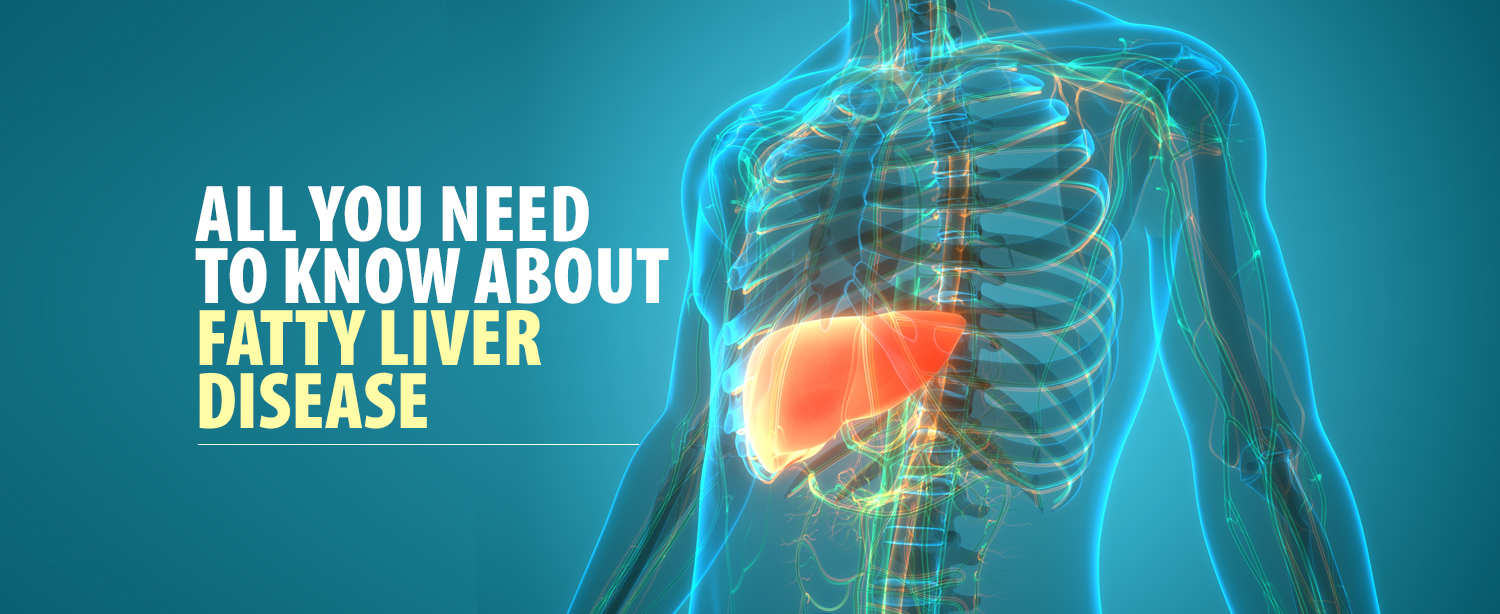
All you need to know about Fatty Liver disease

Wednesday, April 19th, 2023

Did you know? Medical experts suggest that fatty liver disease is at the core of most liver disorders including liver cancer in India, contributing to the total disease burden of the country. In India, one in three people, or 30% of the population, have fatty liver disease. Among its many other crucial functions, the liver is an organ that removes toxins from the blood, aids in digestion by producing bile, and controls energy levels. Let us understand the key factors behind this condition, the symptoms, precautions and treatment options regarding fatty liver disease in this blog.

Fatty liver disease is a medical condition in which fat builds up in the liver, leading to inflammation and damage. There are two main types of fatty liver disease that include alcoholic fatty liver disease (AFLD) and non-alcoholic fatty liver disease (NAFLD). AFLD occurs due to excessive alcohol consumption, while NAFLD occurs in individuals who do not consume alcohol but have unhealthy lifestyle habits. Research suggests that certain health conditions or diseases, your family history, diet and the digestive system may make you more likely to develop NAFLD.

Risk Factors for Fatty Liver Disease

There are several risk factors that increase the likelihood of developing fatty liver disease. The most common risk factors include obesity, high blood pressure, high cholesterol, type 2 diabetes, and metabolic syndrome. Other risk factors include rapid weight loss, malnutrition, and certain medications. Rising rates of obesity in India and around the world are projected to make NAFLD even more common in the coming years. Medical research suggests that ninety percent of people with two or more metabolic risk factors such as obesity, diabetes, and unhealthy levels of fats in the blood may have NAFLD. The condition is becoming increasingly prevalent in children and young adults which is a disturbing fact.

Symptoms of Fatty Liver Disease

In the early stages, fatty liver disease may not cause any symptoms. With the progressing condition, you may notice the below common symptoms that need further care and attention:

  • Fatigue
  • Abdominal discomfort
  • Loss of appetite
  • Nausea
  • Jaundice
  • Swelling in the abdomen and legs
  • Mental confusion

Consult a hepatologist for further assistance and diagnosis; do not delay seeking medical care.

Keeping your Liver healthy

Your liver performs essential functions every day. Just like many other parts of the body, fat can build up in your liver. This may damage the liver and lead to serious health problems. It’s normal to have some fat in your liver cells, but excess fat can interfere with your liver’s normal functioning. Here are some ways to keep your liver healthy:

  • Say no to alcohol
  • Make sure that none of your medications are toxic
  • Get vaccinated to protect against hepatitis
  • Maintain a healthy weight
  • Follow a healthy diet
  • Engage in regular exercise
  • Control existing health conditions
  • Treat liver cirrhosis

Fatty Liver Treatment at Kokilaben Dhirubhai Ambani Hospital, Mumbai

Treatment for fatty liver disease involves lifestyle changes such as losing weight, following a healthy diet, and engaging in regular exercise. These changes can help reduce the amount of fat in the liver and improve liver function. In some cases, medications may be prescribed to manage the underlying causes of fatty liver disease, such as diabetes or high cholesterol. Fatty liver disease is a serious medical condition that can lead to liver damage and other health complications. If you are experiencing any symptoms or have concerns about fatty liver disease, consult experts at our Department of Hepato-Pancreato-Biliary surgery for further treatment and care.

Parkinson’s Disease: A closer look

Monday, April 10th, 2023

Imagine not being able to hold a glass of water without spilling it or not being able to dress up all by yourself. These things may seem impossible for you, but for some people, it is a daily reality that they must contend with. It is a part of life for patients diagnosed with Parkinson’s disease. Parkinson’s is a neurological disease that affects over 10 million individuals worldwide and is characterised by uncontrollable limb movements. Due to the lack of awareness about the condition and various taboos associated with it, people with Parkinson’s delay seeking medical care or are often misdiagnosed by their primary doctor. Medical experts predict that India would see a massive 200-300 % increase in Parkinson’s disease cases over the next two to three decades. Let us understand the key aspects about this condition and find the best ways to manage it.

What is Parkinson’s disease?

Parkinson’s disease is a nervous system ailment that is characterised by uncontrollable bodily movements including bradykinesia, tremors, and stiffness that make it difficult for you to carry out regular daily tasks. Because of the nature of the disorder, the symptoms start off moderate and get worse over time. On sometimes, they might even go undiscovered for several weeks or months. Parkinson’s disease primarily affects motor functions, but as the condition worsens, non-motor consequences like discomfort, sleep issues, and mental health issues can also develop.

Symptoms of Parkinson’s disease

The symptoms of Parkinson’s disease can vary from person to person, but typically include tremors, stiffness, and difficulty with movement. Other common symptoms include:

  • Bradykinesia: Slowness of movement
  • Rigidity: Stiffness of the limbs and trunk
  • Postural instability: Difficulty maintaining balance
  • Difficulty with speech and writing
  • Loss of facial expressions
  • Sleep disturbances
  • Depression and anxiety
  • Cognitive impairment

Parkinson’s disease is diagnosed by a neurologist through a physical examination and a review of the patient’s medical history. The diagnosis is usually made based on a combination of symptoms and physical examination. Imaging tests, such as MRI or CT scans, may be used to rule out other conditions that could be causing the symptoms.

Stages of Parkinson’s disease

Parkinson’s disease is typically divided into five stages, ranging from early symptoms to advanced disease. These stages are based on the severity and progression of symptoms and include:

  • Stage one
    Mild symptoms that do not interfere with daily activities.
  • Stage two
    Symptoms worsen, and daily activities become more difficult.
  • Stage three
    Significant loss of balance and slow movements.
  • Stage four
    Severe symptoms, but the patient can still walk and stand.
  • Stage five
    Complete disability, the patient is unable to stand or walk.

While there is no cure for Parkinson’s disease, there are treatments available to manage symptoms and improve the patient’s quality of life. Patients should focus on leading a healthy lifestyle, including regular exercise, a healthy diet, and social engagement, to improve their overall wellbeing.

Parkinson’s care at Kokilaben Dhirubhai Ambani Hospital, Mumbai

Consult our experienced neurologists to help manage this condition and slow down its progression. Supportive therapies can help cope with the symptoms of this condition, physiotherapy can help to alleviate muscle rigidity and occupational therapy can help you to get back to routine activities. Speech and language therapy is also recommended for some patients of Parkinson’s disease. If you or a loved one is experiencing symptoms of Parkinson’s disease, consult neurologists at our Centre for Neurosciences for a detailed evaluation and further care.

Helping your child with Autism thrive

Sunday, April 2nd, 2023

Autism affects around 1.8 crore Indians many of whom have limited access to medical care or suffer from stigma to seek care. Autism spectrum disorder (ASD) is known as a developmental disability caused by differences in the brain. There are multiple causes of ASD which act together to change the most common ways in which people develop. Autism is the world’s third most common developmental disability, a neurological illness that usually develops by the age of 3 years.  

What is Autism?

Autism is a developmental condition that has an impact on behavior, social contact, and communication. A wide range of behavioural traits, including poor eye contact, compulsive behavior, repeated actions or words, and poor social skills, can be seen in people with autism. Learning difficulties such as speech delay, hyperactivity, limited interest in one thing are some obvious signs of autism. While there is no cure for autism, early diagnosis and intervention can help your child with autism communicate, socialize, and develop meaningful relationships.

Parenting tips for bringing up a child with Autism

Having a child diagnosed with autism can bring about many overwhelming feelings to the parent. Apart from the medical care provided by doctors there are many things you can do at home to help your child thrive and reach their full potential. These include:

  • Gain knowledge about your child’s specific condition
    The best thing you can do to help your child thrive is to understand your child’s place on the spectrum. Because autism presents itself in an entire spectrum of individual aspects, it’s important to know exactly how it impacts your child.
  • Don’t be afraid to seek support
    If your child has been diagnosed with autism or is showing signs of autism, consult your child’s pediatrician and seek correct guidance from a neurologist or a therapist. Ask help from family members and friends too.
  • Learn your child’s sensory needs
    Many children with autism are also sensitive to sensory experiences. It is essential to know what areas under or over-stimulate them. Keeping a diary is a beneficial way to take notes of common triggers. It will also help track which treatments work or which ones do not work.
  • Provide structure with consistency
    A great method to reinforce everything your child learns outside the home is to establish a consistent environment at home. Make a daily routine with regularly-scheduled times for everyday activities such as bath, meals, therapy, bedtime, etc.
  • Create a safe home space
    It’s a good idea to designate a particular area of your home where your child can go to calm down. This will help to reinforce the idea that they should feel safe and secure. Set up reassuring items for your kid, like a stuffed animal or a favourite blanket. Please ensure that the area is completely safety-proofed.
  • Connect using nonverbal communication
    Not being able to communicate via speech can be challenging, but there are other ways to express. Look out for the nonverbal cues your child is giving you – facial expressions, gestures, and sounds are all ways of talking to you.
  • Create a personal treatment plan
    Remember that each child with autism is unique, and their treatment plan should also be unique. The treatment plan for your kid should be developed around their unique interests, enhancing their attributes, and addressing any areas of weakness. Be mindful of your child’s preferred learning styles and their favourite pastimes.
  • Make time for fun
    Spend some time with your child, and have fun together by doing things he/she enjoys. Play is an essential part of learning for all children and the same is true for autistic children.
  • Use rewards and consequences
    Positive reinforcement can go a long way in encouraging and motivating autistic children. When they behave properly or learn a new skill, compliment them. Reward them for their good behaviour by letting them play with a favourite toy or giving them a sticker.
  • Believe in yourself and your child
    Be patient with yourself and your child. You or your child may experience some setbacks, learn from bad experiences and find solutions. But it is essential to note and accept that you both have plenty of time to grow and learn.

Children with autism have unique strengths and abilities, and with the right support and intervention, they can lead happy, fulfilling lives.

Autism care at Kokilaben Dhirubhai Ambani Hospital, Mumbai

The Centre for Neurosciences at KDAH Mumbai offers a range of treatment options to help your child with autism live better. Our team of experienced healthcare professionals will work with you to develop a personalized treatment plan for your child that takes into account their unique needs and challenges. We understand that every child with autism is different, and we strive to provide individualized care that meets the specific needs of your child.

Debunking the Myths around Endometriosis

Friday, March 31st, 2023

Over 2.5 crore Indian women suffer from endometriosis which often remains undiagnosed and untreated due to limited awareness. This gynecological condition is also the leading cause of infertility among women. Endometriosis is a condition in which the tissue that is similar to the tissue that lines your uterus grows outside of the uterus. These cells react to hormonal changes that take place throughout the menstrual cycle, which can result in pain and inflammation in the tissue around them.

Symptoms of Endometriosis

The main symptom of endometriosis is pelvic pain, often associated with menstrual periods. Although many experience cramping during their menstrual periods, those with endometriosis typically describe menstrual pain that is debilitating and affects their quality of life. The common signs and symptoms of endometriosis include:

  • Intense pain during periods
  • Heavy vaginal bleeding
  • Pain during sex
  • Pain on opening your bowels
  • Difficulty getting pregnant

Seeing a gynaecologist on time and discussing your symptoms and getting the required tests done is the key to diagnosing this condition and seeking medical care.

Common Myths & Facts of Endometriosis

Myth: Endometriosis is rare
Fact: Endometriosis affects up to 10% of women between the ages of 15 and 44. Despite how widespread it is, it usually takes eight years to receive a diagnosis. The only reliable method of diagnosis is through laparoscopic, or keyhole, procedure that allows visualization of the pelvic cavity.

Myth: Endometriosis is just painful periods
Fact: While painful periods are a symptom of endometriosis – it is far more than that. Contrary to normal periods, endometriosis pain isn’t just brought on by the uterus contracting; it’s also brought on by endometrial-like tissue that is growing in other places in the pelvic cavity and causing discomfort and inflammation. Because this tissue can develop in the bladder, bowel, and, in extremely uncommon circumstances, the lung, it is possible for pain and other symptoms to manifest throughout the body.

Myth: A gluten-free diet can treat endometriosis
Fact: Medical research doesn’t support the claim that use of a gluten-free diet can reduce your endometrial symptoms. Going gluten-free necessitates a major diet overhaul, which also entails cutting out many healthy foods like fortified wholegrain breads and cereals, which are a significant source of fibre and minerals. If you have endometriosis and are worried that you can’t tolerate gluten, you must consult your dietician.

Myth: If you have endometriosis, you can’t get pregnant
Fact: Most women suffering from endometriosis are concerned about their fertility and ability to become pregnant. The reality is that while there is a link between endometriosis and fertility issues, natural conception is still possible even in cases of severe endometriosis. Statistics suggest that 60–70% of people with endometriosis are thought to be able to conceive naturally.

Myth: Endometriosis patients must avoid dairy products
Fact: The reason behind this myth is for the widespread misconception that dairy causes inflammation, despite the fact that many dairy products are actually considered to be anti-inflammatory. There is not enough medical research available to support this claim. A well balanced diet filled with organic foods is recommended for endometriosis patients.

Myth: Surgery can cure Endometriosis
Fact: There isn’t a single treatment for endometriosis. After a diagnosis, there are numerous choices for managing the illness. While a surgical procedure aims to remove existing endometriotic tissue and scar tissue, it does not address the fundamental reasons for the growth of endometrial tissue.

Endometriosis treatment at Kokilaben Dhirubhai Ambani Hospital, Mumbai

Endometriosis is a serious condition that affects many women worldwide. Early detection and treatment are crucial in easing the symptoms. The Department of Gynaecology & Obstetrics at Kokilaben Dhirubhai Ambani Hospital, Mumbai has experienced and compassionate doctors who work with patients to diagnose and manage this condition. Do not suffer in silence for unusually heavy or painful periods. Consult our team for a detailed evaluation and further care.

Are these habits damaging your oral health?

Saturday, March 18th, 2023

9 out of 10 Indian adults suffer from a major oral health problem. Indians are largely affected by dental cavities, periodontal disease, and oral cancer. According to the Ministry of Health and Family Welfare, the country is considered the world capital for oral cancer. World Oral Health Day is celebrated every year on March 20th to raise awareness about the importance of good oral hygiene and the impact it has on your overall health. Your mouth is the gateway to your body, and taking care of it is crucial to maintaining good health.

Your oral health is much more important than you realize. Your mouth is full of bacteria which is mostly harmless. But it is also the entry point to your digestive and respiratory tracts, and some of these bacteria can also cause disease. Normally the body’s natural defenses and good oral health care, such as daily brushing and flossing, keep bacteria under control. Poor oral hygiene levels can cause the bacteria to reach levels that might lead to oral infections, such as tooth decay and gum disease.

Research indicates that oral bacteria and the inflammation associated with a severe form of gum disease (periodontitis) might play a role in some diseases and may increase your risk of getting heart disease, diabetes, Alzheimer’s disease, HIV/AIDS, etc.

Habits that can damage your oral health

Your oral health is important for a beautiful smile and to protect your teeth and gums. Stay aware and away from these bad habits that damage your overall health:

  • Smoking and tobacco use
  • Sugary and acidic foods and drinks
  • Biting your finger nails
  • Neglecting dental hygiene
  • Using your teeth as tools
  • Grinding or clenching your teeth
  • Frequent snacking
  • Bedtime milk bottle
  • Using hard bristle toothbrush
  • Brushing teeth incorrectly

How to improve your oral hygiene

You must take care of your oral health to maintain healthy teeth and gums. Here are the top 10 dentist recommended tips to improve your oral health:

  • Brush your teeth twice a day
  • Choose your toothbrush wisely, and replace it often
  • Floss daily
  • Scrape your tongue daily
  • Stop smoking
  • Limit your coffee intake
  • at a nutritious diet
  • Decrease sugar intake
  • Use an antibacterial mouthwash
  • Visit the dentist regularly

Dental care at Kokilaben Dhirubhai Ambani Hospital, Mumbai

The Dentistry Department at Kokilaben Dhirubhai Ambani Hospital, Mumbai is committed to quality and excellent patient service. With convenient hours and after-hours emergency care our team of dentists are available to take care of your requirements and put you at ease. We provide affordable dental services using the latest technology and highest safety and sterilisation standards. Consult our highly experienced dental surgeons in Mumbai to improve your dental health by providing a full range of dental services.