
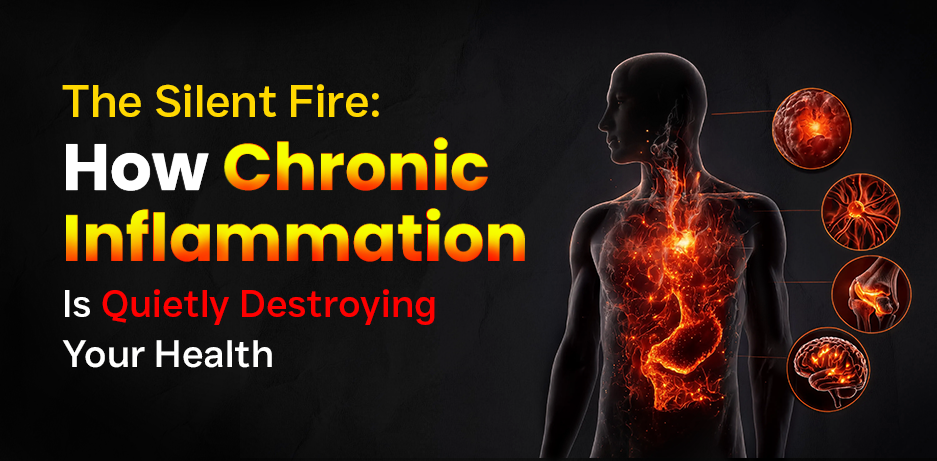

Inflammation is not inherently harmful. When the body encounters an infection, injury, or foreign substance, inflammation is the immune system’s first and necessary response — a targeted, time-limited mobilisation of biological resources to neutralise the threat and initiate repair. Without it, minor infections would become life-threatening, wounds would not heal, and the body would have no defence against pathogens.
The problem is not inflammation. The problem is inflammation that does not switch off.
When the immune system remains in a state of low-grade activation long after the original trigger has resolved, or when it fires continuously in response to stimuli that pose no actual threat — the resulting chronic inflammation begins to damage the very tissues it is meant to protect. It is a slow, silent, and cumulative process. It produces no fever, no swelling, no obvious pain. But over months and years, it contributes to some of the most serious and prevalent conditions in modern medicine: heart disease, type 2 diabetes, cancer, Alzheimer’s disease, and autoimmune disorders.
Understanding what chronic inflammation is, what causes it, and how to address it is one of the most clinically relevant areas of preventive health today.
What Is Chronic Inflammation?
Chronic inflammation is a prolonged, dysregulated immune response in which the body maintains a state of inflammatory activity well beyond what is physiologically appropriate. Unlike acute inflammation, which is sharp, targeted, and self-limiting — chronic inflammation is diffuse, persistent, and often subclinical, meaning it progresses without producing the obvious signs that prompt a person to seek medical attention.
How It Differs from Normal Inflammation
Acute inflammation is the body’s rapid, necessary response to a clear biological threat. The classic signs, including redness, heat, swelling, pain, and loss of function, are familiar because they are visible. The process is swift, purposeful and resolves once the threat is neutralised. It is an essential survival mechanism.
Chronic inflammation is physiologically distinct in several important ways:
- It persists for months to years rather than days to weeks
- It does not resolve when the original trigger is removed — or it is driven by triggers that are not conventional pathogens, such as dietary patterns, visceral fat, or persistent low-level infections
- It produces low concentrations of inflammatory mediators continuously, rather than a large acute burst
- It causes progressive tissue damage through the sustained activity of immune cells that, over time, lose the ability to distinguish between foreign and self-tissue
- It is often detectable only through biochemical markers rather than clinical signs
The distinction matters clinically because many people with chronic inflammation feel broadly unwell without understanding why — and because the condition is often discovered only after it has contributed to a diagnosable disease.
Types of Chronic Inflammation
Chronic inflammation is not a single uniform condition. It presents across a spectrum depending on its underlying mechanism, location, and driving causes.
Systemic low-grade chronic inflammation The most common type in the context of modern lifestyle-related disease. It involves a persistent, low-level elevation of pro-inflammatory cytokines throughout the body — detectable via blood markers — without overt clinical signs. This is the form most directly linked to metabolic syndrome, cardiovascular disease, and type 2 diabetes.
Autoimmune-driven chronic inflammation In this form, the immune system incorrectly identifies the body’s own tissues as foreign and mounts a sustained inflammatory attack against them. Examples include rheumatoid arthritis (targeting joint tissue), systemic lupus erythematosus (affecting multiple organ systems), inflammatory bowel disease (targeting the gastrointestinal mucosa), and psoriasis (affecting the skin).
Tissue-specific chronic inflammation Chronic inflammation localised to a specific organ or system, such as the airways in asthma, the liver in non-alcoholic steatohepatitis (NASH), or the arterial walls in atherosclerosis. The inflammatory process is sustained within the target tissue and drives progressive structural damage to that organ.
Chronic infection-associated inflammation Some infections, including Helicobacter pylori in the stomach, hepatitis B and C in the liver, and certain periodontal bacteria, establish chronic low-grade inflammatory states that persist as long as the infection remains inadequately treated.
What Causes Chronic Inflammation?
The causes of chronic inflammation are numerous, and in many cases multiple factors operate simultaneously.
Persistent infection or foreign material When the immune system cannot fully eliminate an infectious agent, as in chronic viral hepatitis or persistent Helicobacter pylori infection, it maintains an ongoing inflammatory response around the site. Similarly, foreign materials that cannot be broken down, such as silica particles in the lungs, sustain a localised inflammatory reaction.
Autoimmune dysregulation In autoimmune conditions, the immune system fails to correctly distinguish self from non-self, generating a sustained inflammatory response against normal body tissue. The precise trigger for this dysregulation varies by condition and is not always fully understood, but genetic predisposition and environmental exposures both contribute.
Visceral adiposity Adipose tissue, particularly the visceral fat that accumulates around internal organs in abdominal obesity, is metabolically active. It secretes pro-inflammatory cytokines including TNF-alpha and IL-6, creating a continuous low-grade inflammatory environment. This is one of the primary mechanisms linking obesity to systemic chronic inflammation and its associated diseases.
Dietary patterns Diets high in refined carbohydrates, ultra-processed foods, trans fats, and excess red and processed meat consistently drive inflammatory signalling pathways. Conversely, diets rich in omega-3 fatty acids, polyphenols, fibre, and antioxidants are associated with lower inflammatory markers. The cumulative effect of daily dietary choices on systemic inflammation over years is clinically significant.
Chronic psychological stress Sustained stress activates the HPA axis and the sympathetic nervous system, producing prolonged cortisol and catecholamine exposure. Over time, the inflammatory response loses sensitivity to cortisol’s inhibitory regulation, a state of glucocorticoid resistance — allowing pro-inflammatory cytokines to accumulate unchecked.
Sleep deprivation Inadequate or disrupted sleep is independently associated with elevated inflammatory markers. Sleep is the period during which the immune system is regulated and inflammatory activity is suppressed. Consistently poor sleep removes this regulatory brake.
Environmental exposures Long-term exposure to air pollutants, tobacco smoke, industrial chemicals, and fine particulate matter activates inflammatory pathways in the lungs, cardiovascular system, and systemically. Urban air quality is increasingly recognised as a modifiable driver of chronic inflammation.
Sedentary behaviour Physical inactivity is a significant contributor to chronic inflammation through its effects on body composition, insulin sensitivity, and the absence of the anti-inflammatory signalling that regular physical movement produces.
The Silent Signs — How Chronic Inflammation Presents in the Body
Chronic inflammation rarely produces dramatic symptoms. Its presentations are often attributed to other causes: fatigue to poor sleep, joint pain to ageing, digestive symptoms to diet, which is precisely why it remains unrecognised for extended periods.
Symptoms and signs that may indicate underlying chronic inflammation include:
- Persistent fatigue that does not resolve with rest, driven by the metabolic cost of sustained immune activation
- Diffuse joint pain, stiffness, or swelling, particularly in the morning or after periods of inactivity
- Recurrent infections — a paradox of chronic inflammation is that while the immune system is persistently active, immune suppression of specific pathways can increase susceptibility to infection
- Gastrointestinal symptoms — bloating, alternating bowel habits, and abdominal discomfort are associated with gut-based inflammation and dysbiosis
- Skin changes — persistent rashes, eczema flares, and psoriatic plaques are visible manifestations of systemic inflammatory activity
- Mood disturbances — depression and anxiety are associated with elevated inflammatory cytokines, which cross the blood-brain barrier and affect neurotransmitter function
- Unintended weight changes — particularly abdominal weight gain, which simultaneously causes and is caused by chronic inflammation
- Slow wound healing — reflecting impaired tissue repair when inflammatory regulation is disrupted
What Are the Diseases Directly Linked to Chronic Inflammation?
Chronic inflammation is not merely a risk factor in the conventional sense, it is a mechanistic contributor to the development and progression of a wide range of serious diseases.
Cardiovascular disease Chronic inflammation drives the formation and destabilisation of atherosclerotic plaques in arterial walls. Elevated CRP and other inflammatory markers are independently predictive of cardiac events. Inflammatory activity within plaques contributes to their rupture, which is the immediate cause of most heart attacks and strokes. Patients with persistent cardiovascular risk factors should consider evaluation at a best heart hospital in India that offers comprehensive inflammatory risk profiling alongside standard lipid and cardiac assessments.
Type 2 diabetes Chronic inflammation impairs insulin receptor signalling and promotes insulin resistance. Inflammatory cytokines from visceral adipose tissue directly interfere with glucose uptake in peripheral tissues, contributing to the metabolic dysfunction that characterises type 2 diabetes.
Cancer The tumour microenvironment is characterised by inflammatory activity that promotes angiogenesis, suppresses anti-tumour immune responses, and supports the survival and proliferation of malignant cells. Chronic inflammation associated with specific infections, H. pylori and gastric cancer, hepatitis B/C and liver cancer, and chronic colitis and colorectal cancer, represents a well-established carcinogenic pathway.
Autoimmune and rheumatological conditions Rheumatoid arthritis, systemic lupus erythematosus, ankylosing spondylitis, and multiple sclerosis are conditions in which chronic immune-mediated inflammation drives progressive organ and tissue damage. Management of these conditions requires specialist rheumatological input from a rheumatologist in Mumbai with expertise in immunological therapies.
Neurodegenerative diseases Neuroinflammation, chronic inflammatory activity within the central nervous system, is implicated in the pathogenesis of Alzheimer’s disease, Parkinson’s disease, and other dementias. Microglial activation and the accumulation of pro-inflammatory cytokines in brain tissue are features of neurodegenerative pathology.
Inflammatory bowel disease Crohn’s disease and ulcerative colitis are defined by chronic mucosal inflammation of the gastrointestinal tract. Beyond local gastrointestinal complications, the systemic inflammatory burden of IBD contributes to extraintestinal manifestations affecting joints, skin, eyes, and the liver.
How Is Chronic Inflammation Measured and Diagnosed?
Chronic inflammation does not produce a single definitive diagnostic marker. Assessment involves a combination of clinical evaluation and laboratory investigations.
Key blood markers:
- C-reactive protein (CRP) — a hepatic acute-phase protein produced in response to inflammatory cytokines; high-sensitivity CRP (hs-CRP) is used to detect low-grade systemic inflammation
- Erythrocyte sedimentation rate (ESR) — a non-specific marker of inflammatory activity; elevated in many inflammatory and autoimmune conditions
- Interleukin-6 (IL-6) and TNF-alpha — specific inflammatory cytokines measured in specialised contexts
- Complete blood count (CBC) — elevated white cell count, anaemia of chronic disease, and elevated platelet count can all indicate ongoing inflammatory activity
- Homocysteine — elevated levels are associated with cardiovascular inflammation and endothelial damage
- Fibrinogen and ferritin — acute-phase reactants that rise in inflammatory states
For patients seeking a comprehensive inflammatory assessment, investigations through a reliable pathology lab in Mumbai that offers high-sensitivity CRP, ESR, cytokine panels, and autoimmune markers provide the most clinically useful baseline evaluation.
Chronic Inflammation Treatment
There is no single treatment for chronic inflammation in isolation. Management is directed at the underlying cause and the modifiable drivers that sustain inflammatory activity.
Pharmacological approaches:
- Non-steroidal anti-inflammatory drugs (NSAIDs) — provide symptomatic relief from inflammatory pain and reduce prostaglandin-mediated inflammation; not appropriate for long-term use without medical supervision due to gastrointestinal and cardiovascular risks
- Corticosteroids — potent suppressors of immune-mediated inflammation; used in acute flares of autoimmune conditions and severe inflammatory disease; long-term use carries significant systemic risk
- Disease-modifying antirheumatic drugs (DMARDs) — including methotrexate, hydroxychloroquine, and sulfasalazine; used in rheumatological conditions to address the underlying immune dysregulation
- Biological therapies — targeted agents including TNF inhibitors, IL-6 inhibitors, and JAK inhibitors are used in moderate to severe autoimmune and inflammatory diseases where conventional therapies are insufficient
- Statins — beyond their lipid-lowering effects, statins have demonstrated anti-inflammatory properties, partially explaining their cardiovascular protective effects independent of cholesterol reduction
Lifestyle-based chronic inflammation treatment:
- Anti-inflammatory diet — a dietary pattern built around whole grains, oily fish, leafy vegetables, legumes, nuts, seeds, and olive oil, while limiting ultra-processed food, refined carbohydrates, and trans fats, consistently reduces inflammatory markers over time
- Regular aerobic exercise — physical activity reduces visceral adiposity, improves insulin sensitivity, and directly suppresses pro-inflammatory cytokine production; 150 minutes of moderate-intensity exercise per week is the evidence-supported target
- Sleep restoration — treating obstructive sleep apnoea, establishing consistent sleep schedules, and achieving 7 to 9 hours of quality sleep per night directly reduces inflammatory burden
- Weight management — reducing visceral fat through sustained dietary and exercise changes produces measurable reductions in systemic inflammatory markers
- Smoking cessation — one of the most potent modifiable drivers of chronic vascular and systemic inflammation
- Stress management — structured psychological interventions, mindfulness-based practices, and social support all reduce HPA axis activation and downstream inflammatory signalling
Inflammaging — How Chronic Inflammation Accelerates the Ageing Process
Inflammaging — a portmanteau of inflammation and ageing — is the term used to describe the chronic, low-grade, sterile inflammatory state that develops progressively with age and contributes to the biological deterioration associated with growing older.
As the immune system ages, it loses the precision and regulation of its inflammatory responses. Senescent cells — aged cells that have stopped dividing but have not been cleared — accumulate in tissues and secrete a cocktail of pro-inflammatory cytokines known as the senescence-associated secretory phenotype (SASP). This creates a persistent, self-amplifying inflammatory environment that damages surrounding healthy tissue.
Inflammaging is now considered a central mechanism in:
- Muscle mass loss (sarcopenia) — chronic inflammatory cytokines suppress protein synthesis and accelerate muscle catabolism
- Bone density reduction — pro-inflammatory cytokines stimulate osteoclast activity, accelerating age-related bone loss
- Cognitive decline and neurodegeneration — neuroinflammation driven by inflammaging contributes to the progressive cognitive changes of ageing and increases the risk of Alzheimer’s disease
- Cardiovascular ageing — arterial stiffening, endothelial dysfunction, and plaque progression are all accelerated by chronic inflammatory activity
- Immune senescence — the ageing immune system becomes simultaneously overactive in inflammatory pathways and underactive in pathogen defence, increasing susceptibility to infection
What is clinically significant about inflammaging is that it is not entirely inevitable. The same lifestyle factors that drive chronic inflammation — poor diet, physical inactivity, sleep deprivation, chronic stress, and smoking — also accelerate inflammaging. Conversely, sustained anti-inflammatory lifestyle practices have a measurable effect on biological age markers, even in older adults.
Frequently Asked Questions
Q1. Can chronic inflammation be completely reversed — or is it a lifelong condition?
In many cases, chronic inflammation can be significantly reduced or resolved when the underlying cause is identified and addressed. Lifestyle-driven systemic inflammation is substantially reversible through consistent dietary changes, weight loss, exercise, and improved sleep. Autoimmune-driven inflammation is managed rather than reversed, though remission is achievable in many conditions.
Q2. Is chronic inflammation genetic — can you inherit a higher inflammatory tendency?
Yes, partially. Genetic variants influencing cytokine production, immune regulation, and autoimmune predisposition are heritable. However, genes establish susceptibility, and lifestyle and environmental factors determine whether and to what degree that susceptibility manifests as disease.
Q3. How quickly do lifestyle changes produce measurable reductions in inflammatory markers?
Meaningful reductions in CRP and other markers can be observed within four to eight weeks of sustained dietary improvement, exercise, and sleep optimisation. More significant changes, particularly those related to weight loss, may take several months to fully reflect in laboratory values.
Q4. Can chronic inflammation cause infertility or affect reproductive health?
Yes. Systemic chronic inflammation disrupts hormonal signalling pathways involved in reproductive function. In women, it is associated with endometriosis, polycystic ovary syndrome, and implantation failure. In men, inflammatory cytokines impair sperm quality and motility. Managing underlying inflammation is increasingly recognised as a component of fertility evaluation.
Q5. What is the relationship between chronic inflammation and skin ageing?
Chronic inflammation accelerates the degradation of collagen and elastin — the structural proteins that maintain skin firmness and elasticity. It also impairs the skin’s barrier function and increases oxidative damage. An anti-inflammatory diet rich in antioxidants, polyphenols, and omega-3 fatty acids demonstrably slows these processes and supports skin structural integrity over time.
Conclusion
Chronic inflammation is one of the most consequential and most overlooked health conditions in modern medicine. It does not announce itself. It does not hurt. It does not interrupt daily life, not in the early stages. But over time, it reshapes the internal environment of the body in ways that contribute to cardiovascular disease, metabolic dysfunction, neurodegeneration, cancer, and accelerated biological ageing.
The most important clinical insight about chronic inflammation is that it is not inevitable. Its primary drivers, diet, physical activity, sleep, body weight, stress, and smoking, are all modifiable. The earlier the underlying inflammatory burden is identified and addressed, the greater the window for prevention.
At Kokilaben Dhirubhai Ambani Hospital, our internal medicine, rheumatology, cardiology, and preventive health teams provide comprehensive inflammatory risk assessments and personalised management plans for patients at every stage, from early-stage systemic inflammation to established autoimmune and cardiovascular disease. If you have experienced persistent unexplained symptoms or have been told your inflammatory markers are elevated, a structured clinical evaluation is the right next step. Book a consultation today.