
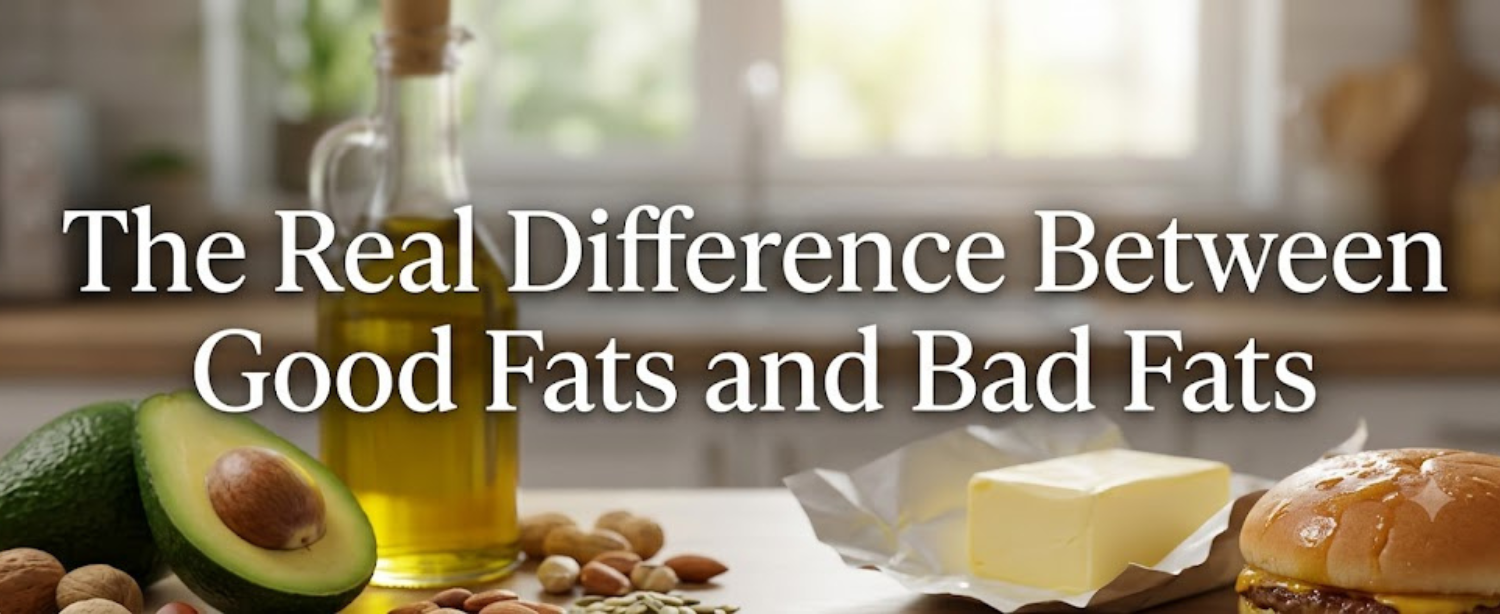
Dietary fat has long been a misunderstood macronutrient. For much of the late twentieth century, public health guidance positioned fat as a primary driver of cardiovascular disease and weight gain, a view that led to widespread low-fat dietary recommendations without adequately distinguishing between fundamentally different types of fat.
Current nutritional science is more precise on this point. The effect of fat on the body varies significantly depending on its chemical structure. Some fats are demonstrably protective; others, when consumed in excess or in specific forms, are associated with measurable health risks. Understanding the real difference between good fats and bad fats has direct implications for cardiovascular health, metabolic function, and long-term disease prevention.
What Is Dietary Fat and Why Does the Body Need It?
Dietary fat is one of three primary macronutrients, alongside carbohydrates and protein, that the body requires to function. Far from being purely harmful, fat serves several essential physiological roles:
- It is a concentrated source of energy, providing more than twice the energy per gram compared to carbohydrates or protein
- It is required for the absorption of fat-soluble vitamins such as A, D, E, and K, which cannot be transported through the body without it
- It forms the structural basis of every cell membrane in the body
- It is essential for the production of hormones, including steroid hormones and sex hormones
- It provides insulation for organs and contributes to the myelin sheath that protects nerve fibres
- It plays a role in blood clotting, immune function, and the regulation of inflammation
The question is never whether to consume fat, but which fats to consume and in what proportion.
The Four Types of Dietary Fat — A Formal Classification
All dietary fats share a common chemical structure, a chain of carbon atoms bonded to hydrogen atoms. What distinguishes one fat from another is the length and arrangement of that carbon chain and the number of hydrogen bonds it contains. These structural differences produce very different effects in the body.
The four main categories of dietary fat are:
- Monounsaturated fats — considered beneficial; found primarily in plant oils, nuts, and avocados
- Polyunsaturated fats — also considered beneficial, particularly omega-3 fatty acids; found in fatty fish, seeds, and plant oils
- Saturated fats — associated with elevated LDL cholesterol when consumed in excess; found primarily in animal products and some plant-based oils
- Trans fats — the most harmful category; largely artificial, created through industrial processing, and associated with significant cardiovascular risk
A clear understanding of this classification is essential for making informed, evidence-based dietary decisions.
Good Fats — Types, Sources and Health Benefits
The term “good fats and bad fats” refers to the distinction between unsaturated fats on one hand and trans fats, and to a lesser extent saturated fats, on the other. Unsaturated fats are broadly protective when they replace harmful fats in the diet.
Monounsaturated Fats
Monounsaturated fats contain one double bond in their carbon chain. They are liquid at room temperature and solidify slightly when chilled. Their primary health benefit is their ability to reduce LDL (low-density lipoprotein) cholesterol, often referred to as bad cholesterol, while maintaining or raising HDL (high-density lipoprotein), the protective form.
Primary sources of monounsaturated fats:
- Olive oil, particularly extra virgin olive oil, a cornerstone of heart-protective dietary patterns
- Avocados and avocado oil
- Almonds, cashews, peanuts, and peanut butter
- Sesame oil
- Mustard oil, widely used in Indian cooking, is also relatively high in monounsaturated fatty acids
Regular consumption of monounsaturated fats has been associated with improved cardiovascular risk profiles, better insulin sensitivity, and reduced systemic inflammation.
Polyunsaturated Fats
Polyunsaturated fats contain multiple double bonds and remain liquid even at low temperatures. This category includes two families of fatty acids that the body cannot produce on its own and must obtain through diet: omega-3 and omega-6 fatty acids. Because of this, they are classified as essential fatty acids.
Omega-3 fatty acids are particularly significant for heart health. They help reduce blood triglyceride levels, lower the risk of abnormal heart rhythms, and have anti-inflammatory properties. Primary sources include:
- Fatty fish including salmon, mackerel, sardines, and tuna
- Flaxseeds and flaxseed oil
- Chia seeds
- Walnuts
- Soybeans and soya oil
Omega-6 fatty acids also play important roles in the body, including supporting brain function and regulating metabolism. They are found in:
- Sunflower oil, corn oil, and soybean oil
- Sunflower seeds and sesame seeds
- Most nuts
The balance between omega-3 and omega-6 intake is clinically relevant. Modern diets, particularly those high in processed and fried foods which tend to be disproportionately high in omega-6 and low in omega-3, a ratio associated with increased inflammatory activity in the body.
Bad Fats — Types, Sources and Health Risks
Not all fats serve the body well. Two categories such as trans fats and saturated fats are associated with negative health outcomes, particularly when consumed in excess.
Saturated Fats
Saturated fats have no double bonds in their carbon chain. They are solid at room temperature and are found primarily in animal-derived foods. Consuming excess saturated fat raises LDL cholesterol levels in the bloodstream, contributing to the build-up of arterial plaque and increasing the risk of cardiovascular disease.
Primary sources of saturated fats:
- Fatty cuts of red meat — beef, lamb, and pork
- Full-fat dairy products — butter, ghee, cream, and whole-fat cheese
- Processed meats such as sausages and salami
- Coconut oil and palm oil — plant-based oils with high saturated fat content
- Packaged bakery products and fried snacks made with these oils
Current guidance recommends limiting saturated fat intake rather than eliminating it entirely. Replacing saturated fat with unsaturated fat, rather than with refined carbohydrates is the approach supported by evidence for cardiovascular benefit.
Trans Fats
Trans fats are the most harmful category of dietary fat. Most trans fats in the modern diet are artificially produced through a process called partial hydrogenation, in which hydrogen is added to liquid vegetable oils to solidify them and extend their shelf life. This process generates partially hydrogenated oils that behave very differently in the body from natural fats.
Trans fats raise LDL cholesterol, lower HDL cholesterol, promote inflammation, and are strongly linked to cardiovascular disease. Unlike saturated fat, trans fats have no recognised safe level of consumption.
Primary sources of trans fats:
- Vanaspati (partially hydrogenated vegetable fat), widely used in Indian commercial cooking and bakery products
- Commercially fried foods including chips, fried snacks, and fast food
- Packaged biscuits, crackers, cookies, and pastries
- Margarine and shortening
- Ready-to-eat instant noodles and processed snack foods
Checking ingredient labels for “partially hydrogenated oil” is the most reliable way to identify trans fat-containing products.
Good Fat Foods to Include in Your Daily Diet
Incorporating good fat foods into daily meals does not require dramatic dietary restructuring. The following practical additions make a meaningful difference:
- Nuts — a small handful of almonds, walnuts, or cashews as a daily snack
- Seeds — flaxseed, chia seeds, and sunflower seeds added to yoghurt, salads, or smoothies
- Fatty fish — two to three servings per week of salmon, sardines, or mackerel
- Olive oil or mustard oil — used as primary cooking oils in place of vanaspati or refined palm oil
- Avocado — consumed regularly as part of meals or added to salads
- Whole eggs — a source of both healthy fats and high-quality protein
- Soybeans and tofu — excellent sources of polyunsaturated fats for vegetarian diets
Bad Fat Foods to Limit or Avoid
Reducing the presence of bad fat foods in the daily diet is equally important. The following categories deserve particular attention:
- Vanaspati and partially hydrogenated oils — present in a wide range of Indian sweets, fried snacks, and commercial baked goods
- Deep-fried street food and fast food — regularly cooked in refined or partially hydrogenated oils
- Packaged biscuits, namkeen, and chips — common sources of hidden trans fats
- Processed meats — sausages, salami, and deli meats are high in both saturated and trans fats
- Full-fat commercially processed dairy products — consumed in excess, these contribute significantly to saturated fat intake
- Commercially prepared sweets and mithai — frequently made with ghee, vanaspati, and full-fat dairy in large quantities
Simple Swaps — Replacing Bad Fats With Good Fats
Improving the fat profile of a diet is largely a matter of substitution rather than deprivation.
- Replace vanaspati or refined palm oil with cold-pressed olive oil or mustard oil for cooking
- Replace full-fat cream in cooking with low-fat yoghurt or coconut milk in moderation
- Replace deep-fried snacks with a handful of mixed nuts or seeds
- Replace butter on toast with avocado or nut butter
- Replace processed biscuits with whole grain crackers or roasted chana
- Replace fatty red meat with grilled or baked fish, legumes, or tofu as a protein source
These adjustments, applied consistently, reduce trans and saturated fat intake while increasing the proportion of beneficial unsaturated fats in the diet, a shift that carries measurable benefits for cardiovascular and metabolic health.
How Much Fat Should You Consume Per Day?
Fat should make up a meaningful portion of total daily caloric intake. General guidance suggests:
- Total fat intake should account for approximately 25 to 35% of daily calories
- Saturated fat should be limited to less than 10% of total daily calories
- Trans fats should be kept as close to zero as possible
- The remainder of fat calories should come from monounsaturated and polyunsaturated sources
Individual requirements vary based on age, activity level, existing health conditions, and overall dietary pattern. Persons with cardiovascular disease, elevated cholesterol, or metabolic disorders should seek personalised dietary guidance rather than applying general population recommendations.
Consulting a specialist in medical nutrition therapy offers a structured, clinically supervised approach to adjusting fat intake in line with specific health conditions and goals. For those with existing heart conditions, a consultation with the best cardiologist in India is the appropriate starting point before making significant dietary changes. Patients experiencing digestive symptoms related to dietary fat, including malabsorption, bloating, or changes in bowel habits, may benefit from evaluation by a gastroenterologist to rule out conditions that affect fat digestion.
Conclusion
The distinction between good fats and bad fats is one of the most clinically consequential differences in nutritional science. Unsaturated fats — when they form the foundation of dietary fat intake — actively support cardiovascular health, reduce inflammation, and protect metabolic function. Trans fats, by contrast, carry measurable risk with no compensating benefit. Saturated fats occupy a middle ground that requires moderation rather than elimination.
The key takeaway is straightforward: the goal is not to eat less fat — it is to eat the right fats consistently. Replacing vanaspati and refined oils with olive or mustard oil, choosing nuts and seeds over fried snacks, and prioritising fatty fish and legumes over processed meats are changes that are both practical and evidence-supported.
At Kokilaben Dhirubhai Ambani Hospital, our clinical nutrition and cardiology teams provide personalised dietary assessments and management plans tailored to individual health profiles. Whether you are managing existing heart disease, working to prevent metabolic conditions, or simply seeking guidance on better daily nutrition, our specialists are equipped to support you with evidence-based care. Book a consultation today.
Frequently Asked Questions
Q1. Is coconut oil a good fat or a bad fat?
Coconut oil is high in saturated fat but contains medium-chain triglycerides, which are metabolised differently from animal-based saturated fats. It is not harmful in moderate quantities, but should not be treated as a heart-healthy equivalent to olive oil.
Q2. Can consuming too much of a good fat still lead to weight gain?
Yes. All fats are calorie-dense regardless of type. Consuming healthy fats beyond total caloric needs will result in weight gain. Portion awareness applies even to beneficial fat sources.
Q3. What is the difference between Omega-3 and Omega-6 fatty acids — and why does the ratio matter?
Both are essential fats that the body cannot produce. Omega-3s are anti-inflammatory; excess omega-6s can promote inflammation. Modern diets tend to be disproportionately high in omega-6. Increasing omega-3 intake through fatty fish, flaxseed, and walnuts helps restore balance.
Q4. How does dietary fat affect brain health and cognitive function?
The brain depends on essential fatty acids, particularly the omega-3 DHA, for structural integrity and neurotransmitter function. Diets low in healthy fats and high in trans fats are associated with cognitive decline and increased neurodegenerative risk over time.
Q5. Is it safe for people with existing heart disease to consume any saturated fat?
In small amounts, saturated fat is not categorically prohibited. The priority, however, should be replacing saturated fat with unsaturated alternatives. Cardiac patients should seek specific dietary guidance from a cardiologist and a clinical nutritionist.