

Archive for the ‘ Health Tips ’ Category

Work at Home Tips for those Working from Home!

Monday, June 15th, 2020

The COVID 19 pandemic has led to a situation where a majority of people have begun to work from home. In most cases, with domestic help not being available, they have to ‘work at home’ as well as ‘work from home’ and cope with both domestic chores and office work. For homemakers, the lack of domestic help has added to their workload. Among other issues, one complaint that is emerging is an increase in their symptoms and pain for many patients who are restricted to their homes, the most common being back pain and knee pain.

An increase in workload is contributing to this increase in pain. It is important for all members of the family to participate and share the domestic chores. If family members are not supportive, then the onus falls on the homemaker who now has to care for a larger number of people at home and spend more standing cooking in the kitchen with along with the burden of other household work. If there are only senior citizens living alone, then many elderly patients cannot manage heavy physical work at home, and their pain worsens.

For professionals, working from home, they end up sitting for longer periods of time, which can worsen their pain. The lack of exercise arising from closure of gyms, parks, walking areas during lockdown has caused muscle weakness and led to many individuals putting on weight.

Here are some work at home tips for those working from home:

  • Avoid sitting for more than 30-60 minutes continuously. Take breaks, walk around and stretch a little
  • Make a regular schedule for basic stretching exercises at home. Some like to do this early in the morning, some prefer it to be in the evening. Find out what works for you best and fit it in your daily schedule
  • In the kitchen, avoid bending down while cooking or over the sink while washing dishes as this posture can aggravate back pain. Keep a footstool to rest one leg, and keep alternating your weight between each leg, so that when you bend, the stretch is taken off the back
  • Use floor mops, long handle brooms and stand, instead of bending/ squatting while mopping the floor or sweeping
  • Get regular sleep. Good sleep ensures good health and reduces pain levels
  • Meditate for some time every day. This helps in two ways – It helps to reduce pain levels, and also helps in coping with stress during these times from the negative messages floating around
  • Listen to your body. Pain is your body’s way of telling you something is wrong. Do not push yourself when you have chronic pain, because this may worsen your pain levels
  • Use cold packs or warm packs for local application. Avoid using very hot bags for a long period, as this can be harmful. Apply these for a few minutes only, and repeat frequently
  • Use lumbar belts or walking sticks even while inside the house. This will support the back and take load off the knee
  • Most important, do not hesitate to connect with your doctors! Physical distancing is needed, but today technology allows us to connect with doctors virtually on telemedicine. This will help in getting the right advice to help you manage the pain in its early stages and prevent it from worsening

This blog post is written by: Dr. Mahesh Menon, Consultant – Pain and Palliative Medicine, Kokilaben Dhirubhai Ambani Hospital. Find out more about Dr. Menon by clicking here
Stay Healthy this Summer

Monday, May 25th, 2020

This summer we have been hit by the highly infectious COVID-19. This pandemic has affected people all over the world and India has seen above 1 .38lakh cases to date. Hospitals are already overstretched attending to patients suffering from the coronavirus. This makes it even more important to take extra care of your health this summer. High temperatures can cause dehydration, heat exhaustion and heat stroke, or intestinal infections too.

This summer is different from every year. The lockdown has forced people to stay indoors, eat home-cooked food, and maintain high hygiene due to the COVID-19 pandemic. This has helped reduce the incidents of summer illness. Cases of stomach infections and food poisoning have all come down as people are aware of hand hygiene.

Even when you stay at home it is important to eat the right foods and follow healthy practices to stay healthy and fit. Here are a few healthy tips to follow this summer:

  • Have seasonal fruits and vegetables
    It is best to consume only seasonal summer fruits and vegetables this season as they are filled with properties to fight the summer heat. Watermelon, muskmelon, oranges,  mangoes are some of the seasonal summer fruits. Pumpkin, bitter gourd, bottle gourd, cucumber, etc are some of the seasonal summer vegetables.
  • Stay hydrated
    Drinking water is extremely important as it helps rehydrate your body and regulates the various functions of the body. Avoid drinking extremely cold water.
  • Eat regularly but light
    Summer time tends to reduce one’s appetite because of excessive heat. But you need eat regularly because your body requires the nutrients to fight the heat and keep you healthy. It is good to have lighter meals rather than having heavy ones, especially at night.
  • Skin care in summer
    Are you sweating profusely this summer? Summer makes your skin more prone to rashes, prickly heat, and fungal infections. Have a bath twice daily and use a medicated powder if needed.
  • Choose healthy juices
    Summers make you thirsty more often. However avoid sipping on fizzy drinks, alcohol, caffeinated drinks or packaged juices. Choose healthy alternatives like nimbu pani, homemade juice, or aam panna a seasonal favourite.
  • Snack healthy
    The harsh climate can drain you off your energy, making you prone to infections, vomiting, nausea, prickly heat, and low blood pressure. Avoid fried foods and foods that are highly processed and heavy to digest.
  • Don’t Exert Yourself
    Physical activity is essential for good health, but during summers, make sure that you don’t overexert yourself. If household chores are exhausting you, take some rest or split the activities during the day. Follow a light exercise routine and remain indoors.
  • Wear Loose Clothes
    Wear loose and comfortable cotton clothes even if you are staying at home. Avoid wearing any synthetic fabrics. 

Summer Special Foods

What are you eating every day? Is your diet a summer-friendly?

Here are some of the summer special foods that are extremely high on vitamins, minerals, and other essential nutrients. Have them daily:

  • Melons – Watermelons and muskmelons good for the digestive system, propel weight loss, and are very high in water content.
  • Lauki or Bottle Gourd – It’s rich in calcium, magnesium, Vitamin A, C, and, folate. The summer vegetable works well on high blood pressure, keeps the heart healthy, and is considered an excellent blood purifier.
  • Aam panna – Aam panna made from raw mangoes helps fight constipation and chronic stomach problems like Irritable bowel syndrome (IBS). Make it at home to ensure the use of recommended quantities of sugar and salt.
  • Cucumber – Loaded with fibre, eating cucumber in summer helps in keeping constipation at bay. Cucumber also contains a high amount of water content that helps keep you cool.
  • Curd – Curd is not only delicious but also gives a coolant effect to your body. You can make buttermilk or have a plain bowl of curd with your meals. It can also be mixed with fruits and made into a seasonal smoothie.
  • Mint – Mint leaves or pudina not only keeps your body temperature cool but also gives you a refreshing effect.
  • Green leafy vegetables – Having green leafy vegetables around the year gives you numerous benefits. And adding them to your daily diet is also beneficial as green leafy vegetables contain a high amount of water content.
  • Onions – You may get surprised to know that onions too provide cooling properties. The red onions are loaded with quercetin, which is considered as a natural anti-allergen. Adding onion to your daily diet also helps in protecting you against the sun-stroke.
  • Nimbu pani water – Lemonade or nimbu pani is another refreshing drink for summer. Sip on some nimbu pani everyday to stay hydrated.

An extreme heatwave is set to hit many parts of India during the end of May. Stay at home and stay safe as you are already fighting the COVID-19 pandemic. If you are stepping out to buy essentials do not step out between 11 am to 4 pm as the heat is at its peak at this time. Wear protective clothing like a cap or scarf if required. Take preventive steps and protect your and your family’s health in summer. Please consult doctors at Kokilaben Dhirubhai Ambani Hospital for any summer ailments.

All about Hypertension

Saturday, May 16th, 2020

Hypertension is high blood pressure, a very common condition in older adults. Blood pressure is the physical force exerted by the blood as it pushes against the walls of the arteries. Blood pressure readings are written in two numbers separated by a line. The top number represents the systolic blood pressure and the bottom number represents the diastolic pressure. The systolic blood pressure is the pressure in the arteries as the heart contracts pushing the blood forward. The diastolic pressure is the pressure in the arteries as the heart relaxes. 1 in 5 adults have Hypertension in India. 33% of urban Indians are Hypertensive whereas 25% of rural Indians are Hypertensive.

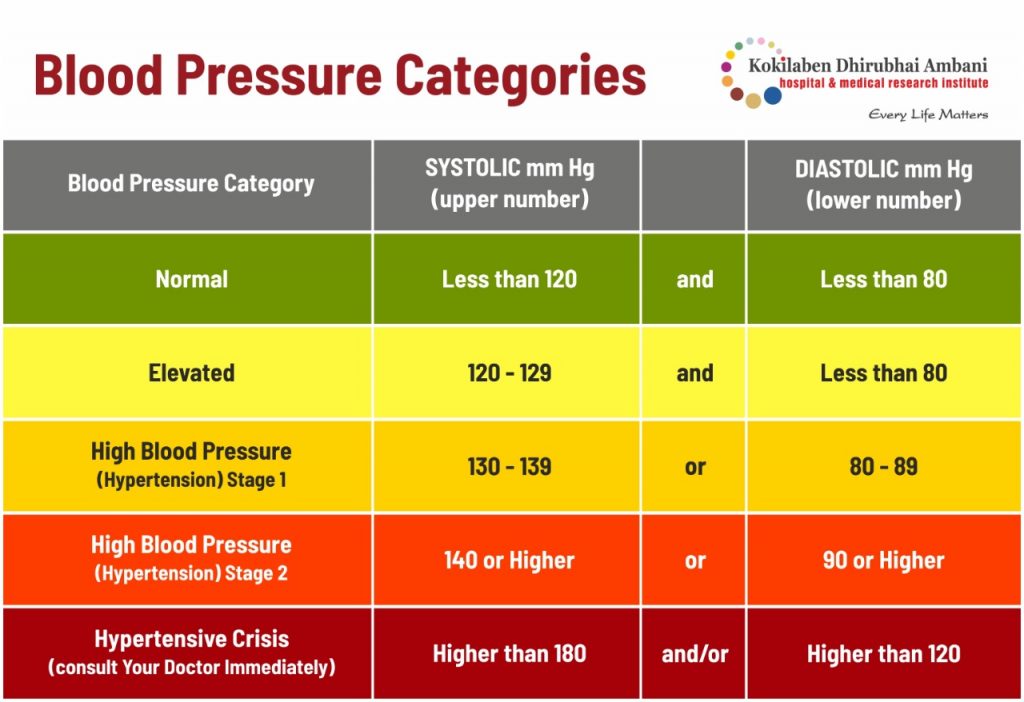
Normal blood pressure is below 120/80. High blood pressure can also damage the walls of the arteries. Over time, hypertension increases the risk of heart disease, kidney disease, and stroke. Here are the revised 4 blood pressure categories:

  • Normal.
  • Elevated.
  • High blood pressure, Stage 1.
  • High blood pressure, Stage 2.
Blood Pressure Categories

Symptoms of Hypertension
Most commonly high blood pressure causes no symptoms at all. This means that people with high blood pressure can be having damage that occur to their heart, kidneys, eyes, and circulation without any symptoms. This makes regular check-up of blood pressure very important.

High blood pressure can impair the function of the kidneys, leading to fluid retention and swelling of the legs, and even kidney failure. High blood pressure can affect the eyes, causing vision loss. High blood pressure can seriously affect the circulation causing pain in the legs with walking, cold feet, and stroke. Fortunately, when high blood pressure is detected early, treated, and monitored, the consequences of high blood pressure can be avoided.

Symptoms of high blood pressure may be present in those who have extremely high blood pressure. Some of the symptoms include:

  • Severe headaches.
  • Fatigue.
  • Vision problems.
  • Chest pain.
  • Difficulty breathing.
  • Irregular heartbeat.
  • Pounding in the chest, neck, or ears.

Causes of Hypertension
There are several factors that may cause high blood pressure, but the exact cause is unknown. The following factors may increase one’s risk for high blood pressure:

  • Smoking.
  • Overweight or obesity.
  • Lack of physical activity.
  • Too much salt consumption.
  • Excessive alcohol consumption.
  • Stress.
  • Older age.
  • Family history of high blood pressure.
  • Chronic kidney disease.
  • Adrenal and thyroid disorders.
  • Sleep apnoea.

Elevated Blood Pressure
An elevated blood pressure reading means that your blood pressure falls just above the normal level, corresponding to a systolic pressure between 120 and 129 or a diastolic pressure of 80 or less.

Treatment
If elevated blood pressure levels are accompanied by diabetes, kidney disease, or cardiovascular disease, your doctor may suggest blood pressure medication as well as  lifestyle changes. If elevated levels are your only condition, lifestyle changes can help prevent blood pressure from rising. Here are a few health tips to help lower your blood pressure:

  • Maintain a healthy weight.
  • Eating a healthy, low-salt diet.
  • Exercise regularly.
  • Limit alcohol consumption.
  • Quit smoking.
  • Stay hydrated.

Some facts about High Blood Pressure:

  • High blood pressure may be linked to dementia.
  • Young people can also have high blood pressure.
  • Anxiety causes some of the same symptoms as hypertension.
  • High blood pressure usually has no symptoms.
  • Many people who have high blood pressure don’t know it.
  • High Blood pressure can be life-threatening.

COVID-19 and Hypertension
Having hypertension does not make you more susceptible to COVID-19. However, a person with high blood pressure who gets the virus is more likely to require hospitalisation or even ventilation, as opposed to infected patients without blood pressure. Any co-morbidity or existing medical conditions like diabetes, hypertension or heart disease may result in a more severe impact of the virus on the body due to a weaker immune system. Those who have high blood pressure and are already on medication may have compromised immunity.

Are you or a family member suffering from Hypertension? Get expert advice and treatment at our Department of Internal Medicine. Please find below website link for more details:

Epilepsy Awareness

Monday, February 10th, 2020

Epilepsy is a chronic non-communicable disease of the brain that affects around 50 million people worldwide. It is characterized by recurrent seizures, which are brief episodes of involuntary movement that may involve a part of the body (partial) or the entire body (generalized). Seizure episodes are a result of excessive electrical discharges in a group of brain cells. Different parts of the brain can be the site of such discharges. Seizures can vary from the briefest lapses of attention or muscle jerks to severe and prolonged convulsions. Seizures can also vary in frequency, from less than 1 per year to several per day. It is estimated that there are more than 10 million persons with epilepsy (PWE) in India.

Epilepsy Symptoms

The main symptom of epilepsy is recurrent seizures. However, if a person experiences one or more of the following symptoms, they should seek medical attention, as it may indicate epilepsy:

  • a convulsion with no fever.
  • short blackouts or confused memory.
  • sudden stiffness for no apparent reason.
  • sudden falling for no apparent reason.
  • intermittent fainting spells, during which they lose bowel or bladder control, frequently followed by extreme tiredness.
  • temporary unresponsiveness to instructions or questions.
  • peculiar changes in senses, such as smell, touch, and sound.
  • jerking arms, legs, or body, which will appear as a cluster of rapid jerking movements in babies.
Causes of Epilepsy

Epilepsy has no identifiable cause in about half the people with the condition. In the other half, the condition may be a result of:

  • Hereditary factors.
  • Head trauma.
  • Prenatal injury.
  • Developmental disorders.
  • Brain damage like stroke or brain tumours.
  • Infectious diseases like meningitis or AIDS.
Key facts about Epilepsy
  • Epilepsy is a chronic non-communicable disease of the brain that affects people of all ages.
  • Nearly 80% of people with epilepsy live in low- and middle-income countries.
  • It is estimated that up to 70% of people living with epilepsy could live seizure-free if properly diagnosed and treated.
  • The risk of premature death in people with epilepsy is up to three times higher than for the general population.
  • In many parts of the world, patients with epilepsy suffer from stigma and discrimination.
Epilepsy Diagnosis

A doctor will review an individual’s medical history and the symptoms they have experienced, including a description and timeline of past seizures, to diagnose epilepsy. Several types of imaging test, as well as neurological tests are used to diagnose epilepsy and find the type of it.

Epilepsy Medication

Most people with epilepsy can become seizure-free by taking one anti-seizure medication, which is also called anti-epileptic medication. Others may be able to decrease the frequency and intensity of their seizures by taking a combination of medications.

Epilepsy Surgery

When medications fail to provide adequate control over seizures, surgery may be an option. With epilepsy surgery, a surgeon removes the area of your brain that’s causing seizures. Doctors usually perform surgery in the below scenarios:

  • Your seizures originate in a small, well-defined area of your brain.
  • The area in your brain to be operated on doesn’t interfere with vital functions such as speech, language, motor function, vision or hearing.
Epilepsy Myths and Facts

Myth 1: If you’ve had a seizure, you have epilepsy.

Fact: A person is diagnosed with epilepsy when he or she has two or more unprovoked seizures, that occur more than 24 hours apart. But when something provokes a seizure, such as a binge drinking or sleep deprivation these are not related to epilepsy.

Myth 2: People with epilepsy are mentally ill or emotionally unstable.

Fact: Epilepsy is an umbrella term covering many types of seizures and epileptic disorders. It is a functional, physical problem, not a mental one, and it has many unidentifiable causes.

Myth 3: It’s easy to tell when a seizure is about to happen.

Fact: One cannot predict when seizures are beginning. However, once patients are aware of the seizure triggers they can avoid such situations.

Myth 4: Seizures hurt.

Fact: A person is unconscious and not in any pain during most seizures. However if the person falls down or has bit their tongue, they may experience discomfort.

Myth 5: Epilepsy is most common in children.

Fact: Epilepsy is most common in both the very young and the elderly. However, this disease can develop at any age.

Myth 6: You should force something into the mouth of someone having a seizure.

Fact: That is not true. Never put anything into a person’s mouth if they are having a seizure. This could injure them. Roll the person on one side, keep him or her a safe distance from any nearby objects, and let the seizure run its course.

Are you or a loved one suffering from Epilepsy? Seek expert help from the best neurologists in Mumbai at our Centre for Neurosciences, part of Kokilaben Dhirubhai Ambani Hospital – recognized as a top epilepsy treatment hospital in Mumbai.

Healthy you = Healthy nation

Sunday, January 26th, 2020

Are you healthy?

Are you happy?

Is your poor health hampering your professional life?

Chronic diseases and ailments can affect your performance at work, lead to poor concentration and may add to your sick leaves. A good physical and mental health makes an important contribution to the economic progress of the nation. Healthy populations live longer, are more productive, and save more.

India stands to lose $4.58 trillion due to non-communicable diseases and mental disorders between 2012 and 2030, an amount more than double India’s annual GDP, according to a report. Out of this, cardiovascular diseases (CVDs) will account for $2.17 trillion and mental health conditions $1.03 trillion for the majority of the economic loss. This report has been released by the World Economic Forum and the Harvard School of Public Health.

Why is India unhealthy?

Unhealthy diets, physical inactivity, air pollution, harmful use of alcohol and tobacco consumption, lack of awareness is the main reason behind the development of NCDs. A non-communicable disease (NCD) is a disease that is not transmissible directly from one person to another. NCDs include most cancers, heart diseases, Parkinson’s disease, autoimmune diseases, strokes, diabetes, chronic kidney disease, osteoarthritis, osteoporosis, Alzheimer’s disease, cataracts, and others. World Health Organization estimates that an estimated 60 per cent of all deaths in India are due to non-communicable diseases (NCDs).

Top 10 killers in India

The latest Global Burden of Disease study lists ailments that are triggering most deaths and disabilities in India. Here is the list:

1. Heart Disease causes 17.8% of all deaths.

Cases of heart attacks are increasing day by day and an increasing number of cases are affecting younger people.

2. Chronic Obstructive Pulmonary Disease (COPD) causes 8.66% of all deaths.

The human lungs have a holding capacity of 3.5 litres. After 30 years of age, it declines by 10-30 ml per year, if a person does not exercise. However, in COPD patients, it declines faster, almost 100 ml per year which harms the functioning of your lungs. 

3. Diarrhoea causes 7.94% of all deaths.

Diarrhoea kills just a little less than COPD. In all age groups, it is the third-largest killer in India. 

4. Cerebrovascular diseases cause 7.09% of all deaths

This includes neurological diseases like brain strokes and cases of internal bleeding.

5. Cancer causes 6% of all deaths.

According to WHO, India has a cancer mortality rate of 79 per 100,000 deaths and accounts for over 6 percent of total deaths.

6. Lower Respiratory Tract Infections (LRI) cause 5.06% of all deaths.

These include pneumonia and influenza infections. Antibiotics often prove ineffective in today’s drug-resistant strains. This disease strikes the old and young alike.

7. Tuberculosis (TB) causes 4.45% of all deaths.

Cases of Tuberculosis are often misdiagnosed and not treated appropriately which leads to many deaths by TB.

8. Diabetes causes 3.11% of all deaths.

India has an estimated number of 6.5 crore diabetics. Uncontrolled blood sugar leads to many diabetes complications like and may damage your retina, kidneys, nerves, and arteries. A diabetic lives 7-8 years less than a normal person.

9. Chronic Kidney Disease (CKD) causes 2.39% of all deaths.

The reason CKD is such a huge problem is that there is a very high incidence of obesity and hypertension in our country. These are major risk factors for CKD.

10. Suicide causes 2.35% of all deaths.

Of eight lakh suicides across the world annually, 1,35,000 are from India.

Tips to stay healthy 

As we celebrate our 71st Republic day on this 26th January 2020, let us commit to making some healthy lifestyle changes in our life. A healthy population means a healthy country and it goes a long way in contributing to the economic growth of the country. Here are a few tips to maintain optimum health and minimize your risk of diseases:

  1. Quit smoking.
  2. Eat healthy.
  3. Exercise regularly.
  4. Manage your blood sugar levels.
  5. Limit alcohol intake.
  6. Say no to junk food.
  7. Stay hydrated.
  8. Monitor your blood pressure level.
  9. Check your cholesterol levels.
  10. Maintain personal hygiene.

Kokilaben Dhirubhai Ambani Hospital completes 11 years of offering expert medical care in Mumbai on 26th January 2020. We have been ranked no. 1 fourth time in a row as the best hospital in Mumbai and western India. We are the only hospital in Mumbai with a Full Time Specialist System (FTSS) ensuring easy availability and access to dedicated specialists. Our hospital is equipped with state of the art infrastructure and world-class technology that helps deliver consistent and safe patient care. Feel free to get in touch with our medical experts for any health-related issues, diagnosis and treatment options.

Add us as preferred source