

Archive for July, 2026

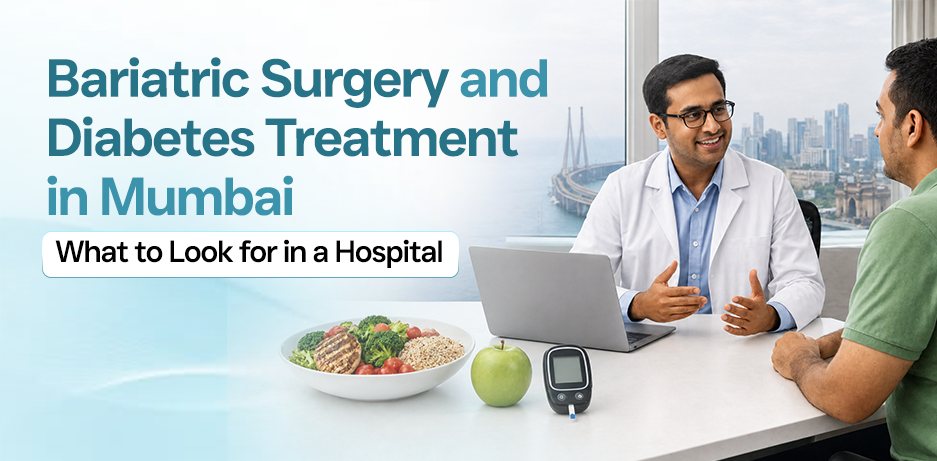
Bariatric Surgery and Diabetes Treatment in Mumbai: What to Look for in a Hospital

Friday, July 31st, 2026

India now has one of the highest burdens of type 2 diabetes in the world, and obesity, one of its major drivers, is rising rapidly in urban populations. For many patients in Mumbai managing both conditions, the question is no longer whether to treat them separately, but whether treating one may help improve the other.

When performed in the right clinical setting, bariatric surgery can lead to remission of type 2 diabetes in a significant proportion of patients, often before meaningful weight loss occurs. Choosing the right hospital for bariatric surgery and diabetes treatment in Mumbai is therefore about more than finding a capable surgeon. It requires a facility with the full metabolic medicine infrastructure for the procedure, along with long term support afterwards. Metabolic health is closely tied to cardiac health too, patients managing diabetes and obesity often benefit from being at a centre that is also recognised as the best heart hospital in India, given how closely the two conditions interact.

Understanding Bariatric Surgery and Its Link to Diabetes

Bariatric surgery refers to a group of weight loss procedures that alter the digestive system to reduce food intake, calorie absorption, or both. Beyond weight reduction, these procedures trigger powerful hormonal changes that improve insulin sensitivity and, in many patients with type 2 diabetes, lead to a significant reduction or even complete remission of the condition, often independent of weight loss.

What is bariatric surgery — the main types:

  • Sleeve gastrectomy — about 80% of the stomach is removed, leaving a smaller, sleeve shaped stomach that reduces food intake and hunger hormones; it is the most commonly performed bariatric procedure in India.
  • Roux-en-Y gastric bypass — a small stomach pouch is created and the small intestine is rerouted; this changes both food intake and nutrient absorption and delivers the strongest diabetes outcomes.
  • Mini gastric bypass — a simpler version of gastric bypass with a single anastomosis; it is increasingly used in India for metabolic benefits.
  • Adjustable gastric band — a band is placed around the upper stomach; it is performed less often now because its metabolic benefit is lower than that of other procedures.
  • Biliopancreatic diversion with duodenal switch (BPD/DS) — the most complex procedure, offering the greatest weight loss and metabolic change; it is usually reserved for patients with severe obesity or those who need the strongest metabolic effect.

The way bariatric surgery affects diabetes is linked to changes in gut hormones, especially GLP – 1 and GIP, which improve insulin secretion and sensitivity. That is why glucose levels often improve within days of surgery, long before significant weight loss occurs.

What to Look for in a Hospital for Bariatric Surgery and Diabetes Treatment in Mumbai

Choosing a hospital for bariatric surgery in Mumbai involves more than reviewing the surgeon’s credentials. The right decision depends on several clinical and institutional factors that directly affect safety, outcomes, and long term success.

Accreditation and safety standards The hospital should have NABH accreditation and, ideally, recognition from bariatric surgical societies such as IFSO (International Federation for the Surgery of Obesity and Metabolic Disorders) or OSSI (Obesity Surgery Society of India). Accredited bariatric programmes follow defined safety protocols for patient selection, perioperative care, and follow up.

Multidisciplinary team Effective bariatric surgery and diabetes treatment requires a team, not just a surgeon. Look for a programme that includes a dedicated endocrinologist or diabetologist, a clinical dietician, a psychologist or psychiatrist for preoperative psychological screening, and a specialist physiotherapist. A weight loss clinic in Mumbai that brings these disciplines together under one programme typically delivers better outcomes than a facility offering surgery without structured support. Given the strong overlap between metabolic and cardiac risk, it also helps if the hospital has access to a best cardiologist hospital in Mumbai team for pre operative cardiac clearance and ongoing risk management.

Surgical experience and volume Bariatric surgical outcomes are closely linked to procedural volume. A surgeon and facility performing a high number of bariatric procedures each year are more likely to have refined surgical technique, efficient complication management, and experienced nursing and anaesthesia teams familiar with the needs of bariatric patients. It is worth asking about annual procedure volumes and complication rates.

Availability of all procedure types Not every patient needs the same operation. A hospital that offers the full range of bariatric procedures, including sleeve, bypass, and revision surgery, can tailor the surgical plan to the individual’s metabolic needs and anatomy, rather than defaulting to the procedure the facility performs most often.

Pre-operative evaluation infrastructure A thorough pre-operative assessment should include nutritional evaluation, psychological assessment, cardiac and pulmonary clearance for high risk patients, endoscopy, and optimization of diabetes and blood pressure medications before surgery. Hospitals with onsite imaging, laboratory, endoscopy, and specialist consultation services make this process more efficient and help ensure nothing is overlooked. Our best general surgeon in Mumbai works closely with endocrinologists and the pre-operative team to make sure every bariatric patient is properly evaluated before surgery.

Structured long-term follow-up Bariatric surgery is not a one-time procedure with a fixed endpoint. Nutritional deficiencies, especially vitamin B12, vitamin D, iron, and folate, are common after surgery and require lifelong monitoring and supplementation. Long term dietary counselling from the best dietician in Mumbai with experience in postbariatric nutrition is essential for maintaining results.

Diabetes Treatment Options in Mumbai Beyond Surgery

Bariatric surgery is not appropriate for all patients with type 2 diabetes. The decision is based on BMI, degree of diabetes control, duration of diabetes, and the presence of comorbidities. For patients who are not surgical candidates, or who are not yet at a stage where surgery is indicated, structured non-surgical diabetes management remains highly effective.

Non-surgical diabetes treatment options:

  • Lifestyle intervention — structured dietary modification, weight management, and physical activity; first-line for all stages of type 2 diabetes.
  • Oral antidiabetic medications — metformin, SGLT – 2 inhibitors (empagliflozin, dapagliflozin), DPP – 4 inhibitors, and glitazones; selected based on individual metabolic profile and comorbidities.
  • GLP-1 receptor agonists — such as semaglutide and liraglutide; produce significant weight loss alongside glucose lowering; increasingly used as a bridge toward surgical candidacy or as an alternative in selected patients.
  • Insulin therapy — for patients with inadequate glycaemic control on oral agents, or with beta cell failure; available in multiple formulations for individualised regimens.
  • Technology-assisted management — continuous glucose monitoring (CGM) systems and insulin pumps that allow more precise glucose management with real-time data.

The best treatment for diabetes is the one appropriate to the individual patient’s clinical profile, not a single approach applied uniformly. A hospital that provides the full spectrum, from lifestyle intervention to pharmacotherapy to surgery, enables a truly personalised management approach. This is also why patients with longstanding diabetes are often advised to be evaluated by a cardiac rhythm specialist, since uncontrolled metabolic disease can affect heart rhythm over time.

Questions to Ask Before Choosing a Hospital

Before committing to a hospital for bariatric surgery or diabetes treatment in Mumbai, ask the following:

  • Is the hospital NABH accredited ?
  • How many bariatric procedures does your team perform annually?
  • Does the programme include preoperative psychological assessment?
  • What nutritional monitoring and supplementation protocols are in place after surgery?
  • Who manages my diabetes during and after the operation, is an endocrinologist involved?
  • What is the followup schedule after surgery, and for how long is it provided?
  • What happens if I develop a complication, is there ICU and surgical backup available in the same facility?
  • What is the total cost of bariatric surgery, including preoperative workup, surgery, hospitalisation, and 1 year of follow-up?

Conclusion

For patients in Mumbai managing obesity and type 2 diabetes, whether they are considering bariatric surgery or looking to optimise nonsurgical management, the quality of the hospital and programme matters just as much as the procedure itself. The right facility should offer a comprehensive team, a full range of surgical options, structured preoperative preparation, and long-term nutritional and metabolic follow-up.

At Kokilaben Dhirubhai Ambani Hospital, our Centre for Diabetes and Bariatric Surgery offers an integrated programme that brings together surgical expertise, endocrinology, dietetics, and long-term support for patients at every stage of metabolic disease management. Since heart rhythm disorders are also more common in patients with long-term diabetes and obesity, patients can additionally access our best electrophysiologist in Mumbai team as part of the same coordinated care pathway. Book a consultation with our team today.

Frequently Asked Questions

What is the cost of bariatric surgery in Mumbai? 

Bariatric surgery costs in India vary depending on the type of procedure, hospital accreditation, and the extent of preoperative workup required. Sleeve gastrectomy typically costs less than gastric bypass; revision procedures carry higher costs. It is important to obtain a total cost estimate that includes preoperative investigations, surgery, hospitalisation, and structured followup rather than the surgical fee alone.

Can bariatric surgery cure type 2 diabetes? 

Bariatric surgery produces remission of type 2 diabetes, meaning blood glucose normalises without medication, in a significant proportion of patients, particularly those with shorter disease duration and good residual beta cell function. It is more accurate to describe this as remission than cure, as lifelong monitoring remains appropriate.

What types of bariatric surgery are available in Mumbai? 

The main types of bariatric surgery available in Mumbai include sleeve gastrectomy, Roux en Y gastric bypass, mini gastric bypass, biliopancreatic diversion with duodenal switch, and revisional bariatric surgery. The appropriate procedure is determined after specialist assessment, based on BMI, metabolic profile, and patient preference.

How do I know if a hospital is accredited ? 

Look for NABH accreditation at the hospital level and ask specifically whether the bariatric programme is recognised by IFSO or OSSI. A well established programme will also have a defined multidisciplinary team, stated patient selection criteria, and a structured follow-up protocol, all of which can be confirmed during a pre-operative consultation.

Is diabetes treatment covered by insurance in Mumbai? 

Most health insurance policies in India cover hospitalisation for diabetes related complications and pharmacological management. Bariatric surgery for metabolic indications, including diabetes, is covered by a growing number of insurers, particularly when specific clinical criteria are met (typically BMI above 32.5 with uncontrolled diabetes). Confirm coverage with your insurer before proceeding and request a preauthorisation letter from the hospital.

How to Compare Cancer Centres in India for Robotic Surgery: Technology, Expertise and Key Factors

Friday, July 3rd, 2026

Introduction

Robotic surgery in India has grown from a niche offering at a handful of tertiary centres to a treatment option now available across multiple cities and hospital networks. For cancer patients considering this approach, that growth creates a new challenge: the number of robotic surgery hospitals has increased, but the quality and experience behind those programmes vary significantly.

Choosing a cancer centre for robotic surgery is not simply a matter of finding a hospital that owns a robotic system. What matters is the surgeon’s experience with that system for your specific cancer type, the volume of robotic oncological procedures the programme performs annually, the quality of the multidisciplinary team surrounding the surgeon, and the infrastructure available to manage complications when they occur.

This guide provides a structured framework for comparing robotic surgery centres in India, enabling patients and families to make the most informed decision possible.

Why Robotic Surgery Matters in Cancer Care

Robotic surgery uses a surgeon controlled system, most commonly the da Vinci Surgical System, to perform minimally invasive procedures with a level of precision and range of motion that exceed those of standard laparoscopic techniques. The robotic platform provides a magnified three dimensional view of the surgical field, eliminates hand tremor, and allows instrument articulation in tight anatomical spaces where conventional tools cannot operate as precisely.

In oncological surgery, these capabilities translate into:

  • More precise tumour excision with better preservation of surrounding healthy tissue and critical anatomical structures
  • Reduced blood loss and lower transfusion rates
  • Smaller incisions with less post operative pain and faster mobilisation
  • Shorter hospital stays and faster return to oncological adjuvant therapy, chemotherapy or radiation, which matters when treatment timelines are clinically significant

Da Vinci robotic surgery in India is now performed across prostate, colorectal, gynaecological, urological, thoracic, and selected head and neck cancers, making it relevant to a wide range of oncology patients evaluating their surgical options.

Key Factors to Compare When Choosing a Cancer Centre for Robotic Surgery

1. Robotic surgical volume and case experience Volume is the single most predictive factor for surgical outcomes. The best robotic surgery hospital in India is not simply one that owns the equipment; it is one where the surgical team performs robotic procedures at sufficient volume for the programme to have genuine expertise. Ask specifically about the annual number of robotic oncological procedures for your cancer type.

2. Generation and capability of the robotic system The da Vinci system exists in multiple generations with significant differences in capability. Older systems lack the advanced vision, articulation range, and integrated fluorescence imaging of current platforms. Ask which system is available and whether it supports the specific technique planned for your procedure.

3. Surgeon-specific training and fellowship credentials Hospital ownership of a robotic system and individual surgeon expertise are not the same thing. Confirm that your operating surgeon has completed formal robotic surgery training, ideally a subspecialty fellowship, and ask how many robotic procedures of your specific type they have performed independently.

4. Multidisciplinary tumour board review The best cancer centre for robotic surgery is not one that operates in a silo. Cancer cases should be reviewed by a multidisciplinary tumour board, including oncologists, surgeons, radiologists, pathologists, and radiation oncologists, before a surgical plan is finalised. This review determines whether robotic surgery is the most appropriate approach for your stage and anatomy.

5. Integrated oncological programme Robotic surgery is one component of cancer treatment, not the entirety of it. The centre should offer seamless integration with medical oncology for chemotherapy and coordinated radiation planning, along with a dedicated critical care hospital for postoperative monitoring and complication management within the same facility. 

6. Accreditation and quality benchmarks NABH accreditation, JCI accreditation, and recognition by international cancer surgery bodies provide independent verification of institutional quality standards. These are not marketing designations; they reflect documented adherence to clinical protocols.

Advantages of Robotic Surgery for Cancer Patients Specifically

Beyond the general benefits of minimally invasive surgery, the advantages of robotic surgery carry specific oncological significance:

  • Nerve sparing precision — particularly relevant in prostate and rectal cancer surgery, where preservation of surrounding nerves affects continence and sexual function outcomes
  • Lymph node dissection accuracy — robotic magnification and articulation improve the completeness of regional lymph node clearance, which directly impacts staging accuracy and treatment decisions
  • Reduced surgical trauma in re-operative fields — patients who have received prior pelvic radiation or have adhesions from previous surgery benefit from the precision of robotic dissection in scarred tissue
  • Earlier initiation of adjuvant therapy — faster postoperative recovery allows chemotherapy or radiation to begin sooner in cases where treatment delay affects oncological outcomes. This is why close coordination with a best radiation oncologist in Mumbai is often built into the postsurgical plan from the outset, rather than arranged only once recovery is underway. 

Questions to Ask Before Choosing a Cancer Center

Before committing to a robotic surgery hospital, every patient should ask:

  1. How many robotic procedures of my specific cancer type does your team perform each year?
  2. Which robotic system is available, and is it the current generation?
  3. Has my case been reviewed by a multidisciplinary tumour board?
  4. What is the contingency plan if robotic surgery needs to convert to open surgery mid procedure?
  5. Is post operative care managed by a specialist team, and is intensive care available within the same facility?
  6. What is the expected length of hospital stay and timeline to adjuvant therapy?

Red Flags to Watch For

  • A centre that recommends robotic surgery without a tumour board review or staging workup
  • A surgeon who cannot provide case volume data for your specific cancer type
  • A facility where the robotic system is available but rarely used by the oncological team
  • No clear pathway from surgery to adjuvant oncological care within the same programme
  • Absence of NABH or equivalent accreditation

Conclusion

Choosing a cancer centre for robotic surgery in India requires looking beyond equipment to evaluate the programme, the team, and the infrastructure behind it. The best robotic surgery hospital in India for your diagnosis is the one where surgeon experience, tumour board integration, oncological follow up, and institutional quality standards align with the specific demands of your case.

At Kokilaben Dhirubhai Ambani Hospital, our robotic oncological surgery programme operates within a fully integrated cancer care framework, multidisciplinary tumour board review, advanced robotic surgical platforms including the Toumai Robotic Surgery System, specialist oncology nursing, and coordinated adjuvant therapy, designed to deliver the best possible outcomes for each patient. Book a consultation to understand whether robotic surgery is the right approach for your diagnosis

Frequently Asked Questions

1. Does the type of cancer affect which robotic surgery system a centre should use? 

Yes. Different platforms have different instrument ranges, vision systems, and procedural support. Prostate and gynaecological robotic surgery have the most established evidence base with the da Vinci system. For thoracic or complex pelvic oncology, the specific system and its generation matter. Ask which system is used specifically for your cancer type.

2. How can a patient verify a surgeon’s actual robotic surgery experience? 

Ask directly for case volume data for your specific procedure, and ask whether the surgeon trained at a recognised robotic surgery centre or completed a subspecialty fellowship. Accredited robotic programmes maintain training logs and proctored case records.

3. Are outcomes from robotic surgery in India comparable to those in the US or Europe? 

At high volume robotic surgery centres in India, published outcomes for prostate, colorectal, and gynaecological cancers are comparable to international benchmarks. The key determinant is programme volume and surgeon experience, not geography.

4. What role does a tumour board play in centres offering robotic surgery in India? 

A tumour board review ensures that robotic surgery is being recommended because it is the most appropriate treatment for the individual’s cancer stage, anatomy, and clinical profile, not because it is the modality the centre has available. The absence of a tumour board review before a surgical recommendation is a significant quality concern.

5. Can patients get a second opinion on robotic surgery suitability before choosing a centre? 

Yes, and it is advisable for all major oncological surgical decisions. A second opinion from an independent surgeon, ideally at a different institution with experience in robotic surgery, validates the recommendation and may reveal alternative approaches.

6. How do international patients evaluate robotic surgery centres in India remotely? 

Remote evaluation should include a review of the centre’s JCI accreditation status, specific annual volumes of robotic oncological procedures, the surgeon’s published credentials and training background, and a video consultation with the operating surgeon and oncology team before travelling.

7. Is robotic surgery recommended for every stage of cancer? 

No. Robotic surgery is most appropriate for localised or locally advanced cancers where surgical resection is part of the primary treatment plan. In metastatic disease, the role of surgery changes, and the robotic approach may be less relevant. Stage, tumour characteristics, and overall fitness for surgery all determine whether a robotic approach is suitable.

Can you explain the differences between various brain imaging techniques used in neuroscience?

Friday, July 3rd, 2026

Introduction

For decades, understanding the brain meant relying on symptoms and educated guesswork. Neuroimaging changed that. Doctors and researchers can now look directly at brain structure and activity, catching conditions early, guiding surgery, and answering questions that were once purely theoretical. If you’ve wondered why a neurologist orders an MRI instead of a CT scan, or how an EEG differs from a PET scan, this guide breaks down the major neuroimaging techniques, what they reveal, and how to make sense of them.

What Is Neuroimaging?

Neuroimaging is the set of techniques used to visualise the structure, function, or physiology of the brain and nervous system. It falls into two broad categories: structural imaging, which shows physical anatomy, and functional imaging, which shows the brain in action, blood flow, electrical signals, or metabolism. Since the 1970s, neuroimaging has moved from low-resolution scans to detailed, near real time maps of brain activity, and is now central to diagnosing strokes, tumours, epilepsy, and dementia. Because neuroimaging techniques vary so widely in what they measure, choosing the right one depends entirely on the clinical question being asked.

Structural Brain Imaging Techniques

Structural neuroimaging techniques capture the brain’s physical anatomy — shape, size, and visible abnormalities.

  • CT (Computed Tomography): Uses X rays for fast cross-sectional images. It’s the go-to in emergencies for detecting bleeding, fractures, or large strokes.
  • MRI (Magnetic Resonance Imaging): Uses magnetic fields and radio waves for high-resolution soft-tissue detail. Preferred for tumours, small lesions, and subtle structural changes, the same level of detail surgeons rely on when planning brain tumour surgery
  • DTI (Diffusion Tensor Imaging): A specialised MRI variant that tracks water movement along white matter tracts, mapping neural connections and detecting damage from injury or disease.

Functional Brain Imaging Techniques

Functional neuroimaging reveals how the brain works in real time, not just what it looks like.

  • fMRI (Functional MRI) Measures changes in blood flow to identify active brain regions during specific tasks. Used clinically for presurgical mapping and in cognitive research.
  • PET (Positron Emission Tomography) Uses a small radioactive tracer to measure metabolic activity and neurotransmitter levels. Useful for detecting early metabolic changes linked to Alzheimer’s disease.
  • EEG (Electroencephalography) Records electrical activity from electrodes placed on the scalp. Excellent time resolution makes it the standard for diagnosing epilepsy and studying sleep disorders, which is why an EEG test in Mumbai is often the first investigation ordered when seizures are suspected. 
  • SPECT (Single Photon Emission Computed Tomography)  Similar to PET but more accessible, often used to assess blood flow after stroke or seizure activity.

Advanced Neuroimaging: What’s Next

Advanced neuroimaging is moving toward higher resolution, greater portability, and smarter interpretation. Ultra high field MRI (7 Tesla and above) reveals detail invisible to standard scanners, while machine learning models are being trained to spot patterns in neuroimaging data that even experienced radiologists might miss. Portable, wearable EEG and NIRS devices are expanding access to brain monitoring outside hospitals, from sports concussion checks to at home sleep studies. Hybrid scanners like PET MRI now combine anatomical and metabolic data in a single session, blurring the line between structural and functional neuroimaging.

How to Choose the Right Brain Imaging Technique

The right neuroimaging technique depends on what your doctor is trying to find:

  • Emergency or suspected bleeding: CT scan, for speed
  • Detailed structural concerns (tumours, lesions, MS): MRI
  • Seizure or epilepsy evaluation: EEG
  • Suspected dementia or metabolic disorders: PET scan
  • Pre-surgical brain mapping: fMRI, sometimes paired with DTI

Symptoms and history guide which technique is best, which is why a consultation typically comes before the scan is ordered rather than after. 

Limitations and Considerations in Neuroimaging

No single neuroimaging technique tells the whole story. Structural scans can miss functional problems, and functional scans often lack the anatomical detail needed for surgical planning. Cost and accessibility remain real barriers, since PET and MEG scanners aren’t available everywhere. Radiation exposure is a consideration with CT and PET, so these are used judiciously in children and pregnant patients. Movement can distort MRI and fMRI results, and interpreting functional data takes skilled radiologists to avoid false positives.

Neuroimaging works best alongside patient history and physical examination, not as a standalone answer, which is why a consultation with a neuro physician is usually the first step in deciding which scan is actually needed.

Conclusion

Brain imaging techniques have moved neuroscience from inference to direct observation. Whether it’s a CT scan catching a bleed in the emergency room or an fMRI mapping activity before surgery, each neuroimaging technique has a specific role and limitation. Understanding these differences helps patients ask better questions and helps decision makers choose the right diagnostic path forward. As advanced neuroimaging continues to evolve, expect faster, more precise, and more accessible ways to look inside the brain.

FAQs

1. How has neuroimaging changed the field of neuroscience over the past 20 years? 

It’s shifted neuroscience from theory driven research to evidence based observation, enabling real-time study of brain activity and earlier disease detection.

2. Can brain imaging predict neurological conditions before symptoms appear? 

Sometimes. PET and advanced MRI can detect early metabolic or structural changes linked to conditions like Alzheimer’s, occasionally years before symptoms appear.

3. Is brain imaging safe for children and pregnant women? 

MRI and EEG are generally safe since they don’t use radiation. CT and PET involve radiation exposure and are used only when clearly necessary.

4. How long does a typical neuroimaging session take from start to finish? 

Most sessions run 15 minutes to an hour. A CT scan can take under 15 minutes, while a detailed MRI or fMRI session may take 45 minutes or more.

5. What training or qualifications does a technician need to operate brain imaging equipment? 

Technicians typically need specialised radiologic or MRI certification and supervised clinical training, with scans interpreted by qualified radiologists or neurologists.

Add us as preferred source