

Archive for the ‘ Healthcare ’ Category

Adult-Diabetic Retinopathy

Tuesday, May 21st, 2019
Diabetic Retinopathy–an Emerging Epidemic

India is deemed the world’s capital of diabetes.

The diabetic population in the country is close to hitting the alarming mark of 69.9 million by 2025 and 80 million by 2030.

A diabetic patient is 25 times more vulnerable to the possibility of becoming blind compared to a healthy individual.

Diabetic retinopathy is often symptomless in the early stages, so screening for diabetic retinopathy in all diabetics is of utmost importance.

What causes Diabetic Retinopathy?

Chronically high blood sugar from diabetes is associated with damage to the tiny blood vessels in the retina, leading to diabetic retinopathy. The retina detects light and converts it to signals sent through the optic nerve to the brain. Diabetic retinopathy can cause blood vessels in the retina to leak fluid or haemorrhage (bleed), distorting vision. In its most advanced stage, new abnormal blood vessels proliferate (increase in number) on the surface of the retina, which can lead to scarring and cell loss in the retina.

Diabetic Retinopathy may progress through Four Stages

Mild non-proliferative retinopathy: Small areas of balloon-like swelling in the retina’s tiny blood vessels, called microaneurysms, occur at this early stage of the disease. These microaneurysms may leak fluid into the retina. Moderate non-proliferative retinopathy: As the disease progresses, blood vessels that nourish the retina may swell and distort. They may also lose their ability to transport blood. Both conditions cause characteristic changes to the appearance of the retina and may contribute to diabetic macular oedema (DME). Severe non-proliferative retinopathy: Many more blood vessels are blocked, depriving blood supply to areas of the retina. These areas secrete growth factors that signal the retina to grow new blood vessels. Proliferative diabetic retinopathy (PDR): At this advanced stage, growth factors secreted by the retina trigger the proliferation of new blood vessels, which grow along the inside surface of the retina and into the vitreous gel, the fluid that fills the eye. The new blood vessels are fragile, which makes them more likely to leak and bleed. Accompanying scar tissue can contract and cause retinal detachment—the pulling away of the retina from underlying tissue, like wallpaper peeling away from a wall. Retinal detachment can lead to permanent vision loss.

Combating Diabetic Retinopathy

Most general ophthalmologists across India lack the necessary equipment to detect diabetic retinopathy in its crucial early stages, when the disease is most sensitive to treatment.

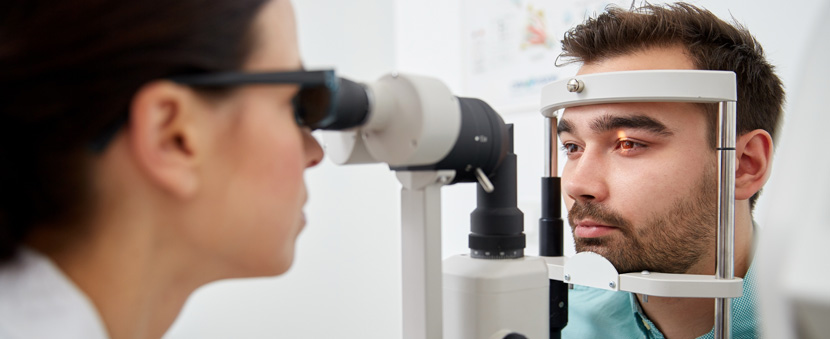
As diabetic retinopathy is often symptomless in the early stages, lots of cases remain undetected. This is also because there are only few tertiary level care centres that have diagnostic tools such as a slit lamp, ultrasound and procedures such as fluorescein angiography.

What is DME?

DME is the build-up of fluid (oedema) in a region of the retina called the macula. The macula is important for the sharp, straight-ahead vision that is used for reading, recognising faces, and driving. DME is the most common cause of vision loss among people with diabetic retinopathy. About half of all people with diabetic retinopathy will develop DME. Although it is more likely to occur as diabetic retinopathy worsens, DME can happen at any stage of the disease.

Who is at risk for Diabetic Retinopathy?

People with all types of diabetes (type 1, type 2, and gestational) are at risk for diabetic retinopathy. Risk increases the longer a person has diabetes. Between 40 and 45 per cent of Americans diagnosed with diabetes have some stage of diabetic retinopathy, although only about half are aware of it. Women who develop or have diabetes during pregnancy may have rapid onset or worsening of diabetic retinopathy.

What are the symptoms of Diabetic Retinopathy and DME?

Diabetic retinopathy typically presents no symptoms during the early stages.

The condition is often at an advanced stage when symptoms become noticeable. On occasion, the only detectable symptom is a sudden and complete loss of vision.

Signs and symptoms of Diabetic Retinopathy may include:
  • Blurred vision
  • Impairment of colour vision
  • Floaters, or transparent and colourless spots and dark strings that float in the patient’s field of vision
  • Patches or streaks that block the person’s vision
  • Poor night vision
  • Sudden and total loss of vision
  • Diabetic retinopathy usually affects both eyes. It is important to make sure that the risk of vision loss is minimised.
Decoding Diabetic Retinopathy
  • It has the potential to cause severe vision loss and blindness
  • It involves changes to retinal blood vessels that can cause them to bleed or leak fluid, distorting vision
  • It is the most common cause of vision loss among people with diabetes and a leading cause of blindness among working-age adults
  • It can be treated with several therapies, used alone or in combination
  • DME is a consequence of diabetic retinopathy that causes swelling in the area of the retina called the macula
  • Controlling diabetes-by taking medications as prescribed, staying physically active, and maintaining a healthy diet-can prevent or delay vision loss
  • Because diabetic retinopathy often goes unnoticed until vision loss occurs, people with diabetes should get a comprehensive dilated eye exam at least once a year
  • Early detection, timely treatment, and appropriate follow-up care of diabetic eye disease can protect against vision loss
How is DME Treated?

DME can be treated with several therapies that may be used alone or in combination.

Anti-VEGF Injection Therapy

Anti-VEGF drugs are injected into the vitreous gel to block a protein called vascular endothelial growth factor (VEGF), which can stimulate abnormal blood vessels to grow and leak fluid. Blocking VEGF can reverse abnormal blood vessel growth and decrease fluid in the retina. Available anti-VEGF drugs include Avastin (bevacizumab), Lucentis (ranibizumab), and Eylea (aflibercept). Lucentis and Eylea are approved by the US Food and Drug Administration (FDA) for treating DME. Avastin was approved by the FDA to treat cancer, but is commonly used to treat eye conditions, including DME.

Most people require monthly anti-VEGF injections for the first six months of treatment. Thereafter, injections are needed less often; typically three to four during the second six months of treatment, about four during the second year of treatment, two in the third year, one in the fourth year, and none in the fifth year. Dilated eye exams may be needed less often as the disease stabilises.

Focal/Grid Macular Laser Surgery

In focal/grid macular laser surgery, a few to hundreds of small laser burns are made to leaking blood vessels in areas of oedema near the centre of the macula. Laser burns for DME slow the leakage of fluid, reducing swelling in the retina. The procedure is usually completed in one session, but some people may need more than one treatment. Focal/grid laser is sometimes applied before anti-VEGF injections, sometimes on the same day or a few days after an anti-VEGF injection, and sometimes only when DME fails to improve adequately after six months of anti-VEGF therapy.

Corticosteroids

Corticosteroids, either injected or implanted into the eye, may be used alone or in combination with other drugs or laser surgery to treat DME. The Ozurdex (dexamethasone) implant is for short-term use, while the Iluvien (fluocinolone acetonide) implant is longer lasting. Both are biodegradable and release a sustained dose of corticosteroids to suppress DME. Corticosteroid use in the eye increases the risk of cataract and glaucoma. DME patients who use corticosteroids should be monitored for increased pressure in the eye and glaucoma.

Why Kokilaben Hospital

We have a state of the art Ophthalmology Department equipped with the most advanced equipment to treat retinal diseases. We are equipped with a Zeiss Fundus Camera for retinal angiography, 532 Zeiss Green Laser for retinal lasers in OPD and during surgeries, ultrasonography—and most importantly the most advanced Alcon CONSTELLATION® vitrectomy surgery machine which is used for 23 and 25 gauge minimal access retinal surgeries.

Increased VEGF (vascular endothelial growth factor) levels in the vitreous are the major culprits in diabetic retinopathy. Anti-VEGF intravitreal injections have become the most important tool in stabilising and reversing diabetic macular oedema as well as controlling proliferative diabetic retinopathy bleeding.

At our hospital we provide the best Anti-VEGF intravitreal injections like Ranibizumab (Accentrix or Lucentis, Razumab) and Aflibercept (Eylea).

World Hypertension Day

Friday, May 17th, 2019
What is hypertension?

Hypertension is the medical term for high blood pressure. This means that the blood applies too much force against the walls of the blood vessels. Medical guidelines define hypertension as blood pressure higher than 130 over 80 millimeters of mercury (mmHg).

Important facts about high blood pressure:
  • High blood pressure may be linked to a higher risk of dementia.
  • Young people can have high blood pressure, too.
  • 1 in 5 adults are unaware of their high blood pressure.
  • Women face pregnancy complications due to high blood pressure.
Risk factors

A number of risk factors increase the chances of having hypertension.

  • Age: Hypertension is more common in people aged over 60 years.
  • Ethnicity: Some ethnic groups are more prone to hypertension.
  • Size and weight: Being overweight or obese is a key risk factor.
  • Alcohol and tobacco use: Consuming large amounts of alcohol regularly can increase a person’s blood pressure, as can smoking tobacco.
  • Existing health conditions: Cardiovascular disease, diabetes, chronic kidney disease, and high cholesterol levels can lead to hypertension, especially as people get older.
  • Hereditary factors: A family history of high blood pressure and poorly managed stress can also contribute.
Signs

Blood pressure can be measured by a sphygmomanometer, or blood pressure monitor. Having high blood pressure for a short time can be a normal response to many situations like stress or intense exercise. For this reason, a diagnosis of hypertension normally requires several readings that show high blood pressure over time.

Symptoms

A person with hypertension may not notice any symptoms, and it is often called the "silent killer." Regularly checking your blood pressure is vital, as there will usually be no symptoms to make you aware of the condition.

It is maintained that high blood pressure causes sweating, anxiety, sleeping problems, and blushing. If blood pressure reaches the level of a hypertensive crisis, a person may experience headaches and nosebleeds.

Complications

Hypertension and heart disease are global health concerns. The World Health Organization (WHO) suggests that the growth of the processed food industry has impacted the amount of salt in diets worldwide, and that this plays a role in hypertension.

Long-term hypertension can cause complications through atherosclerosis, where the formation of plaque results in the narrowing of blood vessels. This makes hypertension worse, as the heart must pump harder to deliver blood to the body.

Hypertension-related atherosclerosis can lead to:

  • Heart failure and heart attacks.
  • An aneurysm, or an abnormal bulge in the wall of an artery that can burst, causing severe bleeding and, in some cases, death.
  • Kidney failure.
  • Stroke.
  • Amputation.
  • Hypertensive retinopathies in the eye, which can lead to blindness.
Hypertension in India:

According to data from the National Health Profile (NHP) 2018, more people were diagnosed with hypertension than diabetes in India in 2017. The prevalence of hypertension among 18-25 years-old was higher than that estimated by the World Health Organization and in fact than any other country in the world.

Prevent Hypertension:

Your age, along with a family history of hypertension and ethnicity are among the hypertension risk factors that are out of your control. To avoid a hypertension diagnosis, make these healthy lifestyle choices:

  1. Maintain a healthy weight. When it comes to hypertension prevention, your weight is crucial. Obesity increases your chances of getting hypertension.
  2. Eat a balanced diet. Consider following the DASH diet which stands for Dietary Approaches to Stop Hypertension. The DASH diet emphasizes vegetables, fruits and low-fat dairy foods — and moderate amounts of whole grains, fish, poultry and nuts which are rich in potassium, calcium and magnesium.
  3. Cut back on salt. For many people, eating a low-sodium diet can help keep blood pressure normal. The higher the sodium intake, the higher the blood pressure.
  4. Exercise regularly. Get moving to prevent hypertension. Physical activity is crucial. The more exercise you get, the better, but even a little bit can help control blood pressure. Moderate exercise for about 30 minutes three times a week is a good start.
  5. Limit alcohol. Drinking too much alcohol can lead to high blood pressure. For women, that means no more than one drink a day, and for men, no more than two.
  6. Monitor your blood pressure. Make sure that you have your blood pressure measured regularly, either at your doctor’s office or at home.
  7. Avoid stress. Learn to manage your stress better to help control your blood pressure control.
  8. Smoking can raise blood pressure. Giving up smoking reduces the risk of hypertension, heart conditions, and other health issues.

Take a look at your lifestyle habits and decide where you can make changes to help prevent hypertension. Adopting these lifestyle changes can help prevent high blood pressure if your blood pressure is currently under control or lead to lower blood pressure if your numbers are already elevated.

Consult doctors at Kokilaben Dhirubhai Ambani hospital to manage Hypertension better. Please find below website link for more details:

https://www.kokilabenhospital.com/departments/clinicaldepartments/internalmedicine/hypertension.html

Summer Travel Health Advice

Saturday, May 11th, 2019

Are you travelling this summer with your family?

Whether travelling as a couple, with children or with elderly parents make sure you are prepared for the destination you are travelling. A few precautions and extra care before travel can make your holiday better.

Here are few general travel tips

1. Be proactive – Think about health in advance of your trip. If you have a chronic health problem, get a check-up before you leave. And find out as much as you can in advance about destination-specific health risks.

2. Pack a travel health kit – Expect the unexpected, always travel with a travel health kit equipped with the most basic medications.

3. Wash your hands – Good hygiene is the first line of defence against any viral or bacterial ailment, be it the common cold or any other infection. Especially wash your hands before and after meal times.

4. Drink and eat sensibly – Traveller’s diarrhoea is the most common ailment that hamper many vacations. Make sure you eat and drink at hygienic places. Always have hot food when in doubt.

5. Make exercise a priority – You always have ample time to exercise on a vacation, it is your choice to make it a part of your agenda.

Travelling with elders

Are you a group of senior citizens travelling this vacation ? Here are a few health tips to keep in mind:

1. Book for accessibility – Make comfort a top priority. Choose to book direct flights, check for elevators, wheelchairs, and ramps before booking hotel accommodation too.

2. Plan small itineraries – Skip long hours of sight-seeing and plan small excursions physically possible.

3. Pack light – Depending on the weather of your destination pack as light as you can. Make sure you carry only small bag packs for day excursions too.

4. Choose comfortable shoes – One thing you absolutely need to pack is a pair of good, sturdy walking shoes—especially if you plan to do any sightseeing on foot.

5. Carry a few accessories – Here are a few things which will make your trip more comfortable and prepare you for any health conditions:

  • travel-sized heat and cold packs.
  • an inflatable neck pillow, and seat cushion for long car, train, or airplane rides.
  • Extra pair of specs if needed.
  • a knee sleeve or elastic bandage to support and cushion sore knees.

6. Stock your medicines – Make sure you carry all your medicines in sufficient quantities. Bring along a prescription, as well as your doctor’s phone number, in case you do run out. Keep the medicines with you instead of in your bags where they could get lost.

7. Keep moving – During long airplane and car trips, try to get up and walk around for a few minutes at least once an hour to keep your joints moving. Staying active will prevent soreness and will maintain blood flow.

Travelling with children

Are you travelling with children this summer? Here are a few health tips to follow:

  • Beat the heat – There are three easy things you need to remember about keeping children safe when it’s hot: Apply sunscreen regularly, give them plenty of drinks, and offer healthy, hydrating snacks.
  • Be prepared for insect bites – If you are spending time on your summer vacation hiking or camping, you’re likely to encounter them. Use an insect repellent before stepping outdoors and wear full sleeved clothes.
  • Watch out around water – Whether you are near a beach or a hotel swimming pool your kids need constant supervision at all times.
  • Clean hands – While you’re travelling, make sure your children wash their hands with soap before eating whenever you can. Hand sanitizer or a pack of antibacterial wipes will work if the water is not available.
  • Carry light snacks – Carry some high-calorie dry snacks like nuts, energy bars or fruits for your kids to snack during travel times
  • Keep a well – stocked first aid kit – Be prepared for minor problems by packing a portable kit that includes over-the-counter pain medicine, antiseptic cream, a cold pack, tweezers, and bandages. If your child has any allergies or asthma, carry the medications. Keep your pediatrician’s phone number handy at all times.
  • Boiled water – Water is the first thing that causes stomach infections. Make sure you offer your children only boiled clean drinking water at all times.
  • Vaccines – Does your child need any preventive vaccinations? Consult our Travel Clinic.

Whether it is advice on vaccination, country-specific precautions or advice on your health conditions, we highly recommend an appointment with experts at our Travel Clinic. The Travel clinic at Kokilaben Dhirubhai Ambani Hospital offers comprehensive travel advice to make sure your trip is happy and healthy.

World Malaria Day

Thursday, April 25th, 2019

Malaria is caused by the Plasmodium parasite. The parasite is transmitted to humans most commonly through mosquito bites. While the disease is uncommon in temperate climates, malaria is still common in tropical and subtropical countries like India.

Symptoms

A malaria infection is generally characterized by the following signs and symptoms:

  • Fever and chills.
  • Headache.
  • Nausea and vomiting.
  • Muscle pain and fatigue.

Other signs and symptoms may include:

  • Sweating.
  • Chest or abdominal pain.
  • Cough.

Some people who have malaria experience cycles of malaria “attacks.” An attack usually starts with shivering and chills, followed by a high fever, followed by sweating and a return to normal temperature. Malaria signs and symptoms typically begin within a few weeks after being bitten by an infected mosquito. However, some types of malaria parasites can lie dormant in your body for up to a year. A blood test is used to confirm the presence of Malaria.

Other modes of transmission

Because the parasites that cause malaria affect red blood cells, people can also catch malaria from exposure to infected blood, including:

  • From mother to unborn child.
  • Through blood transfusions.
  • By sharing needles used to inject drugs.
Complications

Here are a few Malaria complications which can prove fatal:

  • Cerebral malaria – If parasite-filled blood cells block small blood vessels to your brain (cerebral malaria), swelling of your brain or brain damage may occur. Cerebral malaria may cause seizures and coma.
  • Breathing problems – Accumulated fluid in your lungs (pulmonary edema) can make it difficult to breathe.
  • Organ failure – Malaria can cause your kidneys or liver to fail, or your spleen to rupture. Any of these conditions can be life-threatening.
  • Anaemia – Malaria damages red blood cells, which can result in anaemia.
  • Low blood sugar – Severe forms of malaria itself can cause low blood sugar (hypoglycemia), as can some malaria medications. Very low blood sugar can result in coma or death.
Prevention

To protect yourself from mosquito bites, you should:

  • Cover your skin. Wear pants and long-sleeved shirts.
  • Apply an insect repellent to your skin and clothing. Sprays containing DEET can be used on skin and sprays containing permethrin are safe to apply to clothing.
  • Sleep under a mosquito net. Bed nets, particularly those treated with insecticide, help prevent mosquito bites while you are sleeping.
  • Make sure the room doors and windows are closed properly and screened with gauze to prevent mosquitoes from getting in.
  • Use citronella candles in your house to keep mosquitoes away.
  • Keep your home and surroundings clean.
  • Clear any stagnant water in and around your home.
Are you travelling to a Malaria infested region?

Take the right type of anti-malarial medicines after consulting your doctor. The choice of anti-malarial prevention tablets will also need to take into account your medical history, age and other concurrent medications. You must take them daily or weekly, depending on the medication choice, prior to travel and upon return from the malaria area. Consult our Travel Clinic for more details.

Common Myths and Facts:

Here are a few common myths and facts that need attention:

1. Myth – Malaria isn’t fatal

Fact – If left unattended, malaria can cause death. This disease is spread by the female Anopheles mosquito, and is caused by a parasite called Plasmodium. Once in the blood stream, it multiples and affects the liver and red blood cells, and if not addressed, it can become quite serious.

2. Myth – Malaria carries the same risk for everyone.

Fact – Young children and pregnant women are much more vulnerable to malaria. Infants are more at risk because their immune systems are not yet fully developed, while in children under five they have not yet developed effective resistance to the disease.

3. Myth – Once you get Malaria you will never get it again.

Fact – It’s true that people who have grown up in malaria-endemic areas, in particular have been exposed to malaria and may gain some protection. However you can still get malaria. Hence you need to follow preventative measures to avoid mosquito bites.

Malaria statistics

India reported almost 3 million fewer malaria cases in 2017, a 24% decrease over the previous year, while cases increased worldwide to 219 million from 217 million, according to the World Malaria Report 2018. With 9.5 million cases in 2017, India now accounts for 4% of the world’s total malaria cases.

In 2017, India launched its five-year National Strategic Plan for Malaria Elimination that shifted focus from malaria “control” to “elimination” and provided a road-map with targets to end malaria in 571 districts out of India’s 678 districts by 2022. This has immensely helped reduce Malaria cases.

World Liver Day

Friday, April 19th, 2019

The liver is an organ about the size of a football that sits just under your rib cage on the right side of your abdomen. The liver is essential for digesting food and ridding your body of toxic substances. Liver disease can be inherited (genetic) or caused by a variety of factors that damage the liver, such as viruses, alcohol use or even obesity.

Your liver does a lot of things that keep you healthy. It turns nutrients into chemicals your body needs. It filters out poisons. It helps turn food into energy. So when your liver doesn’t work well, that can affect your whole body.

Symptoms:

Signs and symptoms of liver disease include:

  • Skin and eyes that appear yellowish (jaundice).
  • Abdominal pain and swelling.
  • Swelling in the legs and ankles.
  • Itchy skin.
  • Dark urine colour.
  • Pale stool colour, or bloody or tar-coloured stool.
  • Chronic fatigue.
  • Nausea or vomiting.
  • Loss of appetite.
Infections:

Here are some of the most common liver infections:

  • Hepatitis A. Most people get it by eating or drinking something that’s tainted by faecal matter. You might not have any symptoms. It usually goes away by itself within 6 months without any long-term harm.
  • Hepatitis B. You get it from somebody else, such as through unprotected sex or taking drugs with shared needles. If it lasts longer than 6 months, it makes you more likely to get liver cancer or other diseases.
  • Hepatitis C. comes from infected blood that gets into your blood. You might get it if you take drugs with shared needles or in connection with HIV. Symptoms may not show up for many years.
Immune System Problems:

Your immune system fights off invaders including bacteria and viruses. But it might go wrong and attack one or more parts of your body, such as your liver.

  • Autoimmune hepatitis inflames your liver. It can lead to other disorders and even liver failure.
  • Primary biliary cholangitis attacks tiny tubes in your liver called bile ducts. They carry bile, a chemical that helps you digest food. When the ducts are injured, the bile backs up inside your liver and scars it.
  • Primary sclerosing cholangitis scars your bile ducts, and it can eventually block them. The bile builds up inside your liver, and that makes it harder for your liver to work. It may lead to liver cancer, and you might someday need a liver transplant.
Cancer and Tumours:

If cancer shows up in your liver, that’s most likely because it has spread from another part of your body, like your lungs, colon, or breasts. But a few cancers can start in the liver.

  • Liver cancer affects women more often than men. It is medically called as hepatocellular carcinoma. It’s more likely if you have hepatitis or drink too much.
  • Bile duct cancer strikes the tubes that run from your liver to your small intestine to carry bile, a fluid that helps you digest food.
Inherited Conditions:

Here are a list of few inherited liver disorders:

  • Hemochromatosis makes your body store up too much of the iron from your food. The extra iron builds up in your liver, heart, or other organs. It can lead to life-threatening conditions such as liver diseases, heart disease, or diabetes.
  • Hyperoxaluria hits when your urine has too much of a chemical called oxalate. Oxalate is a natural part of your system, and your liver makes a chemical that controls it. If your liver makes too little of that chemical, oxalate builds up. Then it can cause kidney stones and kidney failure. If your kidneys do fail, that can give you oxalosis, where the oxalate collects in other organs and causes more trouble.
  • Wilson’s disease makes copper build up in your liver and other organs. Its first symptoms usually show up when you’re between the ages of 6 and 35, most often in your teens. It not only affects your liver, but it can cause nerve and psychiatric problems.
  • Alpha-1 antitrypsin deficiency involves a chemical that helps your lungs resist infections. Your liver makes it. However sometimes this faulty chemical builds up and may lead to a liver disease.
Other Causes of Liver Disease:
  • Alcohol abuse can lead to cirrhosis. So can non alcoholic fatty liver disease and long-term cases of hepatitis B and C.
  • Drug overdoses. Taking too much acetaminophen or other medications can harm your liver.
  • Non alcoholic fatty liver disease (NAFLD) is when too much fat has built up inside your liver. The extra fat can inflame your liver. It can scar your liver and lead to other disorders, like cirrhosis.
Complications of liver disease:
  • Acute liver failure. This happens when you don’t have a long-term liver disease but your liver quits working within a very short time — days or weeks. That may happen because of an overdose of acetaminophen, infections, or because of prescriptions drugs.
  • Cirrhosis is a build up of scars in your liver. The more scars replace the healthy parts of your liver, the harder it is for your liver to do its job. Over time, it may not work like it should. This may require a liver transplant.
Prevention:

Here are a few tips to prevent liver disease:

  • Drink alcohol in moderation. For healthy adults, that means up to one drink a day for women and up to two drinks a day for men.
  • Avoid risky behaviour. Get help if you use illicit intravenous drugs, and don’t share needles used to inject drugs. Use a condom during sex. If you choose to have tattoos or body piercings, be picky about cleanliness and safety when selecting a shop.
  • Get vaccinated against Hepatitis.
  • Use medications wisely. Take prescription and non prescription drugs only when needed and only in recommended doses. Don’t mix medications and alcohol.
  • Avoid contact with other people’s blood and body fluids. Hepatitis viruses can be spread by accidental needle sticks or improper cleanup of blood or body fluids.
  • Take care with aerosol sprays. Make sure the room is ventilated, and wear a mask when spraying insecticides, fungicides, paint and other toxic chemicals.
  • Protect your skin. When using insecticides and other toxic chemicals, wear gloves, long sleeves, a hat and a mask.
  • Maintain a healthy weight. Obesity can cause non alcoholic fatty liver disease.

Please consult experts at our Hepato-Pancreato- Bliliary Department for more details. Please find below link:

https://www.kokilabenhospital.com/departments/clinicaldepartments/hepatopancreatobiliary.html

Add us as preferred source