

Archive for the ‘ Healthcare ’ Category

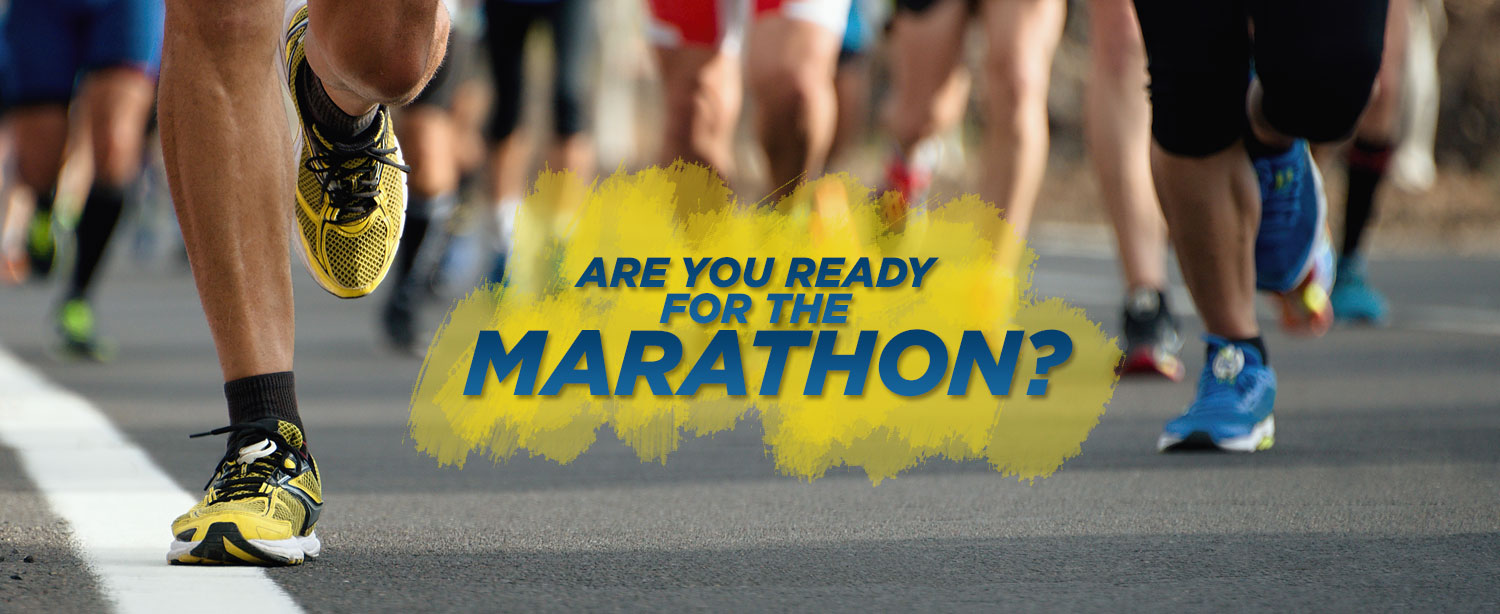
Are You Ready For The Marathon?

Saturday, January 12th, 2019

The Tata Mumbai Marathon is to be held on 20th January 2018. Are you running the marathon this year? Many have been training for months for the marathon day. Are you excited or nervous about the marathon? Relax your anxieties as we take you through essential health tips that help you cruise through the marathon smoothly.

Plan your marathon in advance:

1. Correct footwear

Invest in some good quality running shoes to protect your bones, muscles, joints and tendons during your training. Depending on your weight and the type of shoe, most running shoes should last between 300 and 800 miles.

2. Drink on the Run

During your training run, have the sports drink and energy gels you intend to refuel with during the race.

3. Don’t exceed your limits

Stick to your plan when training for a marathon. Doing more miles than you’re used to in the last few weeks will hurt–not help–your race.

4. Run a Dress Rehearsal

Four or five days before the marathon, do a two- or three-mile marathon-pace run in your marathon outfit and shoes. Besides boosting your confidence it will also test your endurance levels.

5. Get plenty of protein

Protein-rich foods are often associated with bodybuilders, but they’re just as important for runners. When you run, your body may use protein as fuel to keep going, so it’s important to regularly replace your stores.

6. Don’t forget core training

Remember to do regular core training, this will work the muscles in your abdomen which control posture and support the rest of your body. A strong core will make you a stronger, better runner and help prevent injuries.

7. Carbo-Load, Don’t Fat-Load

During the last three days, concentrate on eating healthy carbohydrate-rich foods and avoid fats.

You have been training for months for the marathon. Are you wondering what to do on the marathon day and how to prepare yourself on the final day? You may have many unanswered questions. Here are some expert tips from our Sports Medicine team to ace the marathon:

  • Eat Breakfast
  • Two to three hours before the race eat a carbohydrate-rich breakfast. Breakfast restocks your body and prepares it for the run.

  • Warm Up
  • Do a little warm up like jogging before the marathon because you want to preserve the glycogen stores and keep the core body temperature down. It also helps keep the heart rate slightly elevated.

  • Line up Loose
  • Fifteen minutes before the start, begin some gentle stretching. Concentrate on the muscles of the back side of your body–your calves, hamstrings, glutes, and lower back. Remember, your goal is to start the race comfortably.

  • Start Slow
  • Run the first two to three miles 10 to 15 seconds per mile slower than goal pace. This preserves precious glycogen stores for later in the race so you can finish strong.

  • Drink Early & Often
  • Have a sports drink at the first station and every one after. Taking in carbohydrates and fluid early will help postpone or prevent serious dehydration or carbohydrate depletion later, so you’ll be a lot more likely to maintain your pace.

Here are a few marathon mistakes to avoid:
  • Training without a plan.
  • Everyone runs and trains differently so finding a plan that works for you is key. Be sure to follow a plan that suits your likings and needs.

  • Improper diet intake
  • Your marathon training plan also includes eating a healthy diet. Finding proper ways to fuel and refuel your body will support your performance on the day of your marathon. Make sure that your choice of fuel is the exact same one [that] you use on race day. Do not change anything on race day.

  • You’re not prepared for common running injuries.
  • Blisters are one of the most common alignments that runners suffer from. You can avoid setbacks like this by wearing the right running shoes during training.

Talk to your doctor immediately if your body shows some signs that you are not ready for a marathon:

1. If your heart rate increases to a very high level with minimal exercise. Normally the heartbeat increases gradually with increasing level of exercise.

2. If BP rises to a very high level during running then probably you are yet not fit. A systolic BP more than 180 mm Hg and diastolic BP more than 110 mm Hg during running is considered significantly high. Normally the BP increases marginally during exercise.

3. If the BP falls instead of rising during running, then there may be some serious underlying cardiac disease and you are not fit to run.

4. If the oxygen saturation dips to a very low level during exercise or running then you are not fit for a run. Consult a doctor immediately.

5. If you feel excessively fatigued with a relatively low level of exercise, then you are not fit to run.

Wishing all the runners a healthy and fun Marathon! Our Sports Medicine experts can help you with any sports related injuries. Please find below link for more details:

https://www.kokilabenhospital.com/departments/outreach/centre/sports_medicine_clinic_-_mumbai.html

Turn Your New Year Health Resolution Into A Reality

Thursday, January 3rd, 2019

The New Year is officially here and so are the many health resolutions. Every new year people make many resolutions, but how many follow them religiously?
What is your New Year health resolution?
Do you want to get healthy and fit this new year?
Or do you want to quit a bad habit?

Getting healthy and losing weight is one of the most common New Year’s resolutions, but 80 percent of people who make that promise quit by February and go back to their old ways. Promise yourself to make 2019 a year to achieve your goals.
This is how you can stay focussed:

  • Choose your resolutions wisely.
  • Choose an activity you enjoy for fitness.
  • Motivate yourself daily, make a fitness chart or find a fitness app that keeps you accountable.
  • Find a friend or partner to work out with.
  • Be specific and realistic while choosing your resolution.
  • Make your goals known to others.

Motivation and support can further ensure you’ll stick with your resolution
Once you’ve set your goals, it’s all about motivation. That can come in the form of support from family, friends, doctors, and helpful tools.

Here are a few common Health resolutions to follow:
  • Get more and better sleep – Getting more — and better quality sleep — in 2019 can benefit you on multiple health fronts. Insufficient sleep can decrease the immune system’s ability to be as strong as it should to fight common illnesses such as cold and other viruses. It can also increase the risk and severity of various mood problems including anxiety and depression. Most adults need around eight hours of sleep each night to stay healthy.
  • Change when you eat – Another trick to losing weight without changing your diet is to only eat while the sun is out. By shifting when you eat, you can capitalize on when your body’s metabolism is running fastest. The way your circadian rhythm works, your metabolism is highest around 10am and lowest in the middle of the night.
  • Get and stay active – Regular exercise is well-proven to decrease the potential to develop either depression or anxiety. Get at least 150 minutes of exercise each week. For those looking to change up their sedentary lifestyle, change this habit. Don’t eat while watching television and spend only as much time watching television as you spend exercising.
  • Reduce stress – Stress can impact more than just our emotional health. At least 60 to 80% of all doctor visits touch on least one problem related to stress. Stress can impact more than just your emotional health. Stress can be an overriding factor that leads to many lifestyle diseases.
  • Turn off your phone before bedtime – People who use a light-emitting device instead of reading a book before bed are more alert, take longer to fall asleep, get less deep REM sleep, and take longer to wake up. Simply avoid your devices before going to sleep.
  • Eat more fruits and veggies – Looking to eat healthier? Do not depend on crash diets. For a long-term solution, make a point of adding fresh produce to your plate, rather than avoiding certain foods. You’ll naturally eat fewer unhealthy foods because your appetite will be satisfied with fruits and vegetables.
  • Quit smoking – No matter how long you’ve smoked, there are health benefits to quitting. Long term smoking affects your heart and lung health and causes many types of cancer. Seek counselling support but quit today.
  • Do one puzzle every day – Puzzles like Sudoku and crosswords are more than just a fun game. The more frequently people engaged in these games, the better their cognitive function as they aged. On tests measuring grammatical reasoning speed and short-term memory accuracy, frequent puzzle players had results comparable to people 10 years younger than they were.

Wishing you all a Happy and Healthy New Year! May 2019 motivate you to make fitness, good sleep, healthy and fresh food a part of your daily life.

What Is Your Fitness Mantra?

Saturday, December 29th, 2018
Have you been hearing the term “fitness” too often lately?

Fitness is the new lifestyle trend for many adults. You must have heard about your friends or colleagues joining the gym, taking an aerobics class or training under a personal trainer for the next marathon. Fitness has now gained priority in everyday routine. It is a promising sign that so many are taking interest in being fit. A healthy and fit body with a nourishing diet helps avoid many lifestyle diseases.

Have you chosen your fitness regime yet?

There is no such thing as a perfect workout. Choose the best option suitable to you as per your fitness goals and overall health. If you have a health disorder, talk to your doctor before starting a new fitness plan. Let us study a few popular fitness regimes and how they benefit you.

Yoga

Many people regard yoga as a complete fitness workout for the entire body. Practised in India from thousands of years Yoga definitely has something for everyone and can be practised across all ages.

Why choose yoga:
  • It’s efficient. Most yoga poses help to strengthen your core muscles. And in different inversions and arm balances, yoga allows you to raise your heartbeat, strengthen your muscles, and lengthen them out all at once.
  • It can count as a cardio workout. Sun salutations or Suryanamaskar and certain other yoga poses raise your heart rate and keep it healthy.
  • You can do it anywhere. With no equipment necessary, it doesn’t matter if you are at home, at your office, or travelling, yoga can be done anywhere.
  • In yoga, you learn to unite your body and mind. This allows you to move with ease and pay attention to how your body is feeling at all times. Thus promising an injury-free workout plan.
Strength training:

Strength training is a type of physical exercise that uses resistance to induce muscular contraction which builds the strength, anaerobic endurance, and size of the skeletal muscles. Strength training is an important way to boost your weight loss.

Why choose Strength training:
  • Weight training—using free weights or weight machines to build muscle—is a type of strength training that not only can help you slim down, but also has many other health benefits.
  • It helps burn more calories. Since muscle tissue burns more calories than fat tissue does, muscle mass is a key factor in weight loss.
  • Weight training improves your posture, helps your endurance, builds strength and reduces your chance of injuries.
  • It also boosts heart health, improves cholesterol and increases bone density. It also slows the inevitable strength decline as we age, as it keeps our muscles from turning to mush—and being replaced with fat—as we get older.
Running

Running can significantly improve your physical and mental health. Many experts think that human bodies are shaped the way that they are because we evolved to be extremely effective endurance runners. The shapes of our hips and feet, the length of our legs, our shock-absorbing spinal discs, and our skin (and ability to sweat) make it possible for us to run mile after mile. So it’s perhaps no surprise that running is strongly associated with a number of benefits for our bodies and brains.

Why choose Running:
  • Since it improves aerobic fitness, running is a great way to help improve cardiovascular health.
  • Even a 30-minute run can lift symptoms of depression and improve mood.
  • Running helps young people sleep better and improves their mood and ability to focus.
  • Running can improve your mind at any age and fight age-related cognitive decline.
  • Running changes the brain in ways that make it more resistant to stress.
  • Running is a great way to burn calories.

Wishing you a Happy 2019! Stay safe during the New Year festivities. Hoping this article motivates you to get started with a new fitness goal in the new year. Being fit means being healthy and less prone to lifestyle diseases.

The Need For Cancer Care In India

Friday, December 21st, 2018

The diagnosis of cancer shocks every family.

Every year, lakhs of Indians are devastated by the news of cancer. On an average, more than 1,300 Indians succumb to the dreaded disease every day. With new cancer cases or its incidence in India estimated to grow by 25% by 2020 cancer has become one of the major causes of death occurring in the country. Women, especially, are being increasingly diagnosed with cancer.

Cancer will claim 9.6 million lives in the world this year and India’s share in it will be a worrying 8.17 per cent, warns the World Health Organization’s (WHO) International Agency for Research on Cancer.

The cancer scenario in India:

Ignorance and denial leads to delayed diagnosis and treatment; most Indians change doctors when asked to go in for a screening or biopsy. Other than the fear of invasive treatment, disfigurement and financial burden, the ill-placed belief that a cancer patient will always die makes patients and their families refuse specialised treatment. The importance of awareness can be seen from the fact that in highly literate Kerala, 40% cases are detected early, a fact that ultimately leads to fewer deaths.

Oncologists suggest that if you notice any major changes in the way your body functions or feels, you should seek medical help. As early detection means better chances of cure.

The shortcomings:
  • The symptoms in more than half of India’s cancer patients go undetected due to a shortage of adequate screening technology in rural or underdeveloped areas, or worse, a lack of awareness about the disease itself.
  • According to a study conducted in 2015 there were only 2,700 mammograms, a breast cancer screening device, in India at the time.
  • More surprisingly, there were only 120 PET-CT scanners, most of which were in Tier-1 cities.
  • A study conducted in 2014 concluded that around 70% of India’s cancer cases lead to death due to lack of medical resources as well as the fact that most people don’t seek medical treatment until the late-stage symptoms start manifesting themselves.
Women and Cancer care:
  • India accounts for the third highest number of cancer cases among women after china and US, growing annually at 4.5-5%. Cancer cases as well as mortality are increasing rapidly among Indian women, primarily because of low awareness and late detection.
  • The report states that out of the 2000 new women diagnosed with cancer every day, 1200 are detected in late stages.
  • This reduces five-year survival rate by 3 to 17 times for breast and cervical cancer. Late detection also adds to the cost of the treatment.
  • Estimates show that cost for late-stage cancers is 1.5 to 2 times higher than the cost for early stage cancers.
  • Another pressing issue among women in India is poor menstrual hygiene. Sadly only 12 per cent of women in India use sanitary pads leading to infections.
Cancer – post operative care:

Despite all medical advancements, detection of cancer still rings in a fear of death. But overcoming the phobia and undergoing a successful surgery of the cancerous tumour can be considered as half the battle won. Getting completely cured of Cancer is a long process spanning from two to five years after surgery. Post operative care and support is of utmost importance as the chemotherapy and radiotherapy sessions are not just painful but financially and emotionally taxing as well. For most kinds of cancer, after surgery one needs to look into the aspects such as reconstruction of the operated area, nutritious diet, light exercise, physiotherapy, supportive treatment, regular follow-ups, counselling and so on.

Cancer Care in rural Maharashtra:

The new Reliance Cancer Care Centres, Akola and Gondia, managed and operated by Kokilaben Dhirubhai Ambani Hospital are now open and the rest will follow in a few years. We continuously endeavour to bring world class cancer care accessible to all Indians. Cancer is one of the biggest public health challenges of our times and we are ready to tackle it head on with our medical talent and world-class technology. Please find below link for more details on Reliance Cancer centre:

https://www.reliancehospitals.com/akola/

https://www.reliancehospitals.com/gondia/

How To Survive Arthritis In Winter?

Thursday, December 13th, 2018

The word arthritis literally means inflammation of a joint. The most common type, osteoarthritis, involves degeneration of the particular cartilage protecting the bone ends within a joint. Without cartilage protection, tendons and ligaments have to work harder, and severe loss of cartilage can lead to bone rubbing on the bone, causing friction and eventual swelling and inflammation.

Arthritis can also rear its ugly head when parts of a joint are wrongly identified as a ‘foreign’ threat and are attacked by immune processes – which is the case with rheumatoid arthritis. While far more common in older age groups, anybody, even children, can get arthritis.

Arthritis worsens in winter

During the winter season, joint pains and stiffened muscles are the most common health problem plaguing the lives of older people. There is a 50 per cent spike in the number of senior citizens seeking treatment for bone and joint problems during winter. For many Rheumatoid arthritis patients, pain, swelling, stiffness, fatigue and other common rheumatoid arthritis symptoms are harder to control during the winter. Some people feel more joint pain, as the cold weather sets in.

Why this happens

Here are a few reasons why arthritis flares up in winter:

  • The pain receptors become more sensitive during the winters.
  • The drop in the atmospheric pressure causes painful joints. When pressure decreases, tissues swell, building tension between joints, causing pain.
  • There are more muscle spasms in colder temperatures, which worsens the pain and stiffness the joints.
  • The cold reduces the blood circulation to the fingers and toes, which amplifies arthritis pain.
  • Less sunlight during winters means lower vitamin D levels and leads to weakened bones and joints.
How to find relief in the winters

1. Dress warmly – Depending on the climate in your city, choose to wear warm winter clothes or dress in layers. Always ensure that you cover your hands, knees, legs and all arthritis prone areas.

2. Hydrate – Staying hydrated helps keep you more active. Even mild dehydration might make you more sensitive to pain.

3. Exercise – While it’s understandable to want to avoid winter chill, people with joint pain should still stay active. Exercise indoors to improve the symptoms like joint stiffness and muscle weakness.

4. Keep yourself warm and cosy – Use an electric heating pad, hot water bag or an electric blanket to keep yourself warm while resting or sleeping. Heating pads are more useful for localized areas where joints have become stiff and painful from the cold weather.

5. Let warm baths comfort you – Swimming in a heated pool is both great exercise and soothing to your joints. You can also get great relief from warm baths.

6. Supplement Vitamin D – Low levels of vitamin D might play a role in how sensitive you are to arthritis pain. Being deficient in vitamin D also raises the risk for osteoporosis. Talk to your doctor about the best supplement options.

7. Increase your intake of omega-3 fatty acids – Omega-3 fatty acids are highly beneficial in reducing the inflammation level in your joints. Include avocado, flaxseeds, walnuts and fish in your diet.

Enjoy winter while taking the above precautions for Arthritis. If you are facing extreme discomfort in your joints due to arthritis, do consult our experts at our Centre for Bone and Joint. Please find below link:

https://www.kokilabenhospital.com/departments/centresofexcellence/centrefor_bonejoint.html

Add us as preferred source