
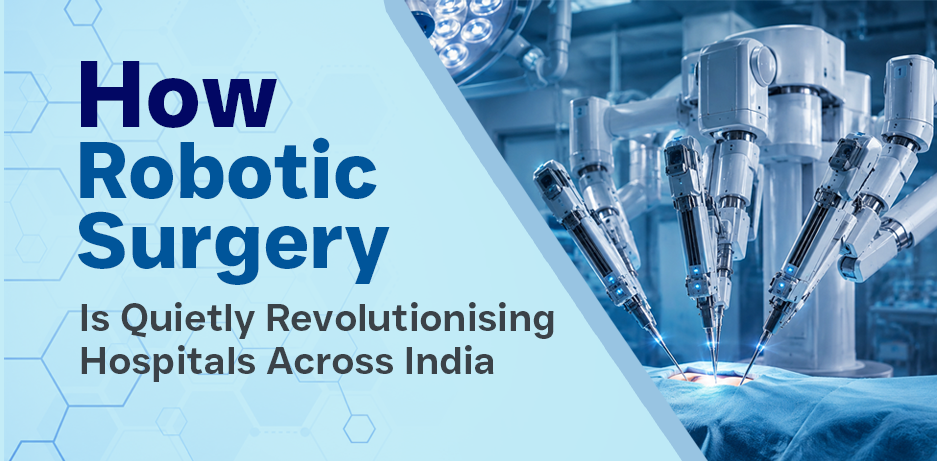
Not long ago, the idea of a robotic arm operating inside the human body seemed like science fiction. Today, it is an established clinical reality, transforming the surgical experience for patients across India. From metropolitan super speciality hospitals to tier two cities, robotic surgery is no longer a rarity, it is now a credible and increasingly preferred option for an expanding range of procedures.
Kokilaben Dhirubhai Ambani Hospital, Mumbai, reflects this shift with the introduction of robotic surgery in Mumbai, the Toumai Robotic Surgery System, the first installation of this system in India. A defining feature of the platform is its telesurgery capability, enabling surgeons to perform real-time operations remotely with zero perceptible delay across distances of up to 5,000 km.
What Is Robotic Surgery?
Robotic surgery, also called robot assisted surgery, is a form of minimally invasive surgery in which a surgeon controls a sophisticated robotic system to perform procedures through very small incisions. Unlike what the name might suggest, the robot does not operate independently. It is an extension of the surgeon’s hands, translating every movement with greater accuracy, stability, and reach than the human wrist alone allows.
The most widely used system globally is the da Vinci Surgical System, though newer platforms are now entering Indian healthcare settings. These systems consist of three key components:
- A surgeon console — where the operating surgeon sits, viewing a magnified 3D image of the surgical field and controlling the robotic arms using hand and foot controls
- Robotic arms — slender instruments introduced through small incisions that hold surgical tools capable of rotating 360 degrees with tremor filtration
- A vision tower — housing the high-definition camera system that provides the surgical team with a clear, real-time view of the operative site
The result is a level of precision, flexibility, and visibility that conventional open surgery and standard laparoscopic surgery cannot always achieve.
How Does Robotic Surgery Work?
The process of robotic surgery begins well before the patient enters the operating room. The surgical team plans each step, and the robotic system is calibrated and tested. On the day of the procedure, the patient receives general anaesthesia, after which small port incisions, typically 8 – 12 mm, are made to allow the robotic arms and camera to be introduced.
Once in position, the surgeon moves from the patient’s bedside to the console, which can be positioned a few feet away. From there, every hand movement the surgeon makes is precisely mirrored by the robotic instruments inside the body. The system’s software filters out natural hand tremors and scales movements so that a larger hand gesture results in a smaller, finer movement at the surgical site.
What the surgeon sees at the console is a magnified, three dimensional, high definition image, significantly clearer than what the naked eye can view through a conventional laparoscope. This visibility is particularly valuable when operating in confined anatomical spaces or near critical structures such as nerves and blood vessels.
Throughout the entire procedure, a trained bedside assistant remains with the patient, ready to intervene if needed. The surgeon retains complete control at all times.
Advantages of Robotic Surgery
The advantages of robotic surgery are most felt by patients during recovery but they begin in the operating theatre. Here is what makes this approach genuinely different:
Precision That Protects Healthy Tissue
Robotic arms can access and manoeuvre in ways the human hand cannot, particularly in deep or narrow surgical fields. This means surgeons can target the area of concern while sparing surrounding nerves, muscles, and vessels from unnecessary trauma.
Significantly Smaller Incisions
Compared to open surgery, where incisions can run 15 to 30 cm, robotic procedures typically require incisions under 1.5 cm. Less disruption to the body surface means less pain, less blood loss, and a substantially lower risk of wound related complications.
Reduced Blood Loss and Fewer Transfusions
The controlled, precise movements of robot-assisted surgery reduce the likelihood of inadvertent injury to blood vessels. Many patients undergoing robotic procedures require little to no blood transfusion.
Lower Risk of Post-operative Infection
Smaller wounds that close quickly are less vulnerable to bacterial entry, making infection, one of the most common complications in surgery which is far less likely.
Shorter Hospital Stay
Many robotic procedures allow patients to be discharged within 24 to 48 hours, compared to 4 to 7 days for comparable open surgeries. Same day discharge is possible for select procedures.
Faster Return to Daily Life
Because the body heals from smaller incisions much faster, patients return to work, family responsibilities, and daily activity in a fraction of the time required after conventional surgery.
Minimal Scarring
The port-site marks left by robotic surgery are small and tend to fade well. This is a meaningful benefit for patients concerned about cosmetic outcomes.
It is also important to acknowledge the disadvantages of robotic surgery to present a complete picture. The technique requires substantial capital investment from hospitals, and in some cases, the procedure may take longer than open surgery. Moreover, not every condition or patient profile is suitable for a robotic approach, which makes consultation with an experienced surgical team essential.
What Types of Surgeries Can Be Done Robotically?
Robotic surgery now spans a broad range of specialities. At KDAH, robotic surgery is offered across the following areas:
- Uro-oncology & Urology — including robotic surgery for prostate, kidney, bladder, adrenal, penile, and testicular cancers
- Gynaec-oncology & Gynaecology — including robotic gynaecologic oncosurgery and ovarian cancer cytoreductive surgery
- Head and Neck / ENT — including Trans Oral Robotic Surgery (TORS) for head and neck cancers
- Oesophageal & Lung Cancer — including robotic and VATS approaches to oesophageal and pulmonary surgery
- Colon Cancer — including robotic colorectal resections for cancer and inflammatory bowel disease
- Paediatric Surgery — robotic-assisted procedures for children
- Bariatrics (Obesity Surgery) — robotic assisted weight loss surgery
- Robotic Kidney Transplant
As robotic platforms become more versatile, the list of operable conditions continues to expand. Patients should ask their treating surgeon whether their specific condition can be managed robotically, as individual anatomy, disease stage, and surgical history all influence eligibility. For the full range of procedures and specialist teams available, Kokilaben Dhirubhai Ambani Hospital is recognised as the best hospital for robotic surgery in Mumbai for its depth of surgical specialities under one roof.
Robotic Surgery Cost in India And What Should You Expect?
The cost of robotic surgery in India is typically higher than that of conventional laparoscopic surgery, largely because hospitals must make substantial investments in acquiring, operating, and maintaining robotic systems. That said, the overall cost equation is more nuanced.
When you factor in shorter hospital stays, reduced risk of complications, lower analgesic requirements, and faster return to work, the total cost of care across the recovery period is often comparable, and in some cases, favourable.
Several leading hospitals, including centres of excellence such as Kokilaben Dhirubhai Ambani Hospital, have invested in advanced robotic platforms precisely because better outcomes translate into better value for patients throughout their care.
Insurance coverage for robotic surgery is evolving in India. Several major health insurers now cover robot assisted procedures when deemed medically appropriate. Patients are advised to confirm coverage with their insurer and the hospital’s billing team before scheduling surgery.
Is Robotic Surgery Right for You?
Not every patient is an automatic candidate for robot assisted surgery, and that is not a limitation; it reflects responsible clinical judgement. Factors that influence suitability include:
- The nature of the condition — certain anatomical locations and disease stages are particularly well served by robotic systems
- Body habitus — patients with obesity or complex anatomy often benefit significantly, as robotic arms navigate constrained spaces more effectively
- Prior surgical history — patients with previous abdominal surgeries can often still undergo robotic procedures; prior scars and adhesions are assessed during pre-operative planning
- Overall health status — robotic surgery is performed under general anaesthesia, so cardiopulmonary fitness is evaluated beforehand
- Surgeon experience — outcomes are closely tied to how many robotic procedures a surgeon has performed; patients are encouraged to ask directly about their surgeon’s volume and training
The decision should always emerge from a detailed conversation with your surgeon. At a centre staffed by the best robotic surgeons in Mumbai, that conversation can be both comprehensive and reassuring.
What Does Recovery Look Like After Robotic Surgery?
Recovery after robotic surgery tends to be one of the most positively surprising aspects for patients, particularly those who have previously had open surgery or know someone who has.
In the first 24 to 48 hours: Most patients experience mild soreness at the small port sites rather than the significant wound pain associated with open surgery. Mobility is encouraged early, walking within hours of the procedure is common and beneficial.
During the first week: Swelling and bruising are minimal. Pain is typically managed with oral medications, and many patients taper off analgesics within a few days. Light daily activities can resume progressively.
Weeks two to four: The majority of patients resume normal daily activity, including desk-based work, within one to two weeks. Strenuous exercise and heavy lifting follow at four to six weeks, as guided by the surgeon.
Long term: Scarring is minimal and fades steadily. Most patients report no functional limitations once fully healed. Follow up appointments track healing progress and address any questions.
The Future of Robotic Surgery in India
Robotic surgery in India is at an inflection point. The technology has moved from a novelty available at a handful of elite institutions to a service offered across a growing network of hospitals in major cities. Continued investment by leading hospitals, combined with expanding insurance coverage and increasing surgeon training programmes, means that access is widening.
Looking ahead, the integration of artificial intelligence with robotic platforms promises even greater precision, systems that can flag anatomical anomalies in real time, assist with tissue identification, and refine movement accuracy further. Haptic feedback technology, which allows surgeons to sense resistance during robotic procedures, is also advancing rapidly.
For patients in India, this trajectory means that what is today considered advanced surgical care will soon become the standard of care, accessible, reliable, and built around faster recovery and better outcomes.
Conclusion
Robotic surgery is not replacing the surgeon. It is making the surgeon more capable, and by extension, making surgery safer and recovery gentler for patients. The benefits of robotic surgery, precision, smaller incisions, reduced blood loss, shorter hospital stays, and faster return to daily life, represent a meaningful advance in how complex procedures are performed.
If you or someone you care for is facing surgery, exploring whether a robotic surgery approach is appropriate is a conversation worth having. At Kokilaben Dhirubhai Ambani Hospital, our surgical teams are experienced in the full spectrum of robotic-assisted procedures, guided by a commitment to patient centred care at every step.
Speak to one of our specialists today to understand whether robotic surgery is the right path for your care.
Frequently Asked Questions
Can robotic surgery be performed under local anaesthesia?
No. Robotic surgery requires general anaesthesia because the instruments are introduced into the body through incisions and operate within internal cavities. Local anaesthesia does not provide adequate comfort or muscular relaxation for these procedures.
How do I verify that my surgeon is properly trained in robotic surgery?
Ask directly how many robotic procedures your surgeon has performed, and in which speciality. Surgeons trained in robotic techniques typically complete a structured programme that includes simulation, proctored cases, and credentialing by the institution or the system manufacturer before operating independently.
Can patients who have had prior abdominal surgeries still opt for robotic surgery?
Often, yes. Prior surgeries are assessed during pre-operative planning. Adhesions or scar tissue may require careful management, but experienced robotic surgeons routinely operate on patients with surgical histories.
What happens if the robotic system malfunctions during a procedure?
Robotic systems include multiple redundancies and real-time safety alerts. If a technical issue arises, the surgical team is trained to safely pause the procedure. In rare circumstances, the operation is converted to open or laparoscopic surgery, a decision made entirely in the patient’s best interest.
Does robotic surgery leave visible scars compared to open surgery?
Robotic surgery leaves only small port-site marks, typically 8 to 12 mm in size, which fade significantly over months. These are considerably less visible than the longer incisions from open surgery.
How long does a robotic surgery procedure take versus conventional surgery?
Duration varies by procedure and complexity. For surgeons experienced in robotic techniques, operative times are broadly comparable to conventional approaches, and in some cases shorter, owing to better visualisation and precision.