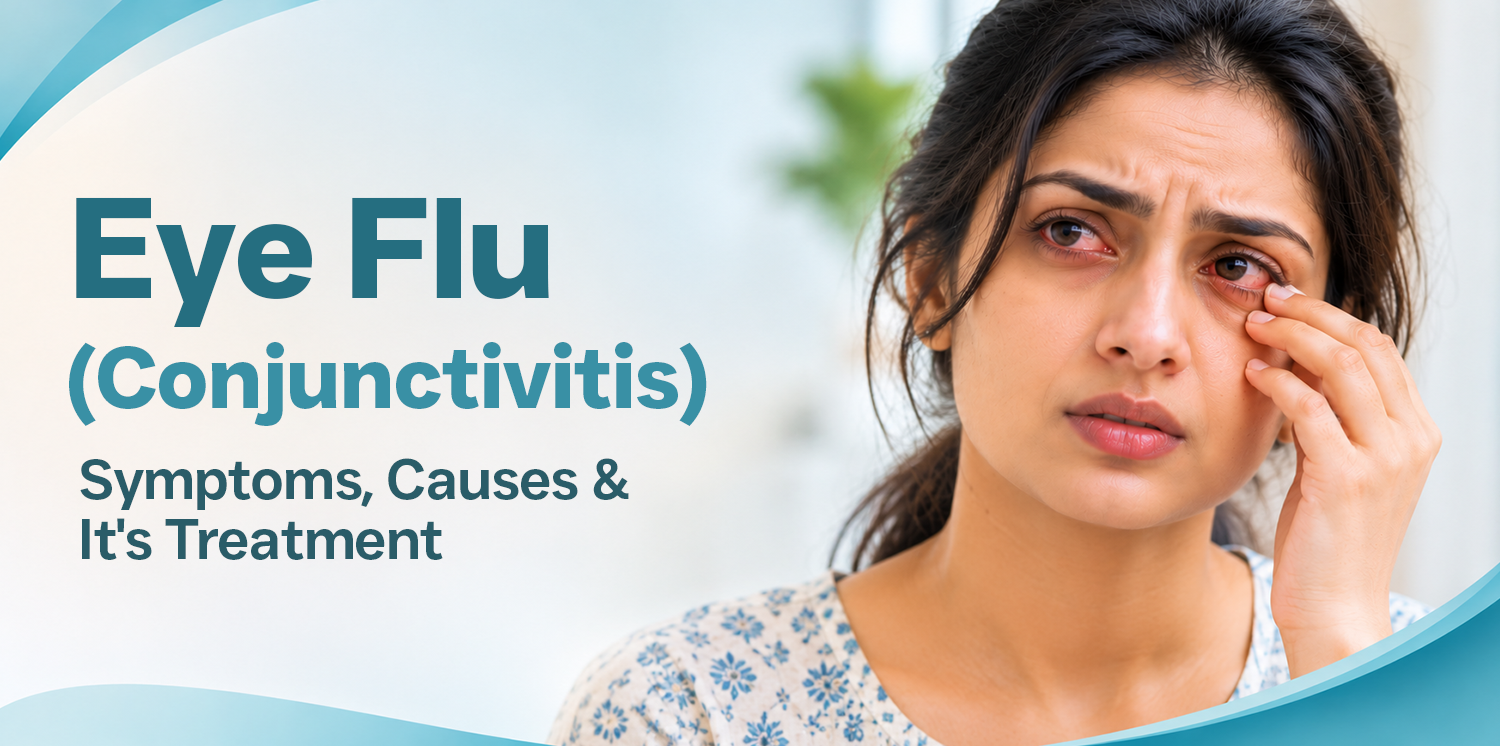
Red, watery, itchy eyes that seem to appear overnight send many people straight to the pharmacy. In Mumbai, eye flu cases rise during the monsoon, when humidity, dirty water, and crowded places help germs spread. Most cases resolve within one to two weeks, but proper care eases discomfort, protects vision, and stops the infection from spreading to family members. This guide explains the symptoms, causes, treatment, and complications of eye flu, and when to see an eye doctor.

Quick Answer: Eye flu, or conjunctivitis, is an infection or inflammation of the thin layer that covers the white part of the eye. Common eye flu symptoms include redness, watering, itching, a gritty feeling, and discharge. Viruses cause most cases, and they usually clear within one to two weeks. See an eye doctor if you experience pain, blurred vision, or strong sensitivity to light.
What Is Eye Flu (Conjunctivitis)?
If you ask what eye flu is, the answer is straightforward: it is an infection or inflammation of the conjunctiva. The conjunctiva is the thin, transparent membrane that covers the white part of the eye and lines the inside of the eyelid. It is medically known as conjunctivitis. In India, it is commonly called pink eye or Madras eye.
The eye becomes red or pink when the tiny blood vessels in the conjunctiva become swollen.
Despite its name, eye flu has nothing to do with influenza. People use the term because the infection can spread quickly from person to person. Some people with viral conjunctivitis also experience a cold, sore throat, or mild fever because the same viruses can cause these symptoms.
Eye flu is common, especially among children, and it can affect one or both eyes.
Eye Flu Symptoms
Eye flu symptoms usually start within a few days of contact with the infection. They often begin in one eye and may spread to the other within a few days.
Common symptoms of eye flu include:
- Red or pink eyes
- Excessive watering
- Itching, burning, or irritation
- A gritty feeling, as if sand is inside the eye
- Swollen or puffy eyelids
- Watery or thick yellow-green discharge
- Crust formation on the eyelashes, especially after sleeping
- Eyelids sticking together after waking up
- Sensitivity to light
- Blurred vision that clears after blinking or wiping the eye
- A tender lump in front of the ear, particularly with viral infections
- Cold, sore throat, or mild fever alongside eye symptoms
Children can catch eye flu easily because they frequently rub their eyes, share toys, and sit close to one another in classrooms. Parents should watch for red eyes, constant rubbing, crusted eyelids, watering, itching, or pain.
A newborn with red or sticky eyes needs medical attention on the same day. Child eye care in Mumbai can help identify the cause and ensure that children receive appropriate treatment.
How Long Does Eye Flu Last?
The duration of eye flu depends on its type:
- Viral conjunctivitis: Usually lasts one to two weeks and sometimes up to three weeks. Symptoms typically peak around the third to fifth day before gradually improving.
- Bacterial conjunctivitis: Symptoms may improve within two to five days with prescribed antibiotic drops, although complete recovery can take up to two weeks.
- Allergic conjunctivitis: Symptoms continue as long as the person remains exposed to the allergen, such as pollen, dust, or pet hair.
Blurred vision, dry eyes, or light sensitivity may persist for a few weeks after the redness disappears. If symptoms do not improve after a week, consult an eye doctor.
Eye Flu Causes
Eye flu can be divided into four main types. Each type has different causes and symptoms.
| Type | Common Causes | Common Symptoms |
|---|---|---|
| Viral | Adenovirus and other viruses spread through infected hands, respiratory droplets, and contaminated surfaces | Watery discharge, red eyes, and sometimes cold symptoms |
| Bacterial | Bacteria such as Staphylococcus and Streptococcus spread through contaminated towels, makeup, or unwashed hands | Thick yellow or green discharge and eyelids sticking together |
| Allergic | Pollen, dust mites, mould, pet hair, and smoke | Intense itching, watery discharge, and swollen eyelids, usually in both eyes |
| Irritant | Smoke, air pollution, swimming pool chlorine, and chemical fumes | Burning, redness, and watering without an infection |
Several factors can increase the risk of developing eye flu. Children, contact lens users, and people with weakened immune systems may be more vulnerable.
Crowded classrooms, offices, and public transport, along with sharing towels or eye makeup and touching the eyes with unwashed hands, can also increase the chances of infection.
During the monsoon, damp indoor environments can encourage mould growth, while contaminated water and frequently touched surfaces may contribute to the spread of infections.
If eye itching occurs at the same time every year, allergy testing in Mumbai can help identify the triggers and guide appropriate preventive measures.
Is Eye Flu Contagious?
Viral and bacterial conjunctivitis are highly contagious, while allergic and irritant conjunctivitis are not.
Eye flu can spread through several routes:
- Touching an infected eye or a contaminated surface, such as a doorknob or mobile phone, and then touching your own eyes.
- Coming into contact with respiratory droplets from an infected person’s cough or sneeze.
- Sharing towels, pillow covers, glasses, eye makeup, or eye drops.
How Long Is Eye Flu Contagious?
With viral conjunctivitis, a person can remain contagious while symptoms are present, often for a week or longer.
With bacterial conjunctivitis, the risk of spreading the infection generally decreases after approximately 24 hours of prescribed antibiotic treatment. However, the duration can vary depending on the infection and treatment.
Always follow your doctor’s advice regarding isolation and returning to school or work.
How to Stop Eye Flu from Spreading
Following basic hygiene practices can help prevent the infection from spreading to other people.
- Wash your hands frequently with soap and water, especially after touching your eyes.
- Avoid touching or rubbing your eyes.
- Use separate towels, pillow covers, and personal items.
- Wash towels and pillow covers regularly.
- Clean frequently touched surfaces, including mobile phones and door handles.
- Stay home from school or work while your eyes are red and watery.
- Avoid swimming pools and crowded places until you recover.
If several people in your home or school develop eye flu, or if infections keep returning, infectious disease specialists in Mumbai can help investigate the cause and recommend appropriate care.
Eye Flu Treatment
There is no instant cure for eye flu. The treatment depends on whether the condition is viral, bacterial, allergic, or caused by an irritant.
1. Viral Eye Flu Treatment
Antibiotics do not work against viruses. Most viral conjunctivitis cases clear on their own within one to two weeks.
Doctors may recommend:
- Lubricating eye drops to reduce dryness and irritation.
- Cool compresses to soothe the eyes.
- Adequate rest and proper hygiene.
2. Bacterial Eye Flu Treatment
Bacterial conjunctivitis may require antibiotic eye drops or ointments prescribed by a doctor.
Symptoms often improve within a few days. However, patients should follow the prescribed treatment course.
3. Allergic Eye Flu Treatment
Allergic conjunctivitis occurs when the eyes react to allergens such as dust, pollen, or pet hair.
Treatment may include:
- Avoiding known allergens.
- Applying cool compresses.
- Using prescribed antihistamine eye drops.
- Avoiding eye rubbing.
4. Irritant-Related Eye Flu Treatment
When smoke, chlorine, or chemical fumes irritate the eyes, treatment involves removing the source of irritation.
Rinse the eyes with clean water and move away from the irritant. Chemical exposure requires immediate and thorough flushing and urgent medical attention.
Home Care Tips for Eye Flu
A few simple steps can help reduce discomfort and support recovery:
- Clean the eyelids using a fresh, damp cotton pad for each wipe.
- Apply a cool compress to closed eyes to reduce irritation.
- Use a warm compress to soften crusts around the eyelids.
- Wear sunglasses if bright light causes discomfort.
- Stop wearing contact lenses until your doctor confirms that it is safe to restart.
- Replace contact lenses and their storage case used during the infection.
- Avoid eye makeup until the eyes have completely recovered.
What Should Be Avoided During Eye Flu?
Certain practices can worsen irritation or delay recovery.
- Avoid using steroid or combination eye drops without a doctor’s prescription.
- Do not use leftover antibiotic drops from previous infections.
- Avoid putting rose water, honey, breast milk, tea bags, or other home remedies directly into the eyes.
- Do not rub your eyes, as this can increase irritation and spread the infection.
- Avoid sharing eye drops, towels, and personal hygiene products.
Side Effects and Complications of Eye Flu
Most people recover completely from eye flu without any permanent damage. However, some cases can lead to complications.
Possible side effects and complications include:
- Dry eyes: Irritation and dryness may continue for a few weeks after recovery.
- Blurred vision: Some viral infections can cause temporary changes in the cornea.
- Light sensitivity: Sensitivity to bright light may continue for days or weeks.
- Spread of infection: The infection can spread to the other eye or other family members.
- Corneal inflammation: A condition called keratitis can cause pain, severe light sensitivity, and reduced vision.
- Corneal scarring: Rarely, severe inflammation can leave scars that affect vision.
- Serious infections: Newborns and people with weakened immune systems may experience more serious complications.
Using the wrong medication can also cause problems. Steroid eye drops used without medical supervision may increase eye pressure, cause cataracts, and worsen certain infections.
When to See an Eye Doctor
Most cases of eye flu improve with proper care. However, certain symptoms require medical attention.
Consult an eye specialist if you experience:
- Eye pain beyond mild irritation or itching.
- Blurred vision that does not clear after blinking.
- Severe sensitivity to light.
- Excessive thick yellow or green discharge.
- Symptoms that do not improve after a week.
- Red eyes while wearing contact lenses.
- Red or sticky eyes in a newborn.
- Red eyes in someone with diabetes or weakened immunity.
- Repeated eye infections.
If a chemical splashes into the eye or an object injures it, immediately rinse the eye with clean running water for at least 15 minutes and seek emergency medical attention.
What to Expect During an Eye Examination
During an eye examination, the doctor uses a light and magnifying equipment to examine the eyes and check vision.
The doctor may ask about:
- The duration of symptoms.
- The type of eye discharge.
- Recent fever or respiratory infections.
- Contact lens usage.
- Contact with people who have red eyes.
- Any eye drops or medications already used.
If the patient experiences pain or light sensitivity, the doctor may examine the cornea using a special dye. In severe, recurring, or persistent cases, or in newborns, a sample of the eye discharge may be collected for laboratory testing.
Patients who wear contact lenses should bring their lenses and storage case to the appointment.
Consulting eye specialists in Mumbai can help identify the cause and ensure appropriate treatment.
Conclusion
Eye flu can cause significant discomfort, but most people recover completely within one to two weeks. Understanding its symptoms, identifying the cause, and following proper hygiene practices can help manage the infection and prevent it from spreading.
Avoid using steroid eye drops or unverified home remedies without medical advice. If symptoms include eye pain, blurred vision, or severe light sensitivity, seek medical attention immediately.
The ophthalmology team at Kokilaben Dhirubhai Ambani Hospital can examine the eyes, identify the underlying cause, and recommend appropriate eye flu treatment for adults and children.
Frequently Asked Questions (FAQs)
1. What are the symptoms of eye flu?
Common eye flu symptoms include red or pink eyes, watering, itching, burning, a gritty feeling, swollen eyelids, discharge, crusted eyelashes, and sensitivity to light. Some people may also experience cold symptoms or a mild fever.
2. What causes eye flu?
Eye flu can be caused by viruses, bacteria, allergens such as pollen and dust, or irritants such as smoke and chlorine. Viral and bacterial infections can spread through contaminated hands, surfaces, towels, and personal belongings.
3. Is there a cure for eye flu?
There is no instant cure for viral eye flu. Most viral cases resolve naturally within one to two weeks. Lubricating eye drops and cool compresses can provide relief. Bacterial infections may require antibiotic eye drops prescribed by a doctor.
4. How is eye flu treated?
Treatment depends on the cause. Viral conjunctivitis is generally managed with lubricating drops and cool compresses, while bacterial conjunctivitis may require antibiotic drops or ointments. Allergic conjunctivitis may require antihistamine drops and avoiding allergens.
5. How long does eye flu last?
Viral eye flu usually lasts one to two weeks, although some cases may continue for up to three weeks. Bacterial infections may improve within a few days with appropriate antibiotic treatment. Consult a doctor if symptoms do not improve after a week.
6. Is eye flu the same as pink eye?
Yes. Eye flu, pink eye, and conjunctivitis are commonly used terms for inflammation of the conjunctiva, the thin membrane covering the white part of the eye. However, eye flu is not related to influenza.