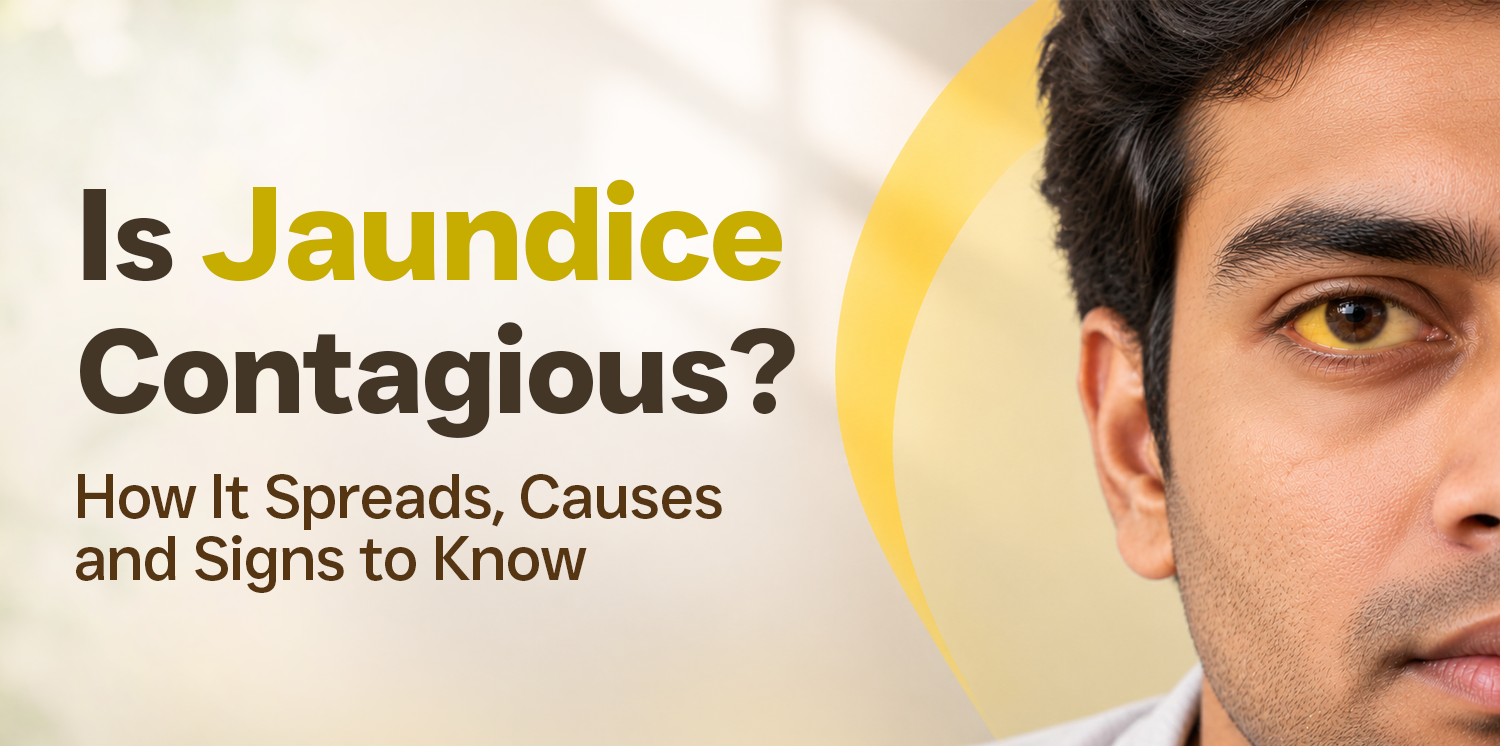
Yellow skin and yellow eyes are a worry for every family, and the first question that often comes up is, “Is jaundice infectious? Can I be in contact with my child, parent, or friend?” The short answer is that jaundice itself is not contagious, but some infections that cause it can spread from person to person. This guide explains what jaundice is, how it occurs, the signs to watch out for, which causes are contagious, which are not, and when to see a doctor.

Quick Answer: Is jaundice contagious? No. Jaundice is a symptom, not an infection. However, the underlying cause of jaundice can be infectious. Hepatitis A and E can spread through contaminated food and water, while hepatitis B and C can spread through infected blood and certain bodily fluids. Gallstones, alcohol-related liver disease, and newborn jaundice are not contagious.
What Is Jaundice?
Jaundice is a condition that causes yellowing of the skin, the whites of the eyes, and the inside of the mouth. It is not a disease in itself. It occurs when there is too much bilirubin, a yellow pigment, in the blood.
The body produces bilirubin when it breaks down old red blood cells. A healthy liver processes bilirubin and removes it through bile. However, if the liver cannot process bilirubin properly or something blocks its removal, bilirubin builds up in the blood and tissues, causing the skin and eyes to turn yellow.
How Does Jaundice Occur?
To understand how jaundice occurs, it is important to follow the normal process of bilirubin removal:
- Old red blood cells break down and release bilirubin into the blood.
- The liver absorbs bilirubin, processes it, and removes it through bile.
- Bile travels through the bile ducts into the intestine, where bilirubin is eventually removed through stools.
Jaundice develops when something interrupts this process. The problem may occur before the liver, inside the liver, or after the liver.
| Location of the Problem | What Happens | Common Causes |
|---|---|---|
| Before the liver | Too many red blood cells break down, and the liver cannot process all the bilirubin | Malaria, thalassaemia, sickle cell disease, and certain medicines |
| In the liver | Damaged liver cells cannot process bilirubin properly | Hepatitis, alcohol-related liver disease, fatty liver, cirrhosis, and certain medicines |
| After the liver | Blocked bile ducts prevent bilirubin from leaving the body | Gallstones, narrowed bile ducts, and tumours of the pancreas or bile duct |
As bilirubin accumulates in the blood and tissues, the skin and eyes gradually develop a yellow appearance.
Signs and Symptoms of Jaundice
Jaundice symptoms usually develop over several days. Recognising the early signs can help people seek medical attention at the right time.
Common signs of jaundice include:
- Yellowing of the skin and whites of the eyes, which is often easier to notice in natural daylight.
- Dark urine that looks like tea or cola.
- Pale or clay-coloured stools.
- Itching across different parts of the body.
- Tiredness and general weakness.
- Nausea, vomiting, and loss of appetite.
- Pain in the upper-right side of the abdomen.
- Fever, particularly when an infection is responsible for jaundice.
- Unexplained weight loss, a swollen abdomen, or swollen legs in people with long-term liver disease.
A Quick Tip: Eating large amounts of carrots, papaya, or pumpkin can cause a yellowish tinge on the palms because of a pigment called beta-carotene. However, this does not cause the whites of the eyes to turn yellow. Yellow eyes should always be medically evaluated.
Is Jaundice Contagious? Which Causes Spread and Which Do Not?
Is jaundice contagious? No, yellow skin itself cannot spread from one person to another. It is also not transmitted through touching, sharing cutlery, hugging, or sitting in the same room.
However, the underlying cause of jaundice is important because some infections responsible for it can spread.
| Causes That Can Spread | Causes That Do Not Spread from Person to Person |
|---|---|
| Hepatitis A: Spreads through food and water contaminated with infected stool | Gallstones and blocked bile ducts |
| Hepatitis E: Spreads mainly through contaminated water and can be particularly dangerous during pregnancy | Alcohol-related liver disease and fatty liver |
| Hepatitis B: Spreads through infected blood, certain bodily fluids, sexual contact, shared needles, and from mother to baby | Liver injury caused by medicines or certain herbal remedies |
| Hepatitis C: Spreads mainly through infected blood, shared needles, and unsafe blood transfusions | Blood disorders such as thalassaemia and sickle cell disease |
| Typhoid: Spreads through food and water contaminated with infected stool | Cirrhosis and tumours of the liver or bile ducts |
Malaria and leptospirosis can also cause jaundice, but they do not spread directly from person to person like a common cold.
Malaria spreads through infected mosquitoes, while leptospirosis spreads through contact with water or soil contaminated with infected animal urine. Leptospirosis is a particular concern during the Mumbai monsoon because of exposure to contaminated floodwater.
Most causes of jaundice do not spread through a hug, handshake, cough, or sharing a room.
Can You Stay With Someone Who Has Jaundice?
Yes, in most cases. Family members can usually stay with and care for someone who has jaundice. However, until a doctor identifies the underlying cause, it is sensible to follow basic hygiene precautions.
- Wash your hands with soap after using the toilet and before preparing or eating food.
- Clean the patient’s plates, glasses, and utensils properly.
- Avoid sharing towels, razors, and toothbrushes.
- Drink boiled or properly filtered water.
- Eat freshly prepared and hygienic food.
- Ask your doctor whether hepatitis A or hepatitis B vaccination is appropriate for family members.
Hepatitis A can spread before symptoms appear. People are generally most contagious during the period before jaundice develops and shortly after symptoms begin, so good hygiene is important from the start.
Newborn Jaundice: Is It Contagious?
Is jaundice in newborn babies contagious? No. Newborn jaundice is common and is not infectious to other babies or family members. Parents can hold, feed, and cuddle their babies normally.
Newborn jaundice usually develops because a baby’s liver is still developing and may not be able to remove bilirubin efficiently. Newborn babies also have more red blood cells that need to be broken down.
Jaundice commonly appears on the second or third day after birth, peaks around the third to fifth day, and gradually improves over one to two weeks.
Other possible causes include:
- Inadequate milk intake during the first few days.
- Blood group incompatibility between the mother and baby.
- Premature birth.
- Bruising during delivery.
- Certain infections or underlying medical conditions.
Parents should feed their newborn regularly and ensure that the baby’s bilirubin levels are checked by a paediatrician when recommended.
Higher bilirubin levels may require phototherapy, a treatment that uses special blue light to help the baby’s body remove bilirubin.
Contact a doctor immediately if newborn jaundice:
- Appears within the first 24 hours after birth.
- Spreads to the baby’s abdomen, arms, or legs.
- Is accompanied by poor feeding, extreme sleepiness, or fever.
- Continues beyond two weeks.
- Occurs with pale stools or dark urine.
How Is Jaundice Diagnosed?
Doctors aim to identify the underlying cause of jaundice rather than simply confirming the yellowing of the skin and eyes.
Diagnosis usually begins with a medical history and physical examination. The doctor may recommend the following tests:
- Blood Tests: Measure bilirubin levels, liver enzymes, and blood cell counts.
- Viral Hepatitis Tests: Help identify whether hepatitis A, B, C, or E is responsible for the condition.
- Urine and Stool Tests: Help assess bilirubin levels and identify certain underlying problems.
- Abdominal Ultrasound: Helps identify gallstones, blocked bile ducts, and changes in the liver.
- CT Scan, MRI, or Endoscopy: May be recommended when doctors suspect a blockage, tumour, or other underlying condition.
- Liver Biopsy: In selected cases, a small liver tissue sample may be collected to investigate the cause of liver damage.
The choice of tests depends on the patient’s symptoms, medical history, and initial examination findings.
Jaundice Treatment: What Depends on the Cause?
Jaundice treatment depends on the underlying medical condition. In many cases, jaundice improves once the cause has been properly treated.
Common treatment approaches include:
- Hepatitis A and E: Most people recover with supportive care, adequate fluids, rest, and nutritious food. Alcohol and medicines not approved by a doctor should be avoided.
- Hepatitis B and C: Treatment depends on the type of infection. Doctors may recommend antiviral medicines and regular monitoring.
- Gallstones or Blocked Bile Ducts: The blockage may need to be removed through an endoscopic procedure or surgery.
- Alcohol-Related Liver Disease: Treatment involves stopping alcohol consumption and receiving appropriate nutritional and medical support.
- Medicine-Related Liver Injury: The doctor may stop or change the medicine responsible for liver damage.
- Blood Disorders: A haematologist in Mumbai can identify blood disorders such as thalassaemia and sickle cell disease and recommend appropriate treatment, which may include medication or blood transfusions.
- Malaria, Typhoid, and Leptospirosis: Doctors prescribe appropriate medicines to treat the underlying infection.
- Newborn Jaundice: Treatment may include regular feeding, monitoring bilirubin levels, and phototherapy when required.
Patients should avoid self-medication, herbal powders, and unverified home remedies. Some herbal products can damage the liver and delay appropriate medical treatment.
When to See a Doctor
Anyone who notices yellowing of the skin or eyes, dark urine, or pale stools should consult a doctor promptly. These symptoms may indicate an underlying liver or bile duct problem that needs investigation.
Book an appointment with a liver specialist in Mumbai within a day or two rather than waiting for the symptoms to disappear.
Seek emergency medical attention if jaundice occurs along with:
- Confusion, extreme drowsiness, or changes in behaviour.
- Vomiting blood or passing black stools.
- Severe abdominal pain.
- A swollen abdomen or unexplained bleeding.
- High fever accompanied by chills.
- Pregnancy, particularly if hepatitis E is suspected.
Patients should carry a list of their current medicines, herbal products, recent travel history, and previous medical reports when visiting the doctor. This information can help identify the underlying cause more efficiently.
Conclusion
Is jaundice contagious? The yellowing of the skin and eyes does not spread from one person to another, but certain infections that cause jaundice can be transmitted. Understanding the signs, maintaining proper hygiene, drinking safe water, checking hepatitis vaccination status, and seeking medical attention early can help prevent complications.
Most people with jaundice recover once the underlying cause is properly treated. The Gastroenterology and Liver Care teams at Kokilaben Dhirubhai Ambani Hospital can help identify the cause of jaundice, guide patients on protecting their families, and recommend appropriate treatment.
Frequently Asked Questions (FAQs)
1. Is jaundice contagious?
No. Jaundice is a symptom caused by high bilirubin levels in the blood, not an infection. However, the underlying cause, such as hepatitis A, B, C, or E, may be contagious. Conditions such as gallstones and alcohol-related liver disease are not contagious.
2. Is jaundice spreadable through food or touch?
Jaundice itself does not spread through food, touch, coughing, or sharing a room. However, hepatitis A and E can spread through contaminated food and water. Maintaining proper hygiene and drinking safe water can help reduce the risk.
3. What is jaundice?
Jaundice is the yellowing of the skin and eyes caused by an accumulation of bilirubin in the blood. It can indicate problems involving red blood cells, the liver, or the bile ducts.
4. What are the signs of jaundice?
Common signs include yellowing of the skin and eyes, dark urine, pale stools, itching, fatigue, nausea, loss of appetite, and pain in the upper-right abdomen.
5. How does jaundice occur?
Jaundice occurs when too many red blood cells break down, when the liver cannot process bilirubin properly, or when blocked bile ducts prevent bilirubin from leaving the body.
6. Can I stay with someone who has jaundice?
Yes, in most cases. Jaundice itself does not spread through hugging, touching, or sharing a room. However, maintaining hygiene, avoiding the sharing of personal items, and following medical advice are important, especially when an infectious cause is suspected.