
Managing diabetes doesn’t mean giving up all your favorite foods or following a restrictive, boring diet. It means making smart choices about what, when, and how much you eat. A proper diabetic diet chart is your roadmap to keeping blood sugar levels stable, preventing complications, and living a full, healthy life.
Many people feel overwhelmed when first diagnosed with diabetes. A diabetic diet chart seems complicated, food labels become confusing, and every meal feels like a math problem. But here’s the truth: eating well with diabetes isn’t about deprivation. It’s about balance, portion control, and understanding how different foods affect your blood sugar.
A well-planned diabetic diet chart does more than just control blood sugar. It helps you maintain a healthy weight, reduces your risk of heart disease, improves energy levels, and makes you feel better overall. Whether you have type 1 or type 2 diabetes, the right food choices make all the difference.
This guide breaks down everything you need to know about creating and following a diabetic diet chart. We’ll cover what foods work best, which ones to limit, how to plan meals, and provide a practical sugar patient diet chart you can start using today. The diabetic diet food list we share focuses on real, accessible foods – not expensive specialty items.
Understanding what is the best diet for a diabetic person depends on your specific needs, but the principles remain the same: balanced meals, consistent timing, appropriate portions, and smart food choices.
What Is a Diabetic Diet?
A diabetic diet isn’t a special or unusual way of eating. It’s simply a healthy, balanced eating plan that helps control blood sugar levels. The diabetes mellitus diet focuses on choosing nutritious foods in moderate amounts and sticking to regular meal times.
The core principle of any diabetic diet plan is managing carbohydrates – the main nutrient that affects blood sugar. Carbohydrates break down into glucose (sugar) in your body.
A diabetic diet chart emphasizes:
Controlled Portions: Eating appropriate amounts prevents blood sugar spikes and helps maintain healthy weight.
Balanced Macronutrients: Including carbohydrates, proteins, and healthy fats in each meal helps stabilize blood sugar.
Regular Timing: Eating at consistent times helps your body manage insulin more effectively.
High-Fiber Foods: Fiber slows sugar absorption, preventing rapid blood sugar spikes.
Whole Foods: Choosing minimally processed foods over refined options provides better nutrition and blood sugar control.
The diabetes mellitus diet isn’t about elimination – it’s about making informed choices.
Diabetic Diet Chart: What You Need to Know
Creating an effective diabetic diet chart requires understanding several key principles:
Carbohydrate Counting:
Carbohydrates have the biggest impact on blood sugar. Your diabetic diet chart should spread carbohydrates evenly across the day. The right amount per meal is set by your doctor or dietitian, based on your medicines, weight and activity level. Eating about the same amount of carbohydrate at each meal helps keep your blood sugar steady.
Glycemic Index:
This measures how quickly a food raises blood sugar. Low-GI foods (below 55) cause gradual increases, while high-GI foods (above 70) spike blood sugar rapidly. The sugar patient diet chart should emphasize low to medium-GI foods.
Meal Timing:
Eating at regular intervals – typically 3 meals and 2-3 small snacks – helps maintain steady blood sugar levels. Don’t skip meals.
Portion Control:
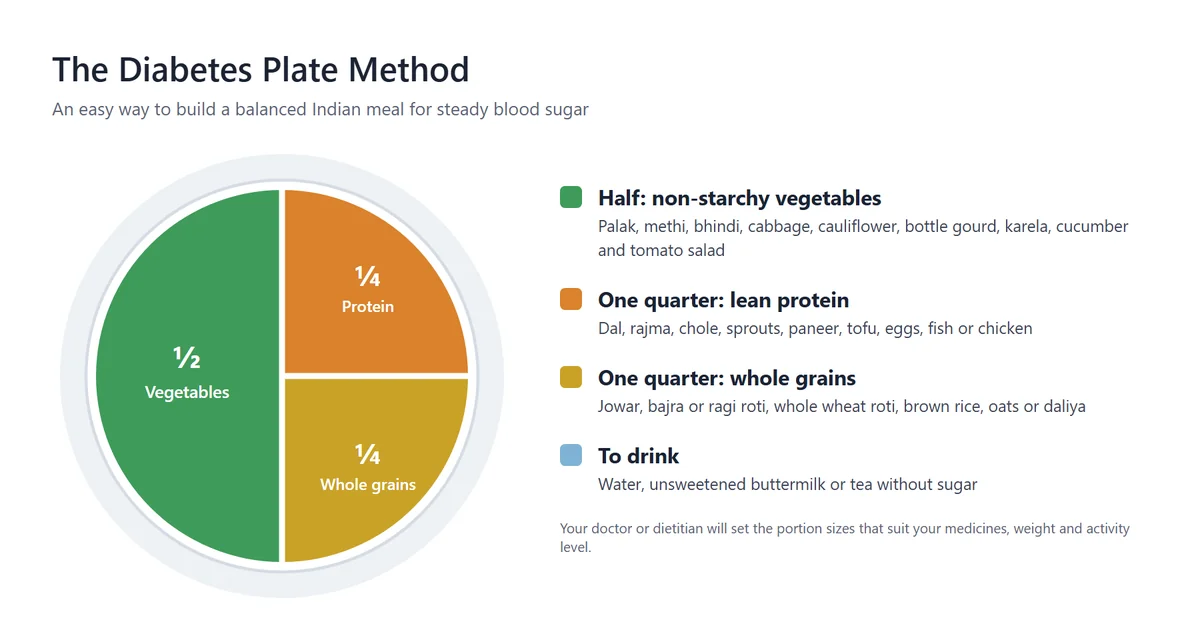
A diabetic diet chart includes appropriate portions:
- Non-starchy vegetables: Fill half your plate
- Lean protein: One-quarter of your plate
- Whole grains or starchy vegetables: One-quarter of your plate
- Healthy fats: Small amounts
Balanced Plates:
Every meal should include protein, healthy fats, and fiber-rich carbohydrates. This combination slows digestion and prevents blood sugar spikes.
Consistency:
Following your diabetic diet chart consistently produces the best results. Occasional treats are fine when planned into your overall eating pattern.
Working with professionals at a diabetes & endocrinology clinic can help you create a personalized diabetic diet chart that fits your lifestyle, preferences, and medical needs.
Diabetic Diet Food List: What to Eat
The diabetic diet food list includes a wide variety of nutritious foods:
Non-Starchy Vegetables:
These should form the foundation of your food for diabetic patient meals:
- Leafy greens: spinach, kale, lettuce, methi
- Cruciferous vegetables: broccoli, cauliflower, cabbage
- Other vegetables: tomatoes, peppers, cucumbers, onions, mushrooms, carrots, beans, okra, bitter gourd
Whole Grains:
Brown rice, quinoa, oats, barley, whole wheat (in moderation), jowar, bajra, ragi
Lean Proteins:
Protein has little direct effect on blood sugar:
- Fish (especially fatty fish like salmon), chicken breast, turkey, eggs, tofu, paneer, low-fat dairy, legumes (dal, chickpeas, rajma)
Healthy Fats:
These help slow digestion:
- Nuts (almonds, walnuts), seeds (chia, flax, sunflower), olive oil, avocado, fatty fish
Fruits (in moderation):
Fruits contain natural sugars but also fiber:
- Berries (strawberries, blueberries), apples, pears, oranges, papaya, guava, plums (eaten with skin when possible)
Dairy:
Low-fat milk, plain yogurt, buttermilk, cottage cheese (paneer)
Legumes:
All types of dal, chickpeas, kidney beans, black beans, green gram
Herbs and Spices:
Turmeric, cinnamon, fenugreek, curry leaves, ginger, garlic
This diabetic diet food list provides the building blocks for balanced, satisfying meals. Clinical nutrition therapy can help you understand how to combine these foods for optimal blood sugar control.
Foods to Avoid on a Diabetic Diet
While no food is completely off-limits, certain foods should be limited in a diabetic diet chart:
Sugary Foods:
Regular soda, sweet tea, fruit juices, energy drinks, candy, cookies, cakes, pastries, ice cream, sweetened breakfast cereals
Refined Carbohydrates:
White bread, white rice, refined pasta, maida-based products, naan, white flour parathas
Trans Fats:
Packaged snacks, fried foods, bakery items with partially hydrogenated oils, vanaspati ghee
Processed Meats:
Sausages, bacon, hot dogs, deli meats with nitrates
High-Sodium Foods:
Canned soups, pickles, papad, namkeen, chips, processed sauces
Sweetened Dairy:
Flavored yogurt, sweetened lassi, condensed milk
Fried Foods:
Samosas, pakoras, fried chicken, French fries, bhajias
The sugar control diet doesn’t mean never eating these foods. It means eating them rarely and in small amounts.
Diabetes Diet Plan for Type 1 Diabetes
Type 1 diabetes diet management requires coordinating food intake with insulin doses. People with type 1 diabetes need to count carbohydrates carefully because they must match insulin to the carbs they eat.
Key Principles:
Carbohydrate Consistency: Eat similar amounts of carbs at the same times each day. The diabetic diet plan for type 1 focuses on consistency.
Carb Counting: Learn to calculate carbohydrates in foods. Most people with type 1 diabetes use an insulin-to-carb ratio.
Meal Timing: Don’t skip meals or delay eating after taking rapid-acting insulin.
Balanced Meals: Include protein and healthy fats with carbs to slow digestion.
Exercise Planning: Adjust food intake or insulin before and after exercise.
Sample Type 1 Diabetes Meal Pattern:
- Breakfast: 45-60g carbs
- Mid-morning snack: 15-20g carbs (if needed)
- Lunch: 45-60g carbs
- Afternoon snack: 15-20g carbs
- Dinner: 45-60g carbs
- Evening snack: 15-20g carbs (if needed)
The type 1 diabetes diet isn’t about restriction – it’s about precision in matching insulin to food.
Diabetes Diet Plan for Type 2 Diabetes
The type 2 diabetes diet focuses on achieving healthy weight, improving insulin sensitivity, and controlling blood sugar through food choices and portions.
Key Principles:
Weight Management: Many people with type 2 diabetes benefit from weight loss. Even losing 5-10% of body weight significantly improves blood sugar control.
Carb Control: Limiting carbohydrates, especially refined carbs, is crucial. The diabetic diet plan for type 2 emphasizes quality and quantity of carbs.
Regular Meals: Eat at consistent times to maintain steady blood sugar.
Portion Control: Use smaller plates, measure foods initially to learn portions.
Increase Fiber: Aim for 25-35 grams daily from vegetables, fruits, whole grains, and legumes.
Reduce Processed Foods: Choose whole, minimally processed foods most of the time.
Sample Type 2 Diabetes Eating Pattern:
Many people with type 2 diabetes do well limiting carbs to 30-45 grams per meal. Some find success with:
- Lower-carb approach: 100-150g carbs daily
- Moderate-carb approach: 150-200g carbs daily
- Higher-fiber approach: Focusing on fiber-rich carbs
The type 2 diabetes diet is highly individual. Regular blood sugar monitoring through diabetes blood tests helps you understand what works for your body.
Low Blood Sugar: What to Eat When Your Sugar Drops
A diabetic diet chart also needs a plan for the opposite problem. If you take insulin or certain diabetes tablets, a skipped meal, a delayed meal after your dose or a longer workout than usual can push your blood sugar too low. Blood sugar below 70 mg/dL is considered low.
Signs to Watch For:
Shakiness, sweating, sudden hunger, a fast heartbeat, dizziness, irritability and confusion. Some people feel weak, sleepy or get a headache. At night, low sugar can show up as nightmares or crying out during sleep.
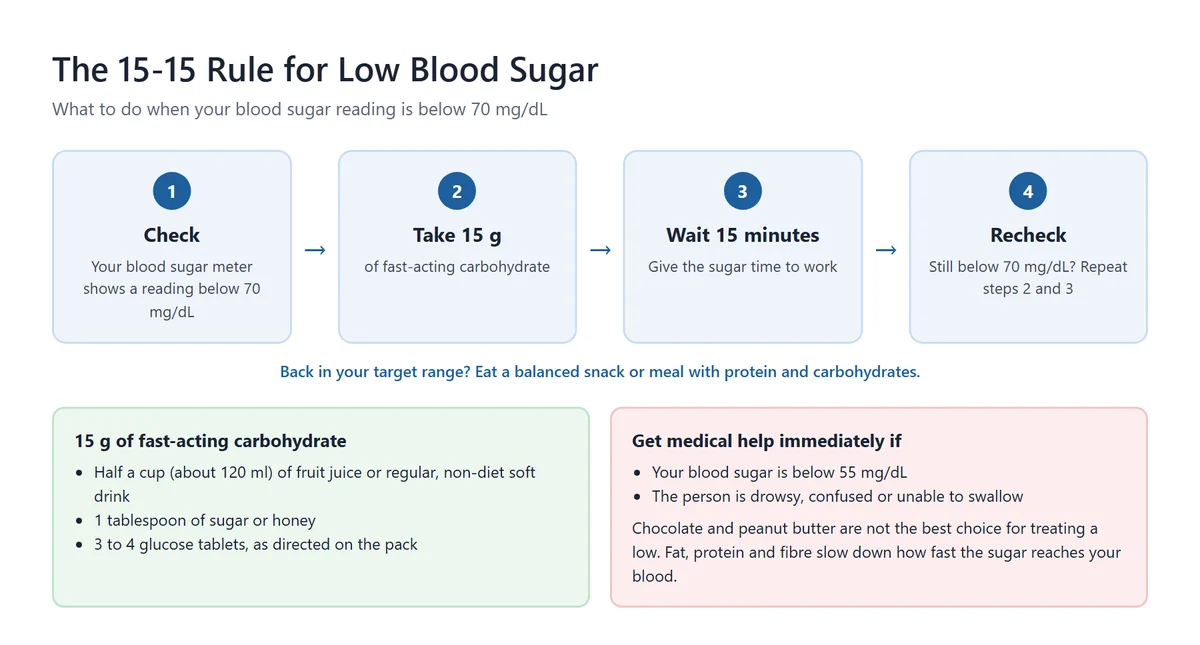
The 15-15 Rule:
Have 15 grams of fast-acting carbohydrate, then wait 15 minutes. Check your blood sugar again. If it is still below 70 mg/dL, repeat the same step. Once your reading is back in your target range, eat a balanced snack or meal with protein and carbohydrates so it does not drop again.
What 15 Grams of Fast-Acting Carbohydrate Looks Like:
- Half a cup (about 120 ml) of fruit juice or a regular, non-diet soft drink
- 1 tablespoon of sugar or honey
- 3 to 4 glucose tablets, as directed on the pack
Chocolate and peanut butter are not the best choice here. Food with more fat, protein or fibre slows down how fast the sugar reaches your blood.
If your blood sugar falls below 55 mg/dL, or the person is drowsy, confused or unable to swallow, treat it as an emergency and get medical help immediately. Ask your doctor whether your medicines carry a risk of low blood sugar, and keep a fast-acting option with you at all times.
7-Day Diabetic Diet Chart
Here’s a practical diabetic diet chart with meal timings and portions. This chart provides approximately 1,500-1,800 calories and 150-180g carbs daily:
| Day | Early Morning (7:00 AM) | Breakfast (8:00 AM) | Mid-Morning (11:00 AM) | Lunch (1:00 PM) | Evening (4:00 PM) | Dinner (7:00 PM) | Before Bed (9:30 PM) |
| Mon | Warm water with lemon | 2 small jowar rotis, vegetable curry, 1 bowl sprouts | 1 apple with 10 almonds | 1 bowl brown rice, dal (1 bowl), mixed veg sabzi, cucumber salad | Buttermilk (1 glass), roasted chana (handful) | Grilled chicken (100g), quinoa (1 cup), sautéed vegetables | Low-fat milk (1 glass) |
| Tue | Green tea | Oats upma (1 bowl), 1 boiled egg, small bowl papaya | Carrot sticks with hummus | 2 small whole wheat rotis, rajma curry, spinach sabzi, onion salad | Tea without sugar, with roasted chana | Fish curry (100g), 1 small bowl brown rice, bottle gourd sabzi | Warm turmeric milk |
| Wed | Warm water | 2 moong dal chillas, mint chutney, 1 bowl curd | 1 guava with handful walnuts | 1 bowl brown rice, chicken curry, beans sabzi, tomato salad | Roasted makhana (1 cup) | Paneer tikka (100g), 2 bajra rotis, mixed dal | Low-fat milk |
| Thu | Herbal tea | 2 eggs (scrambled), 2 slices whole wheat bread, 1 bowl berries | Cucumber slices with peanuts | 2 small rotis, chole curry, karela sabzi, cucumber raita | Buttermilk, fruit (small) | Grilled fish (100g), vegetable khichdi (1 bowl), salad | Warm milk |
| Fri | Warm water | Poha (1 bowl) with vegetables, peanuts, 1 bowl curd | 1 pear with almonds | 1 bowl brown rice, dal, bhindi sabzi, mixed salad | Tea with roasted chana | Chicken stir-fry (100g), 2 jowar rotis, lauki sabzi | Turmeric milk |
| Sat | Green tea | Ragi dosa (2), sambhar, coconut chutney | Sprouts salad (1 bowl) | 2 small rotis, fish curry, cabbage sabzi, onion salad | Buttermilk, handful nuts | Mixed veg curry, quinoa (1 cup), paneer (50g) | Low-fat milk |
| Sun | Warm water | Vegetable daliya (1 bowl), 1 boiled egg, small orange | Greek yogurt with nuts | 1 bowl brown rice, dal (1 bowl), mixed veg, salad | Tea with 1 apple | Grilled chicken (100g), 2 small rotis, palak paneer | Warm milk |
Important Guidelines:
- Drink 2-3 liters of water throughout the day
- Adjust portions based on your calorie needs
- Include non-starchy vegetables generously
- Check blood sugar to understand how foods affect you
- Adjust rice/roti portions based on your blood sugar response
This diabetic diet chart provides structure while allowing flexibility. You can swap similar foods based on availability and preference.
Vegetarian Swaps for This Chart:
Most Indian households cook vegetarian on some or all days. Use these swaps to keep the same meal structure without meat, fish or eggs:
| In the chart | Vegetarian swap |
|---|---|
| Grilled chicken (100g) or chicken stir-fry | Paneer tikka or grilled tofu (100g) |
| Fish curry or chicken curry | Rajma, chole or mixed dal (1 bowl) |
| Boiled or scrambled eggs | Moong dal chilla or a bowl of sprouts |
| Grilled fish with khichdi | Vegetable khichdi with a bowl of curd |
Keep the portion sizes and meal timings the same. Your dietitian can adjust the swaps if you also need to watch your protein, salt or fat intake.
Can a Diabetic Diet Help with Weight Loss?
Yes, a well-designed diabetic diet chart often leads to weight loss, which is particularly beneficial for people with type 2 diabetes. Weight loss improves insulin sensitivity, making blood sugar easier to control.
The sugar control diet naturally promotes weight loss by:
Eliminating Empty Calories: Cutting sugary drinks, sweets, and refined carbs removes hundreds of daily calories.
Increasing Satiety: Emphasizing protein, fiber, and healthy fats helps you feel full longer.
Stabilizing Blood Sugar: Stable blood sugar means fewer cravings and less hunger.
Encouraging Whole Foods: A diabetic diet food list focuses on nutrient-dense, lower-calorie foods.
For successful weight loss, combine the diabetic diet plan with regular physical activity. Even modest weight loss of 5-10% significantly improves blood sugar control.
Conclusion
A well-planned diabetic diet chart is your most powerful tool for managing diabetes. The diet chart for diabetic patient we’ve outlined isn’t about restriction – it’s about making smart choices that keep blood sugar stable.
Remember that what is the best diet for a diabetic person varies by individual. The diabetic diet food list provides guidelines, but you’ll need to adjust based on how your body responds. Monitor your blood sugar regularly and work with healthcare professionals.
Whether you follow a type 1 diabetes diet or type 2 diabetes diet, consistency matters more than perfection. Use this diabetic diet chart as a starting point and adapt it to fit your lifestyle and medical needs.
FAQs
How fast can I lower my blood sugar with a diabetic diet?
Following a proper diabetic diet chart can lower blood sugar within days, though significant improvements typically take 2-4 weeks. Immediate changes happen after meals when you choose low-GI foods. Long-term blood sugar control (measured by HbA1c) improves over 2-3 months of consistent diabetic diet plan adherence.
Can I eat rice if I have diabetes?
Yes, rice can be part of a diabetic diet chart, but choose brown rice over white rice and control portions. Limit to 1/2-1 cup cooked rice per meal. Eat rice with protein, vegetables, and healthy fats to slow digestion.
Is it safe to eat fruit every day on a diabetic diet?
Yes, fruits are part of a healthy diabetic diet. Choose whole fruits over juice, stick to one serving (about 15g carbs) at a time, and pair fruit with protein or fat. Best choices include berries, apples, pears, and citrus fruits. Limit high-sugar tropical fruits to smaller portions.
What is the best diet for a diabetic person with high blood sugar?
If your blood sugar is running high, start with the basics: cut out sugary drinks completely, reduce refined carbohydrates such as white rice, maida and sweets, fill half your plate with non-starchy vegetables, and eat at regular times. Check your blood sugar often to find the foods that raise it most. Persistently high readings need a review by your doctor.
Can a diabetic diet prevent complications in the long term?
Yes, consistently following a diabetes mellitus diet significantly reduces risk of complications including heart disease, kidney damage, nerve damage, and eye problems. The sugar control diet combined with medication, regular exercise, and blood sugar monitoring can prevent or delay most diabetes complications.
How many times a day should a diabetic eat?
Most people following a diabetic diet chart do best eating 3 main meals and 1-2 small snacks daily, spaced 3-4 hours apart. This prevents blood sugar from dropping too low or spiking from eating too much at once. Some people prefer eating just 2-3 times daily. Find what keeps your blood sugar most stable.
What can a diabetic eat for dinner?
Build dinner the same way as lunch, using the plate method: half the plate non-starchy vegetables, one quarter lean protein such as dal, paneer, fish or chicken, and one quarter whole grains such as 2 small jowar or bajra rotis or a small bowl of brown rice. Skip sweets and fried snacks after dinner. The dinner column of the 7-day chart above gives you seven ready options.
Can I control my sugar in 7 days with this diet chart?
You will see better readings after meals within the first few days of eating this way, especially once sugary drinks and refined carbohydrates are out of your diet. Long-term control is measured by HbA1c, which reflects your average blood sugar over the past 2 to 3 months, so give your new routine at least that long before judging the results. Do not stop or change any diabetes medicine on your own because your readings improve.
Can I eat banana, mango or chikoo if I have diabetes?
Yes, in a measured portion. Treat them like any other fruit serving: eat one small portion at a time, eat the whole fruit instead of juice or shakes, and pair it with a few nuts or a bowl of curd. Check your blood sugar after eating to see how your body responds to each fruit.