
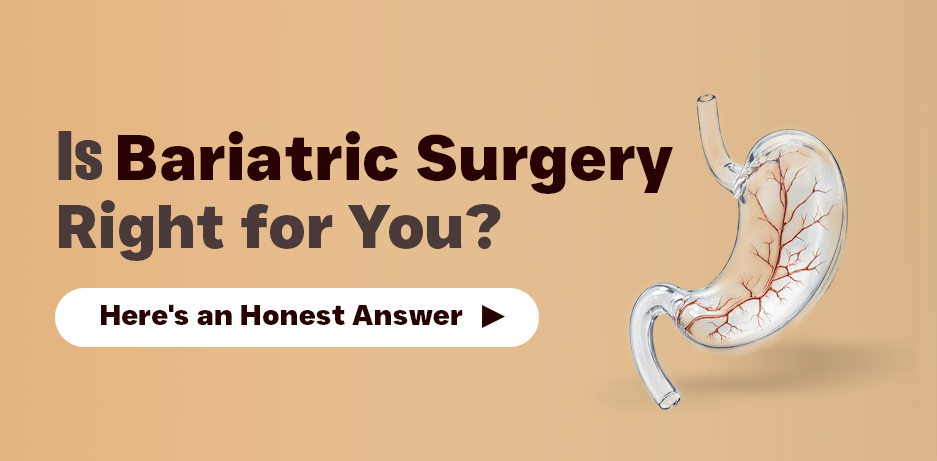
If you have tried multiple diets, maintained regular exercise, and followed professional advice without achieving meaningful, lasting weight loss, you are not alone. More importantly, you are not failing. Obesity is a complex medical condition, not a reflection of personal weakness. For many people living with obesity in India, bariatric surgery has become a highly effective, scientifically supported treatment option — not a shortcut, but a clinically established path toward better health.
The real question is whether it is the right option for you. This guide provides clear, medically grounded information to help you make an informed decision.

What is Bariatric Surgery?
Bariatric surgery, also known as weight-loss surgery or metabolic surgery, refers to a group of procedures that help individuals lose weight by altering the digestive system. In simple terms, these procedures reduce stomach size, change the way food moves through the digestive tract, or do both. As a result, patients feel full sooner, consume fewer calories, and experience hormonal changes that make it easier to maintain healthier eating habits.
The most commonly performed types include:
- Sleeve Gastrectomy (Gastric Sleeve): Approximately 75% of the stomach is removed, leaving a narrow, banana-shaped tube. This is currently the most widely performed bariatric procedure worldwide.
- Roux-en-Y Gastric Bypass: A small stomach pouch is created and connected directly to the lower small intestine, bypassing most of the stomach. This leads to early satiety and reduced calorie absorption.
- Biliopancreatic Diversion with Duodenal Switch (BPD/DS): A combination of sleeve gastrectomy and intestinal bypass. This is a more complex procedure but may be appropriate for patients with very high BMIs.
- Adjustable Gastric Banding: A band is placed around the upper stomach to restrict food intake, though this procedure is now performed less frequently.
Unlike fad diets, bariatric surgery acts on both hormonal and physiological pathways. This is one reason it can produce results that lifestyle changes alone often cannot sustain in cases of severe obesity.
Signs That Bariatric Surgery Might Be Right for You
Bariatric surgery is not appropriate for everyone who struggles with weight. Clinical guidelines define eligibility carefully, because this is a major procedure that requires lifelong commitment.
You may be a candidate if:
- Your BMI is 40 or higher, which is classified as severe or Class III obesity.
- Your BMI is between 35 and 39.9, and you have obesity-related conditions such as type 2 diabetes, high blood pressure, obstructive sleep apnea, heart disease, or fatty liver disease.
- You have been unable to sustain weight loss through medically supervised diet programs, exercise, and weight-loss medications over a significant period.
- Obesity is affecting your quality of life, including mobility, mental health, work, or relationships.
- You have obesity-related infertility or hormonal conditions such as PCOS, where surgical weight loss has shown meaningful benefit.
- You are psychologically prepared for the lifestyle changes required after surgery.
The typical age range considered is 18 to 65, though eligibility is evaluated individually and age alone is not the deciding factor.
Who Should NOT Get Bariatric Surgery
It is equally important to understand who is not a suitable candidate. Bariatric surgery is not recommended for:
- Individuals seeking cosmetic weight loss without meeting clinical BMI criteria.
- Those who are unwilling or unable to commit to permanent dietary and lifestyle changes after surgery.
- People with uncontrolled psychiatric conditions that have not been evaluated or stabilised.
- Patients with certain autoimmune disorders, bleeding disorders, or those unable to tolerate general anaesthesia.
- Individuals with active substance dependence that has not been addressed before evaluation.
- Women who are pregnant or planning pregnancy in the near future.
A comprehensive pre-operative evaluation — including medical screening, psychological assessment, and nutritional counselling — is essential in determining suitability.
Bariatric Surgery vs. Ozempic/GLP-1 — What No One is Telling You
With GLP-1 receptor agonists such as semaglutide (Ozempic, Wegovy) receiving significant attention in recent years, many patients ask why surgery should still be considered. It is a valid question, and the answer is that both approaches have value — but they are not interchangeable.
GLP-1 medications mimic gut hormones to reduce appetite and slow digestion. They can be highly effective, especially for patients with lower BMIs or those who are not surgical candidates. However, there are important differences:
- Weight loss with GLP-1 medications typically requires indefinite use. If the medication is stopped, weight regain is common.
- Bariatric surgery produces durable, long-term weight loss that is often maintained for more than 10 years .
- Surgery changes metabolic function structurally, not just pharmacologically, which is a major advantage for sustained results.
- GLP-1 drugs are not accessible universally, and their long-term safety profile is still being studied across diverse populations.
- For patients with very high BMIs or multiple obesity-related conditions, surgery often delivers broader health benefits than medication alone.
Neither option is a simple fix. Both require commitment. The most appropriate choice depends on your individual health profile, BMI, medical history, and health goals — which is exactly why a specialist consultation is essential before deciding. If you are in Mumbai, speaking with an expert in weight loss in Mumbai at Kokilaben Dhirubhai Ambani Hospital can help you understand which pathway is most appropriate for you.
Benefits of Bariatric Surgery Beyond Weight Loss
Although most people associate bariatric surgery with weight reduction, its health benefits extend well beyond the scale.
- Type 2 Diabetes: Many patients experience major improvements in blood sugar control, and some achieve partial or complete remission, sometimes within days of surgery.
- Cardiovascular Health: Blood pressure, cholesterol levels, and the risk of heart attack and stroke often improve significantly.
- Sleep Apnea: Obstructive sleep apnea frequently improves or resolves, leading to better sleep quality and energy levels.
- Joint Health and Mobility: Weight loss reduces stress on weight-bearing joints, often easing knee, hip, and lower back pain.
- Hormonal and Reproductive Health: Women with PCOS and obesity-related infertility may experience improvements in hormonal balance and fertility.
- Mental Well-Being: Many patients report improved self-esteem, reduced depressive symptoms, and a greater sense of control over their health.
- Life Expectancy: For eligible patients, bariatric surgery is among the few surgical interventions shown to improve life expectancy.
What are the Side Effects & Risks of Bariatric Surgery?
An informed decision requires a clear understanding of potential risks. As with any major surgery, bariatric procedures carry certain complications.
Surgical risks (as with any major surgery) include:
- Bleeding, infection, or blood clots
- Anaesthesia-related complications
- Anastomotic leaks (a leak at the surgical connection point)
- Hernias or small bowel obstruction
Post-operative side effects and complications may include:
- Dumping syndrome: Food moves too quickly through the digestive system, causing nausea, diarrhoea, or dizziness, especially after high-sugar foods.
- Nutritional deficiencies: Because the digestive system is altered, absorption of iron, vitamin B12, calcium, and vitamin D may be reduced. Lifelong supplementation is required.
- Gallstones: Rapid weight loss can increase the risk of gallstone formation.
- Bile reflux and acid-related issues: These may occur, particularly after gastric bypass.
- Emotional and psychological changes: Some patients experience mood changes or shifts in their relationship with food, making pre- and post-operative psychological support important.
At Kokilaben Dhirubhai Ambani Hospital, our bariatric surgery programme is delivered by an experienced, multidisciplinary team — including surgeons, dietitians, psychologists, and specialist nurses — to minimise risk and support every stage of your journey. For patients curious about how our surgical approach has evolved, our team also leads advances in robotic surgery in Mumbai, which enables minimally invasive bariatric procedures with greater precision and faster recovery.
What to Expect — Before and After Bariatric Surgery?
Before Surgery
The pre-operative process is comprehensive for good reason. It is designed to improve safety and long-term success.
- You will undergo detailed medical testing to assess overall health and surgical fitness.
- You will meet with a registered dietitian to prepare for the necessary dietary changes.
- A psychological evaluation will help determine emotional readiness for surgery.
- Your surgeon will recommend the most appropriate procedure based on your BMI, health conditions, and goals.
- You may be asked to follow a pre-surgery diet for several weeks to reduce abdominal fat and improve surgical safety.
- Smoking, alcohol, and certain medications must be addressed well in advance of the procedure.
After Surgery
The first 12 to 18 months after surgery are typically when the most significant weight loss occurs. Post-operative care generally includes:
- Diet progression: Liquids are introduced first, followed by soft foods and then a gradual return to a varied diet in smaller portions.
- Nutritional monitoring: Regular blood tests are used to track nutrient levels. Daily vitamin and mineral supplementation is lifelong.
- Follow-up appointments: Ongoing follow-up with the care team is essential, especially during the first year.
- Physical activity: As mobility improves, physical activity becomes easier and more sustainable.
- Psychological support: Counselling or support groups may help patients adapt to emotional and behavioural changes.
- Body contouring: After achieving and stabilising your target weight — typically after one to two years — some patients choose body contouring procedures to address excess skin. Speaking with a best nutritionist in Mumbai during this phase ensures your nutritional status supports any further procedures safely.
What are the Common Myths About Bariatric Surgery?
Despite its proven benefits, bariatric surgery is still surrounded by misconceptions. The most common myths are addressed below.
Myth: Bariatric surgery is the easy way out. Surgery is a tool, not a shortcut. It requires extensive preparation, major lifestyle changes, and lifelong commitment.
Myth: You will never eat normally again. Portion sizes will remain smaller, but patients can still enjoy a balanced and satisfying diet. The amount changes, not the possibility of healthy eating.
Myth: Bariatric surgery is too risky. When performed laparoscopically or robotically at an experienced centre, modern bariatric surgery has complication rates comparable to many routine procedures. For many qualifying patients, the risks of untreated severe obesity are greater.
Myth: Only extremely overweight people qualify. Eligibility is based on defined clinical criteria, including BMI and associated medical conditions.
Myth: The weight always comes back. With sustained lifestyle changes and regular follow-up, most patients maintain significant long-term weight loss.
Myth: Bariatric surgery is only about appearance. Bariatric surgery is a medical treatment for a medical condition. Its purpose is to reduce disease burden and improve health outcomes.
Conclusion
Bariatric surgery is not the right choice for everyone. However, for patients who meet the criteria, it can be life-changing. If obesity is affecting your health, mobility, emotional well-being, and long-term future, and if diet and lifestyle changes have not produced lasting results, bariatric surgery deserves serious consideration.
The key questions are not whether it is the “easy” option or how others may judge it. The real question is what your health requires, and whether you are ready to commit to a new way of living.
A specialist bariatric team can provide a comprehensive, personalised evaluation and guide you through every stage of the journey, from the first consultation to long-term follow-up. Every patient deserves an evidence-based pathway to better health.
Frequently Asked Questions
Can I get pregnant after bariatric surgery, and how long should I wait?
Yes, many women successfully conceive after bariatric surgery. Most specialists recommend waiting 12 to 18 months post-surgery to allow your weight and nutritional levels to stabilise before attempting pregnancy.
Will I need to take supplements for the rest of my life after surgery?
Yes. Because bariatric surgery alters nutrient absorption, daily supplementation — typically including iron, vitamin B12, calcium, and vitamin D — is a lifelong requirement.
Does bariatric surgery affect alcohol tolerance?
Yes, significantly. After surgery, alcohol is absorbed much faster and more intensely. Patients are advised to avoid alcohol entirely in the first year and to exercise great caution thereafter, as sensitivity increases substantially.
What happens to excess skin after bariatric surgery?
Significant weight loss often leaves loose or excess skin, particularly on the abdomen, arms, and thighs. Body contouring surgery is an option once weight has stabilised — typically after 12 to 24 months.
Can bariatric surgery be reversed?
It depends on the procedure. Gastric banding is generally reversible. Sleeve gastrectomy and gastric bypass are largely permanent, though revisions are possible in specific medical circumstances. Reversal is not common and is only considered for clinical reasons.